
CSLB C-36 · Plumbing
Piping usually drives the schedule.
On a mechanical scope the piping sequence sets everything else. Holding the plumbing classification in house means we set that sequence ourselves instead of waiting on somebody else to show up.
held in house
for industrial service
for most commercial work
for the piping sequence
Process piping and plumbing are not the same work
Plumbing moves water to people and waste away from them. Process piping moves whatever your facility actually runs on: chilled water, steam, compressed air, process gases, chemicals, product. The fittings look similar from a distance and almost nothing else about the two is alike.
Process piping is designed to a pressure code, usually welded or specially joined, often carries material certification requirements, and frequently has to be documented in a way domestic plumbing never is. Plumbing is designed to the plumbing code with fixture units and drainage fall. Different codes, different inspections, different skills.
A lot of facilities need both, in the same building, tied together, and that is where single-source matters.
Does process piping need a plumbing license in California?
This question gets asked constantly and usually gets answered badly, so here is the actual regulation. The C-36 classification is defined in California Code of Regulations, Title 16, Division 8, Article 3, Section 832.36. It opens by describing a plumbing contractor as providing a supply of safe water and the proper disposal of fluid waste, which is the part everyone quotes.
Item (b) of that same section is the part nobody quotes, and it is the one that answers the question. The classification covers piping, storage tanks and venting for safe and adequate supplies of gases and liquids for many uses, including medical, dental and industrial.
That is the regulatory basis for a C-36 holder performing industrial process piping in California. It is written into the classification itself. The same section also covers gas appliances, flues and gas connections, though notably not forced warm air units, water and gas piping from the owner's side of the utility meter, equipment that heats water or fluids including solar, and the maintenance and replacement of all of it along with safety devices such as gas earthquake valves and backflow preventers.
Why this matters to you rather than to us. If a contractor performs work outside their classifications, that is a problem attached to your project, not only to theirs. It surfaces during a claim, an audit, or a dispute, which is the worst possible timing. Checking a license takes under a minute at cslb.ca.gov. Ours is 1006147, and it carries B, C-2, C-6 and C-36.
Which piping code applies to your system
Engineers argue about this and owners get caught in the middle. The honest answer starts with a fact most people do not know: the Code itself places the decision with the Owner or Design Authority. It is their responsibility to determine which Code Section is most applicable. A contractor telling you with total confidence which code governs, without reference to the design authority, is telling you a preference.
That said, the boundaries are reasonably clear in practice. ASME B31.9, Building Services Piping, exists specifically for the piping inside commercial and institutional buildings, and it has defined limits. Beyond those limits you are into ASME B31.3, Process Piping, which is the broader and more demanding industrial code. ASME B31.1, Power Piping, governs power generation, and its allowable stresses are lower than B31.3's.
Why we hold this classification ourselves
On nearly every mechanical scope, piping sets the sequence. Equipment cannot be set until the piping route is settled, insulation cannot start until the piping is tested, and the controls contractor cannot do anything until both are done. Piping is the long pole.
When the piping belongs to a subcontractor, the schedule belongs to them too, whatever the contract says. Holding C-36 in house means we set that sequence ourselves and we are the ones who answer for it. It is also why we can insulate immediately behind our own test, rather than waiting for a second mobilization.
Tie-ins and outages
Connecting new work to a live system is where industrial piping jobs are won or lost. The work itself is usually straightforward. The planning is not.
What makes the difference is how much happens before the outage starts. Spools fabricated, fitted and tested in advance, valves staged, isolation confirmed with plant staff rather than assumed, and a written sequence with the point of no return identified. When an outage overruns it is almost never because the welding was slow. It is because something that could have been prepared beforehand was discovered during the window.
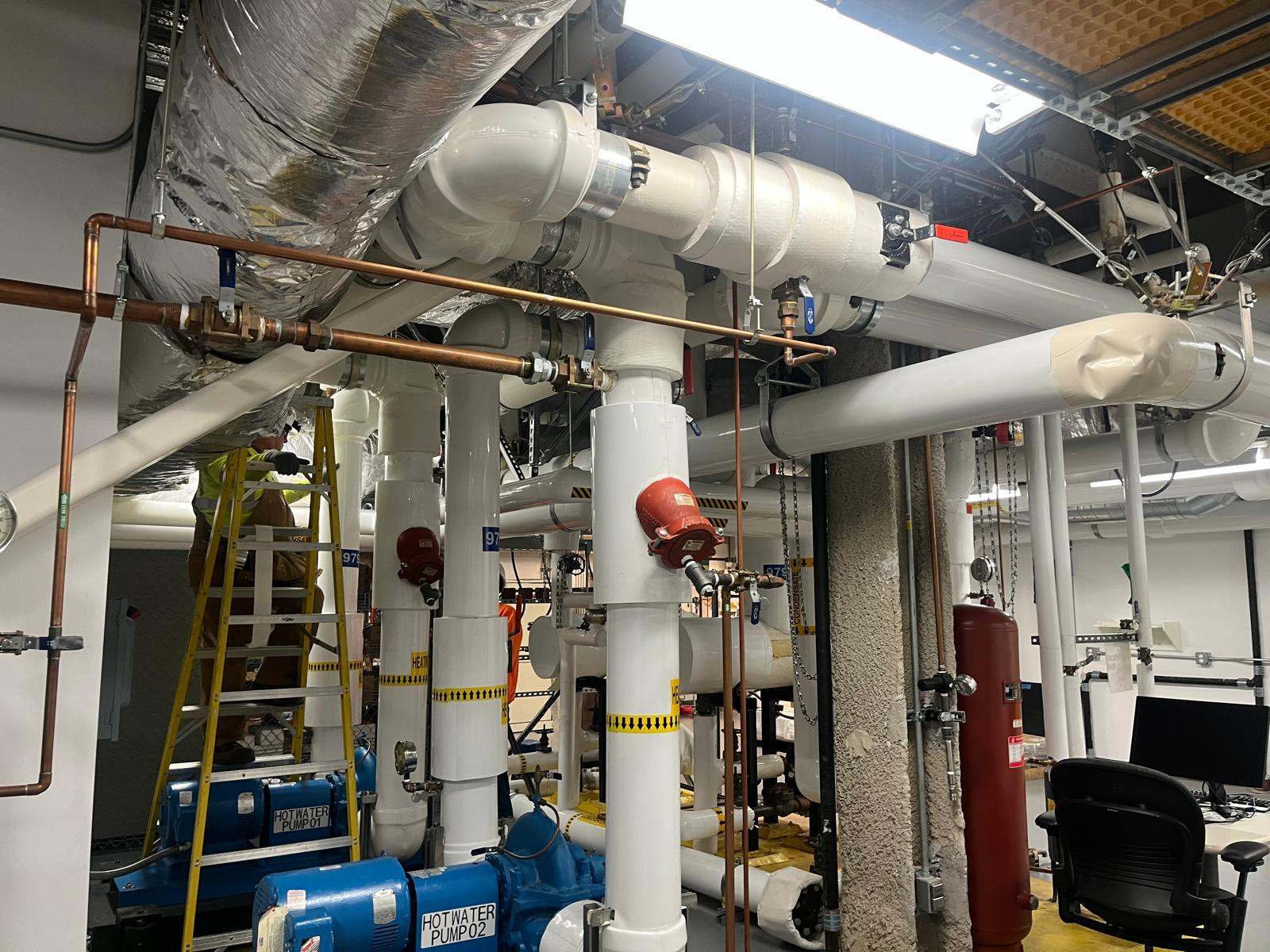
Scope we self-perform
- Process piping
- Chilled water
- Hot water and steam
- Compressed air
- Gas lines
- Domestic water
- Sanitary and waste
- Equipment sets
- Pump and skid connections
- Repipes
- Tie-ins
- Backflow
- Radiant heating
- Pressure testing
ASME B31.9 limits
Where building services piping stops.
B31.9 covers condensing water, water for heating and cooling, steam and condensate, vacuum, and compressed air and nontoxic nonflammable gases, within these limits. Past them, the design moves to another code section.
| Service | Maximum temperature | Minimum temperature | Maximum pressure |
|---|---|---|---|
| Steam and condensate | 366°F (186°C) | 0°F (-18°C) | 150 psig |
| Air, gases and vapors | 200°F (93°C) | 0°F (-18°C) | 150 psig |
| Nonflammable liquids | 250°F (121°C) | 0°F (-18°C) | 350 psig |
Which category a given service falls into is a design determination, not a contractor's call, and it belongs to the Owner or Design Authority. We build to the code the design names and we will raise it early if what is drawn does not look consistent with what the system actually does.
Questions we get asked
Piping, licensing and sequence.
What is the difference between plumbing and process piping?
Purpose, code and documentation. Plumbing serves the building and its occupants, and is designed to the plumbing code. Process piping serves what the facility produces, is designed to a pressure code such as ASME B31.3 or B31.9, and frequently carries material traceability and weld documentation requirements.
In California both can sit under the same C-36 classification, because Section 832.36 explicitly reaches piping for industrial, medical and dental gases and liquids as well as domestic supply and waste.
Which code applies to my chilled water loop?
Most commercial chilled water sits comfortably inside B31.9's limits, which is why B31.9 exists. Once a system exceeds those temperature or pressure limits, or the service is not one B31.9 lists, the design moves to B31.3.
The determination belongs to the Owner or Design Authority rather than to us. What we will do is tell you plainly if the drawings cite one code and the stated operating conditions suggest another, because that is a conversation worth having before fabrication rather than after.
Do you need a certified welder for process piping?
Where the governing code requires qualified welding procedures and qualified welders, yes, and the documentation is part of the deliverable rather than an afterthought. Your quality system or your insurer may require records regardless of what the code strictly demands.
Tell us at bid time if you need weld maps, procedure qualifications or material certifications. Producing them from the start costs very little. Reconstructing them afterwards is painful and sometimes impossible.
Can a general building contractor self-perform the plumbing?
Only with the appropriate classification. A B licensee holds the prime contract and carries the whole scope, but the trades still have to be performed by someone properly licensed, whether that is the general contractor holding the specialty classification or a properly licensed subcontractor.
We hold B and C-36 together, which is why our piping is not subcontracted. It is the same company and the same license.
What about medical gas piping?
Medical gas and medical vacuum are governed in California by California Plumbing Code Chapter 13, which at CPC 1304.1 requires installation to comply with NFPA 99. The code also requires the installer to furnish documentation certifying the installed piping, under CPC 1318.6, and sets specific requirements for brazed tube joints and their accessibility.
Medical gas work requires installer certification specific to that discipline. If your project includes it, raise it early so the right qualifications are confirmed up front rather than discovered at inspection.
How do you keep an outage from overrunning?
By moving as much as possible outside the window. Spools prefabricated and tested in the shop, materials staged and counted, isolation points physically confirmed with plant staff beforehand, and a written sequence that identifies the last moment the work can still be reversed.
We also price against the window rather than against a working day, because an industrial outage is not an eight hour shift and pretending otherwise produces a number nobody can hit.
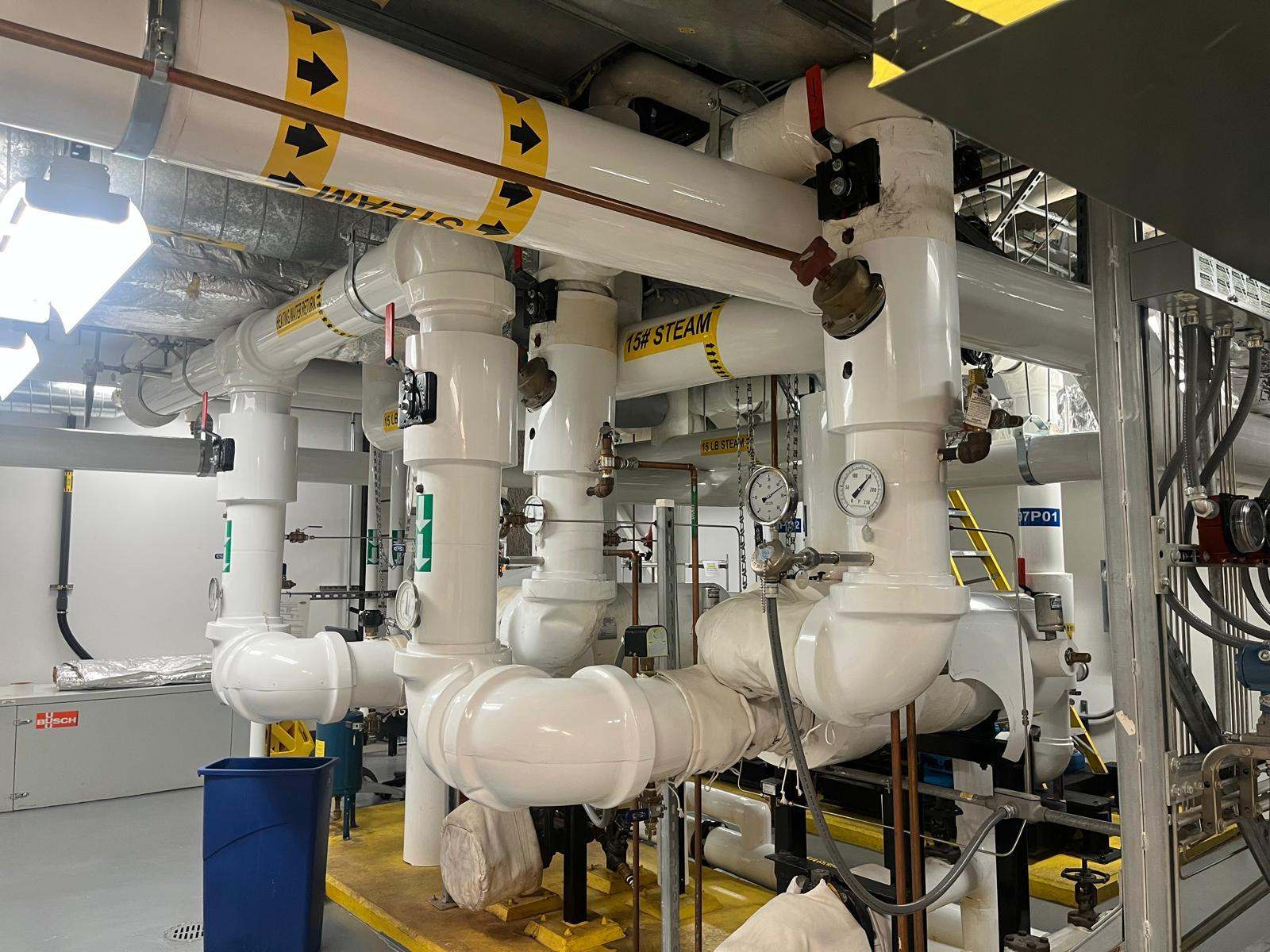
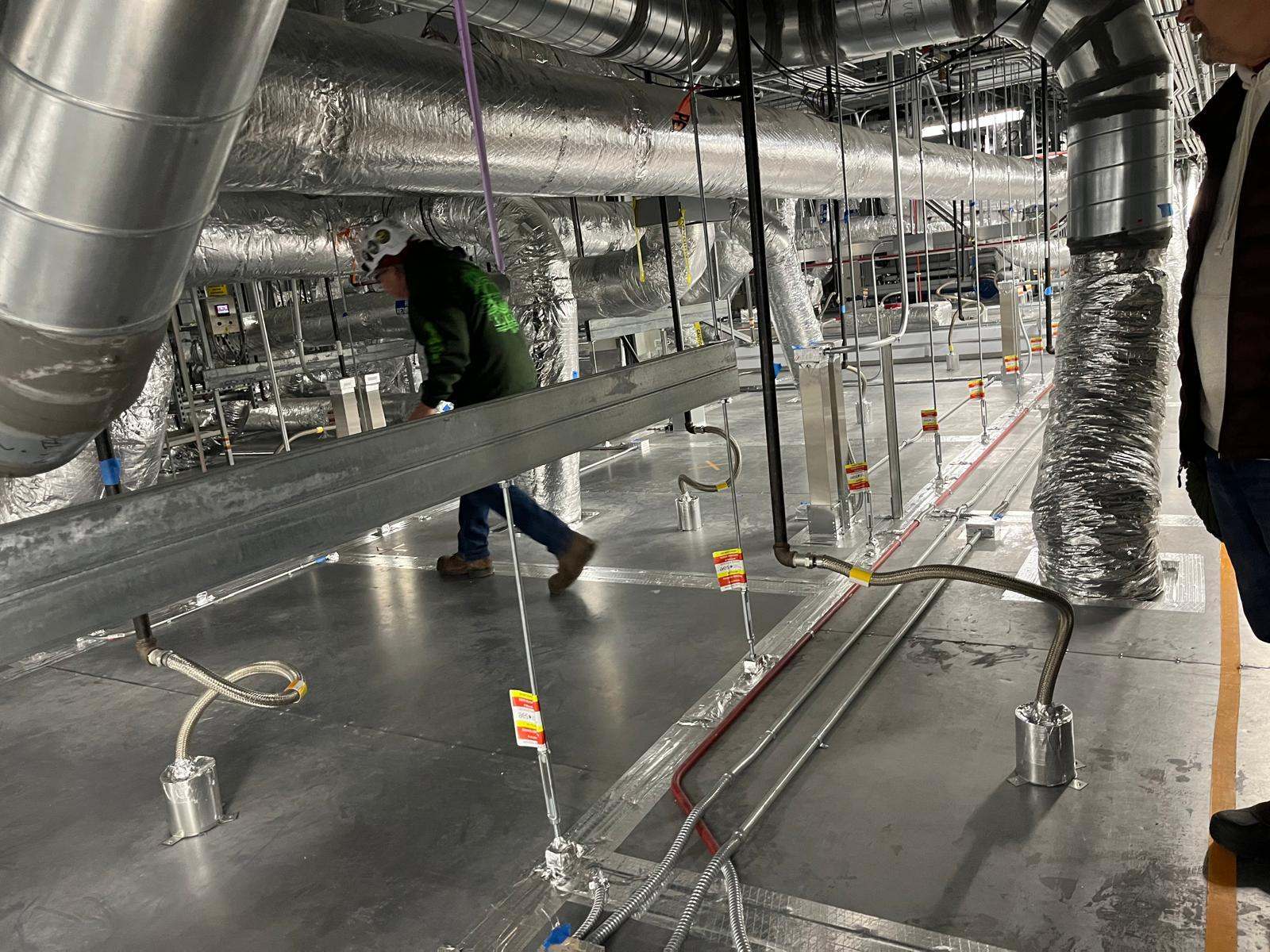
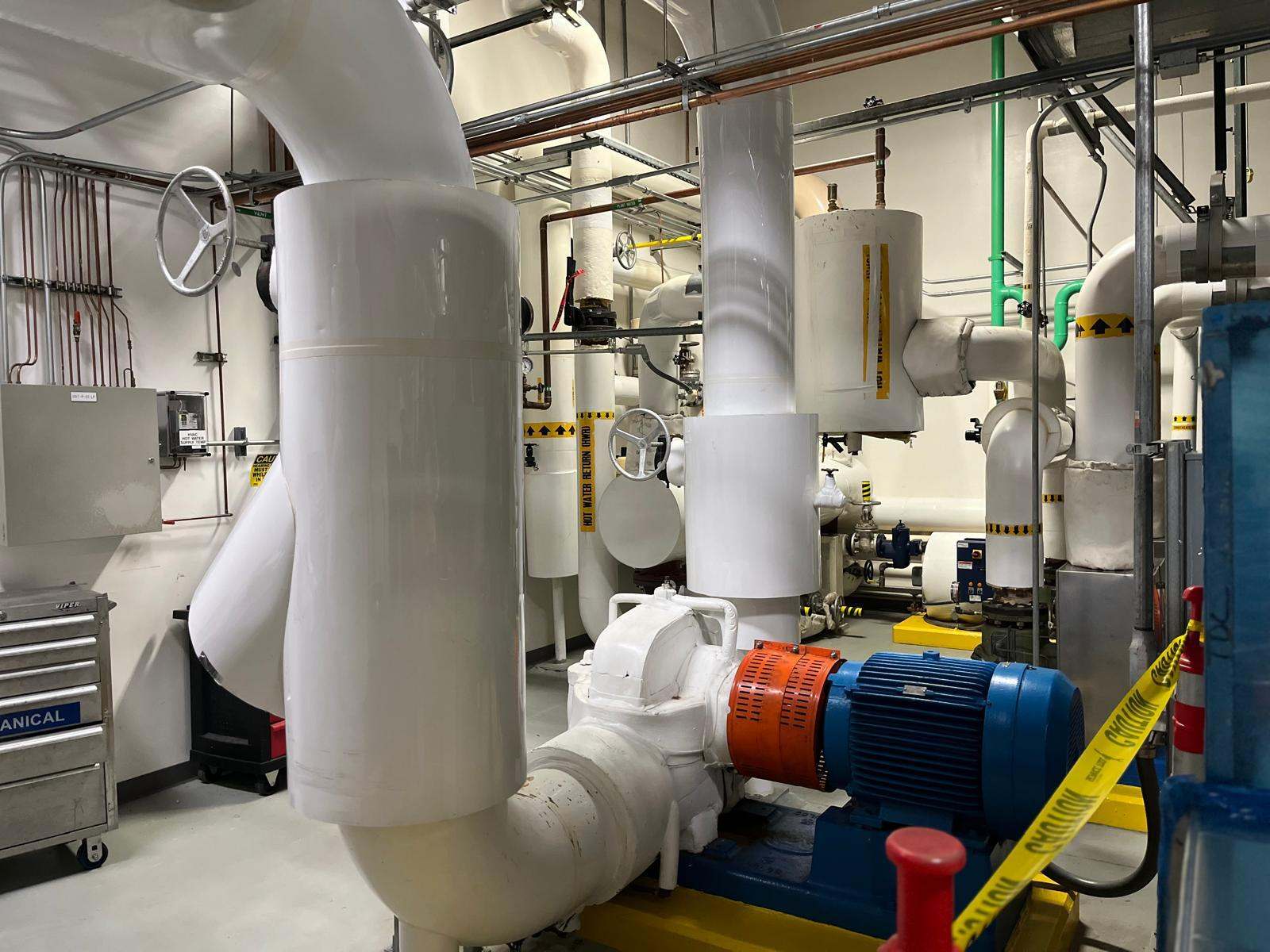
From our jobs
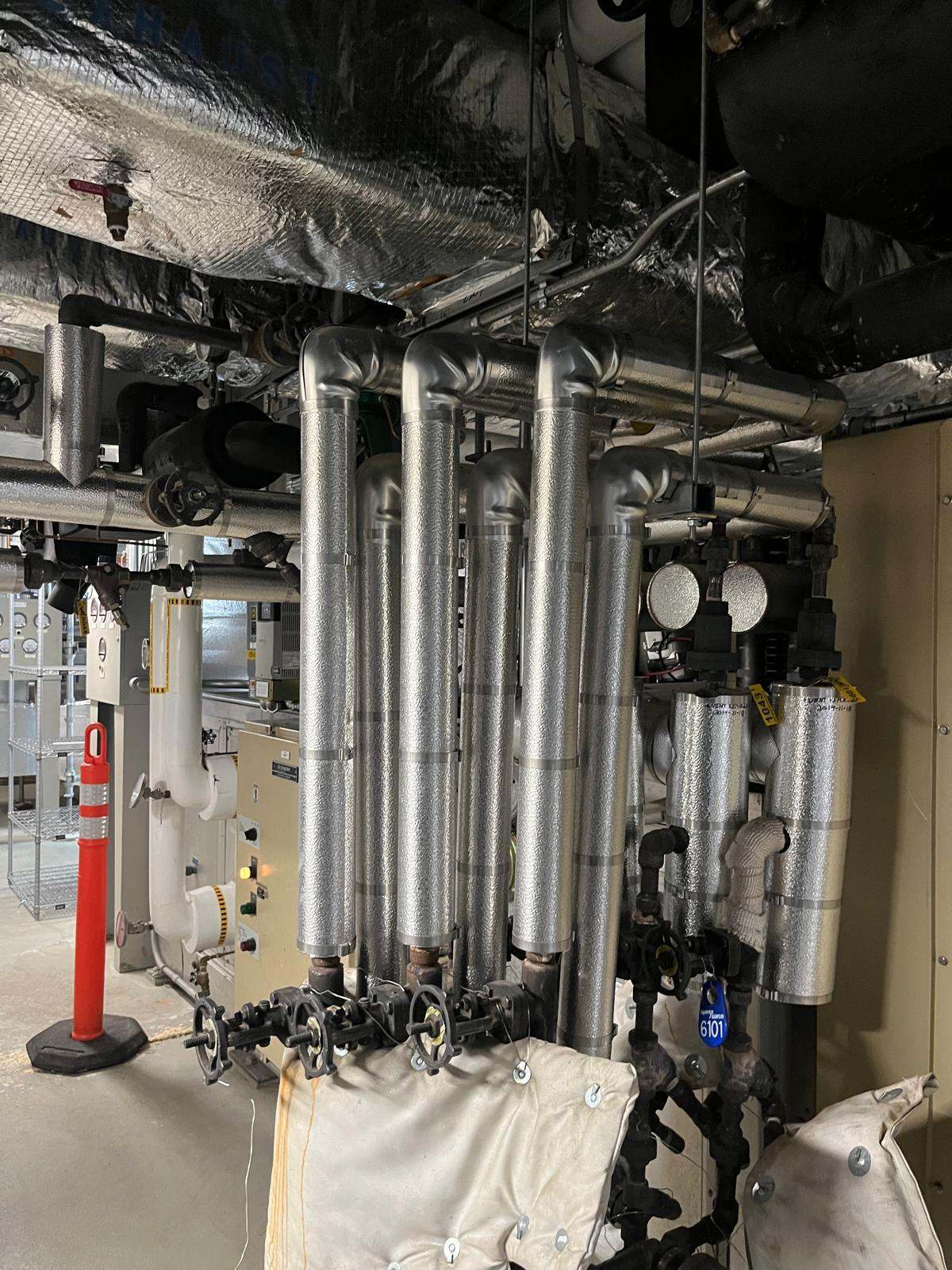
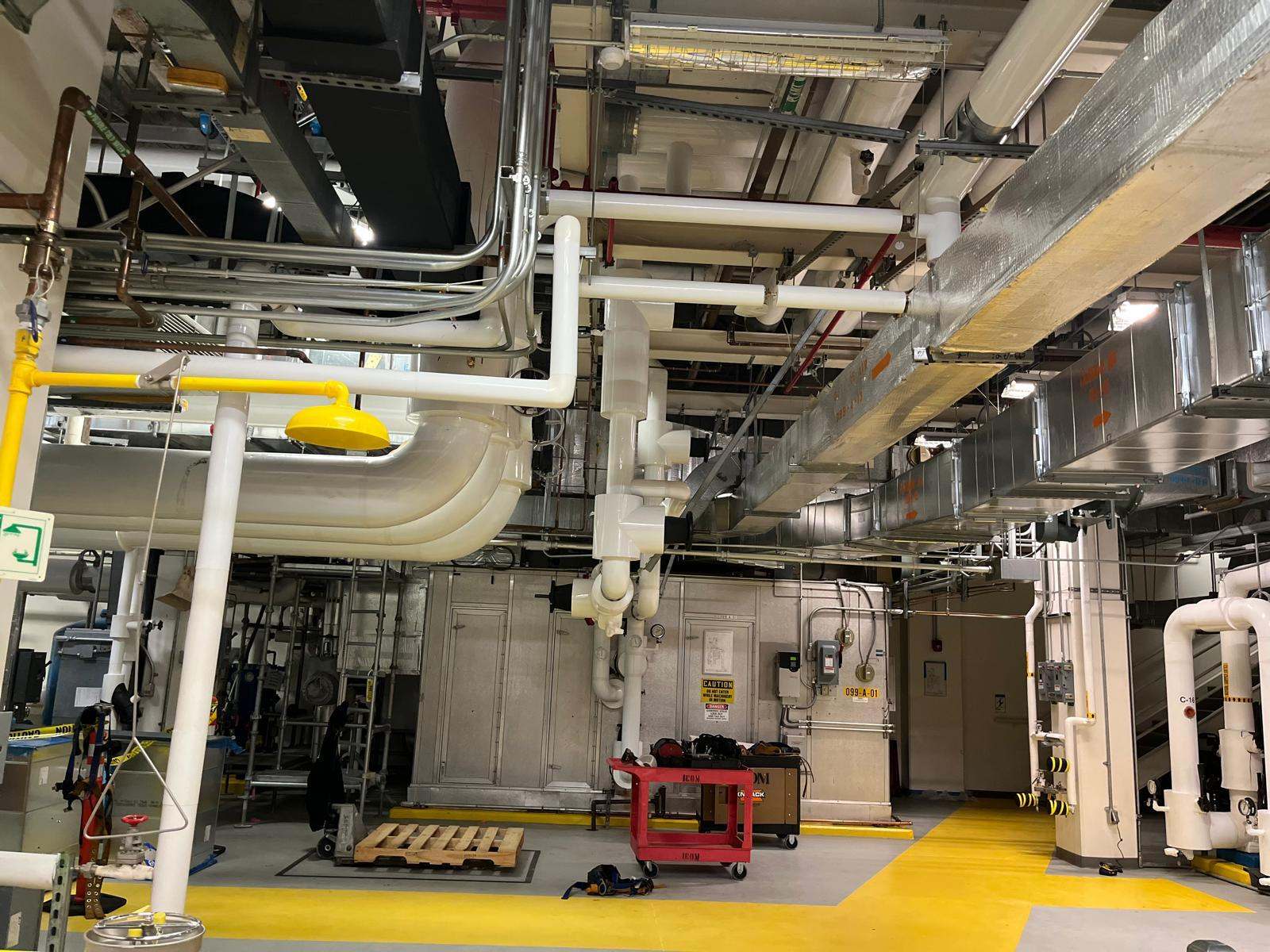
Piping our crews have installed.

Related
Other scopes we self-perform.
Next step
Tie-ins are easier to plan than to recover from.
Send us the drawings and the outage calendar. We will come back with a tie-in sequence, what has to be prefabricated, and what genuinely has to happen inside the window.