
CSLB C-2 · Insulation and acoustical
Mechanical insulation, self-performed.
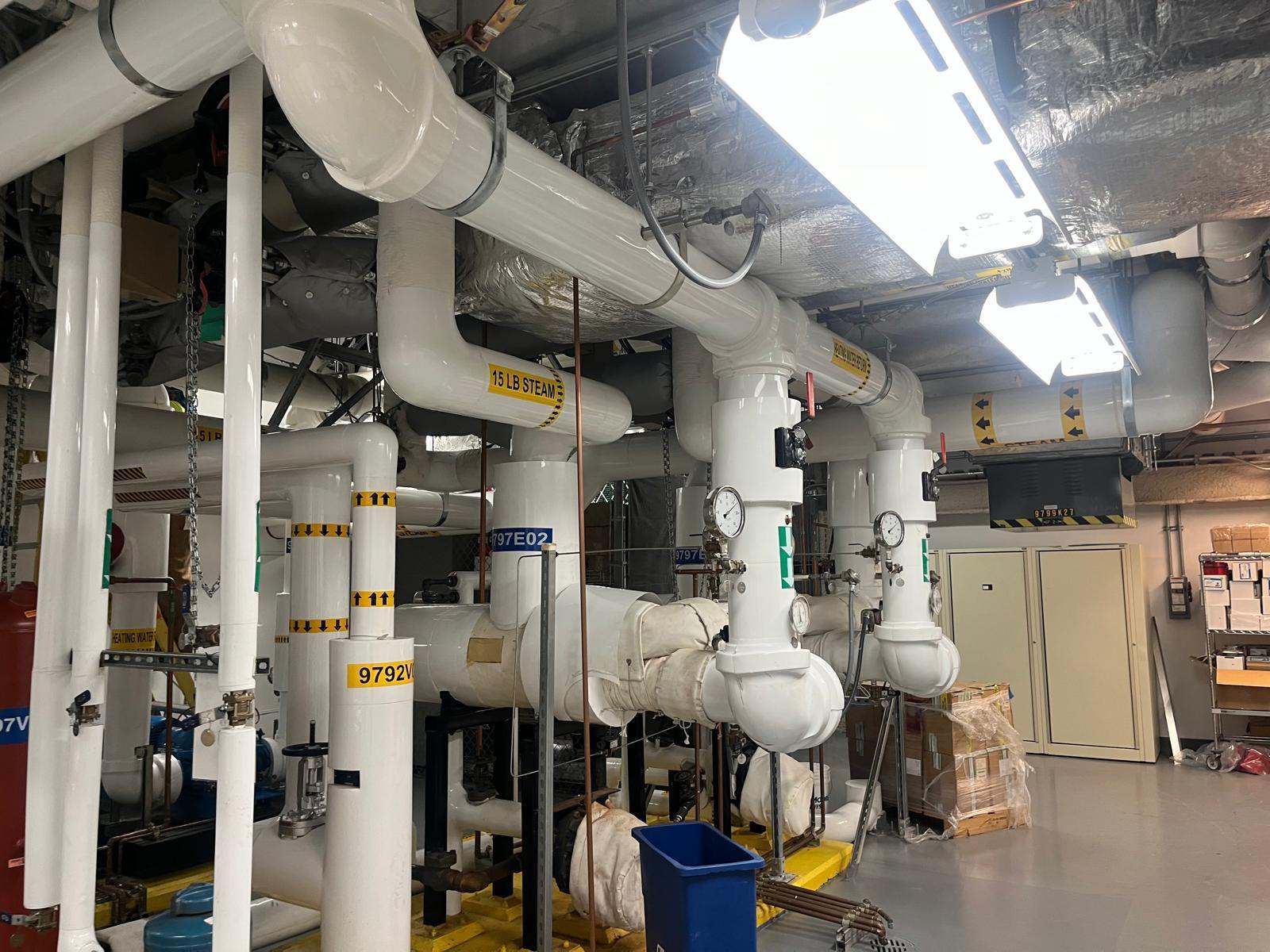
Pipe, duct, vessel and equipment insulation on hot, cold, cryogenic and cyclic systems, installed by our own crews in plants that keep running while we work.
classification held since 2003
under one license
has worked in the trades
Insulator card earned
What mechanical insulation actually has to do
Mechanical insulation is usually sold on energy savings, and it does save energy. But in an operating plant it is doing four jobs at once, and the one that gets you called back is rarely the thermal one.
It controls heat loss and heat gain, which is the part that shows up on the utility bill. It controls surface temperature, so a 350 degree steam line does not burn the operator who brushes past it. On cold systems it controls condensation, which is the difference between a dry mechanical room and standing water under a chilled water main. And it controls process stability, holding a fluid at temperature between one piece of equipment and the next.
A system that fails thermally costs you money slowly. A system that fails at condensation control damages the building, and a system that fails at personnel protection is a recordable incident. That hierarchy is why we ask what a line does before we ask how big it is.
How material gets selected
There is no universal insulation. The choice follows the operating temperature first, then the environment, then whether anything about the service cycles. Getting that wrong is the most common reason a system that looked fine on paper comes apart in three years.
Fiberglass pipe insulation covers most hot-service and HVAC work and handles the great majority of commercial piping. Calcium silicate takes over where temperatures climb and where the insulation has to carry load without crushing, which is why it ends up on high-pressure steam. Mineral wool sits in a similar band and brings better fire performance. On the cold side, closed-cell materials earn their place: cellular glass is impermeable and strong enough to sit under a support, polyisocyanurate gives low conductivity on cryogenic lines, and closed-cell elastomeric is the practical answer on chilled water in a mechanical room. Aerogel blanket is expensive, and worth it exactly where the space for a normal thickness does not exist.
The question that changes the answer: does the system cycle? A line that runs hot, then sits cold, then runs hot again moves moisture in and out of the insulation and works the joints loose. Cyclic service needs closed-cell material and a real vapor barrier even when the operating temperature suggests otherwise. It is the single most common specification mistake we find in the field.
Corrosion under insulation
The most expensive thing insulation does is hide the pipe. Carbon steel corrodes fastest when it is wet and warm, and insulation that has taken on water holds both conditions against the metal indefinitely. The damage is invisible from outside until the jacket is opened or the line fails.
The dangerous band runs from a little above freezing to a few hundred degrees, and it is worst on lines that cycle in and out of that range, because each cycle pulls fresh moist air in as the pipe cools. Lines that run continuously hot usually drive moisture back out and suffer less. That is why a rarely used standby line can be in far worse condition than the main next to it.
Practically, this means jacketing and sealing are not finishing work. They are the corrosion program. Where we find insulation that has gone soft or stained, we open it rather than cover it, because recovering a wet system traps the problem and bills you twice.
What California actually requires
Most insulation specifications quote ASHRAE 90.1. On a California project the governing document is Title 24, Part 6, Section 120.3, and it is more specific than most people expect.
Section 120.3(a) reaches space cooling, space heating, service water heating, process heating and process cooling, which between them cover nearly every mechanical line in a working building. Thicknesses come from Tables 120.3-A-1 and 120.3-A-2, and the conductivity those tables assume is measured by ASTM C335 at the table's mean rating temperature, so a product that does not report against C335 cannot be checked against the table.
There are six exceptions worth knowing, because they are where arguments start. Factory-installed piping inside certified equipment is exempt. So is piping with a design operating range between 60 and 105 degrees, which is the exception people reach for most often and misapply most often. Piping through framing does not need insulation across the penetration itself, though metal pipe through metal framing has to be isolated from contact. And valves, strainers, coil u-bends and air separators are covered once they carry at least half an inch of insulation.
Section 120.3(b) is the part almost nobody reads, and it is the one that decides whether an outdoor system survives. Insulation has to be protected from sunlight, moisture, maintenance traffic and wind. Anything exposed to weather needs a cover that is water retardant and shields against solar radiation, and the code says plainly that adhesive tape shall not be used to provide that protection. Chilled water and refrigerant suction outside conditioned space must carry or be protected by a Class I or Class II vapor retarder with every penetration and joint sealed. Buried insulation needs a waterproof, noncrushable casing.
Working on systems that stay in service
Most of our insulation work happens in buildings that cannot be shut down for our convenience. That changes the method more than it changes the materials.
Removal and replacement on a live line means staging the work so the system is never left open longer than it can tolerate, and it means knowing where you can and cannot cut. Hot work near insulation requires a permit pulled through the plant's own process, not ours. Lockout and tagout gets coordinated with plant staff rather than announced to them. And on older buildings, anything suspected of containing asbestos stops the work and goes to a licensed abatement contractor before we touch it, every time, with no exceptions and no judgment calls made on a ladder.
Scope we self-perform
- Pipe insulation
- Duct insulation
- Vessel and tank
- Equipment
- Hot systems
- Cold systems
- Cryogenic
- Cyclic service
- Removable covers
- Metal jacketing
- Vessel lagging
- Removal and replacement
- Acoustical
- Energy audits
Material selection
What goes where, and why.
A working summary of the materials we install most often. Actual selection follows the specification and the operating conditions on your system, not a table.
| Material | Specification | Typical service | Why it gets chosen |
|---|---|---|---|
| Mineral fiber pipe insulation | ASTM C547 | Hot service and HVAC piping | The default for most commercial and light industrial hot work. Economical, easy to fit, wide temperature range. |
| Mineral fiber board and block | ASTM C612 | Vessels, tanks, flat surfaces | Board stock for anything that is not a pipe. Cut and fitted to the shape. |
| Mineral fiber blanket | ASTM C553 | Duct, large vessels, cover cores | Wraps where rigid stock will not follow the shape. Also the core of most removable covers. |
| Cellular glass | ASTM C552 | Cryogenic, below grade, under supports | Closed cell and genuinely impermeable, so it does not take on water even when damaged. Strong enough in compression to sit under a support. |
| Polyisocyanurate | ASTM C591 | Cold and cryogenic piping | Low conductivity at low temperature, which keeps the required thickness manageable on cold lines. |
| Closed-cell elastomeric | ASTM C534 | Chilled water, refrigerant, condensation control | Vapor resistance is part of the material rather than a separate jacket, which removes the most common failure point. |
| Insulating cement | ASTM C195 / C449 | Irregular fittings and finishes | Fills and finishes shapes that no preformed product covers. |
| Aluminum jacketing | ASTM C1729 | General outdoor and indoor weatherproofing | The standard jacket. The specification covers the moisture barrier on the inner face, which is the part that matters. |
| Stainless jacketing | ASTM C1767 | Wash-down, pharmaceutical, corrosive, coastal | Survives cleaning chemistry and salt air where aluminum does not. |
Where insulation will contact austenitic stainless steel, the material also has to qualify under ASTM C795, which relies on the stress corrosion screening in C692 and the leachable chloride and fluoride limits in C871. That requirement catches people out on stainless process lines, because an otherwise correct product can be the wrong choice purely on its chemistry.
For the system as a whole, ASTM C1696 is the umbrella guide to industrial thermal insulation, covering selection, design, application, protective coverings, inspection and maintenance across a range from -320 to 1200 degrees Fahrenheit. Dimensionally, ASTM C585 is what makes a four inch insulation thickness mean the same thing to us, to the supplier and to your inspector.
Questions we get asked
The things facility people actually want to know.
Why is my insulated pipe sweating?
Because the vapor barrier has failed, or there never was one. On a cold line, moisture does not need a hole to get in. Warm humid air pushes toward the cold surface continuously, and ordinary insulation slows it down without stopping it. Once moisture reaches the pipe it condenses, soaks the insulation from the inside, and the insulation loses most of its value while gaining weight.
Visible sweating usually means the problem is well advanced. Sealing the outside at that point traps the water that is already in there. The fix is to open the system, find out how far the wet has travelled, and replace that section with a continuous sealed vapor barrier rather than patching the symptom.
Can you insulate pipe while the system is running?
Often yes, and it is most of what we do. Hot lines can usually be insulated in service with the right materials and the right protection for the crew. Cold lines are harder, because a vapor barrier has to be sealed continuously and a running cold line is already wet at the surface.
Removal and replacement on a live system is the real constraint rather than installation. Stripping a hot line exposes it and exposes the people near it, so the sequence matters, and we plan it against your operation before we price it.
How long should mechanical insulation last?
Indoors, protected, correctly specified and not disturbed, decades. The material itself does not wear out. What ends a system's life is water intrusion, mechanical damage from people standing on it or working around it, and repeated removal at the same fittings without a proper way to put it back.
Outdoor and rooftop runs are a different story, and the jacketing is almost always what fails first. That is a maintenance item, not a replacement trigger, as long as it gets caught before water reaches the pipe.
What does the C-2 classification actually cover?
C-2 is the California insulation and acoustical classification. It covers installing insulation and acoustical materials, which in practice means mechanical insulation on piping, ducts, vessels and equipment, along with the jacketing and finishes that protect it.
It matters to you for two reasons. A contractor working outside their classifications is a problem for your project if it is ever examined, and the license is checkable in thirty seconds at the CSLB website. Ours is number 1006147.
Do you handle asbestos removal?
No, and you should be wary of an insulation contractor who says yes casually. Asbestos abatement is a separate licensed and regulated activity with its own certification, containment and disposal requirements.
What we do is recognize it. On older buildings, if we encounter material we suspect contains asbestos, work stops at that location and it goes to a licensed abatement contractor for testing and removal before we continue. We would rather lose a day than put your people or ours in that position.
What drives the cost of an insulation scope?
Less than people expect goes to material. The variables that move a number are access, whether the system is live, how much removal comes before installation, the fitting count, and the window you are giving us to work in.
A straight run of pipe in open space is quick. The same linear footage threaded through an occupied ceiling with twenty valves and six changes of direction is a different job. That is why we walk the work before pricing it, rather than quoting from a line list alone.
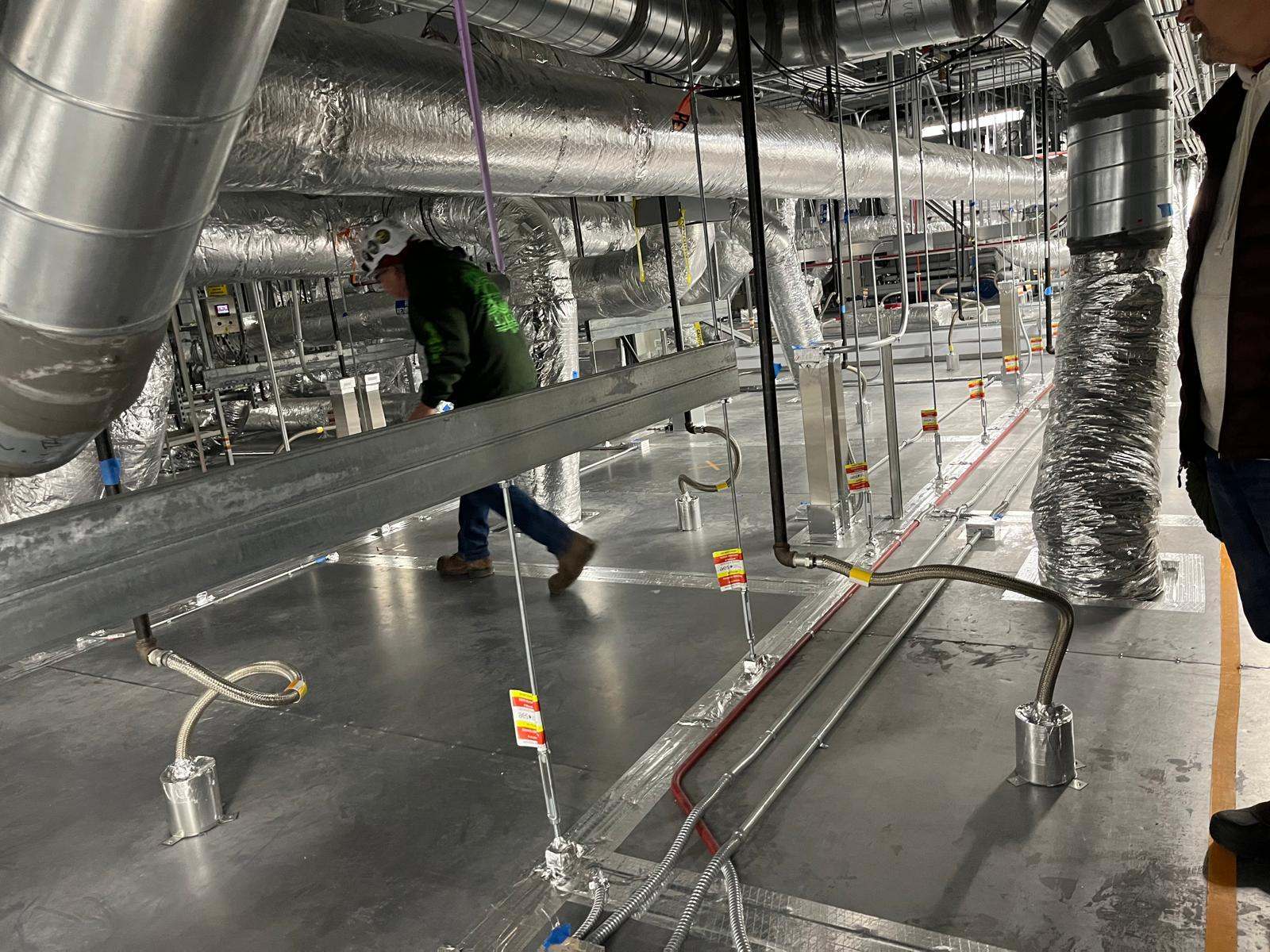
From our jobs
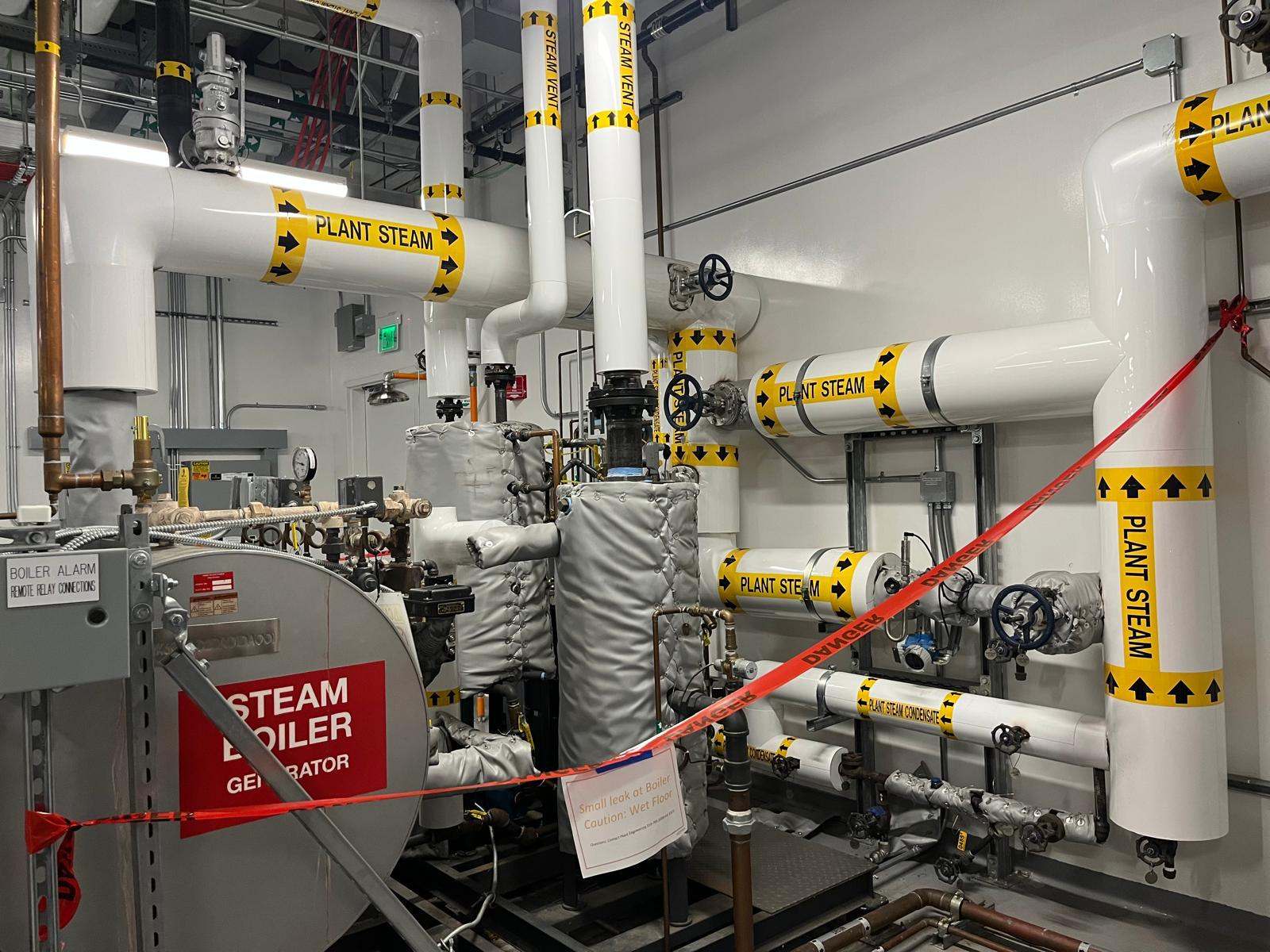
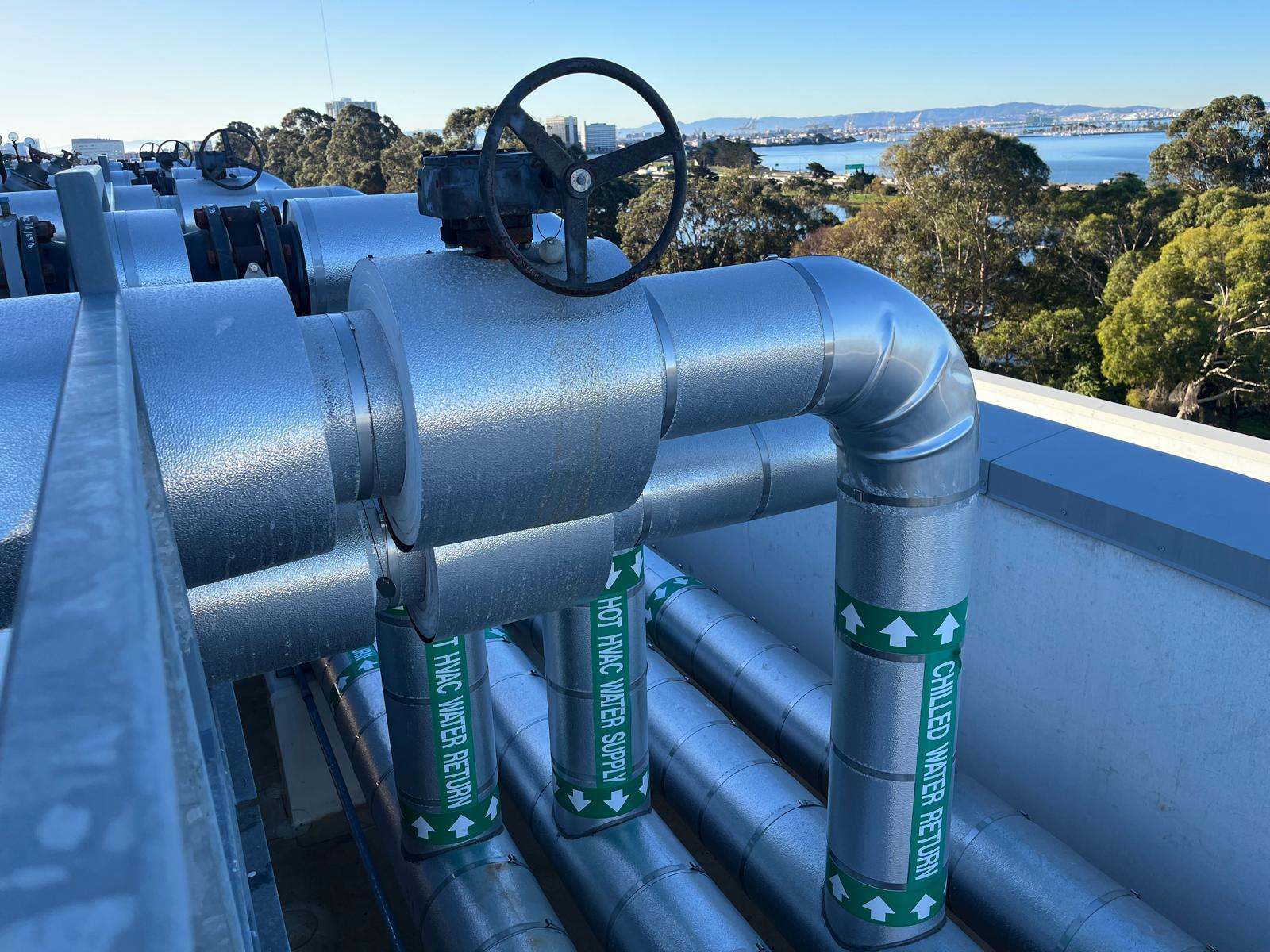
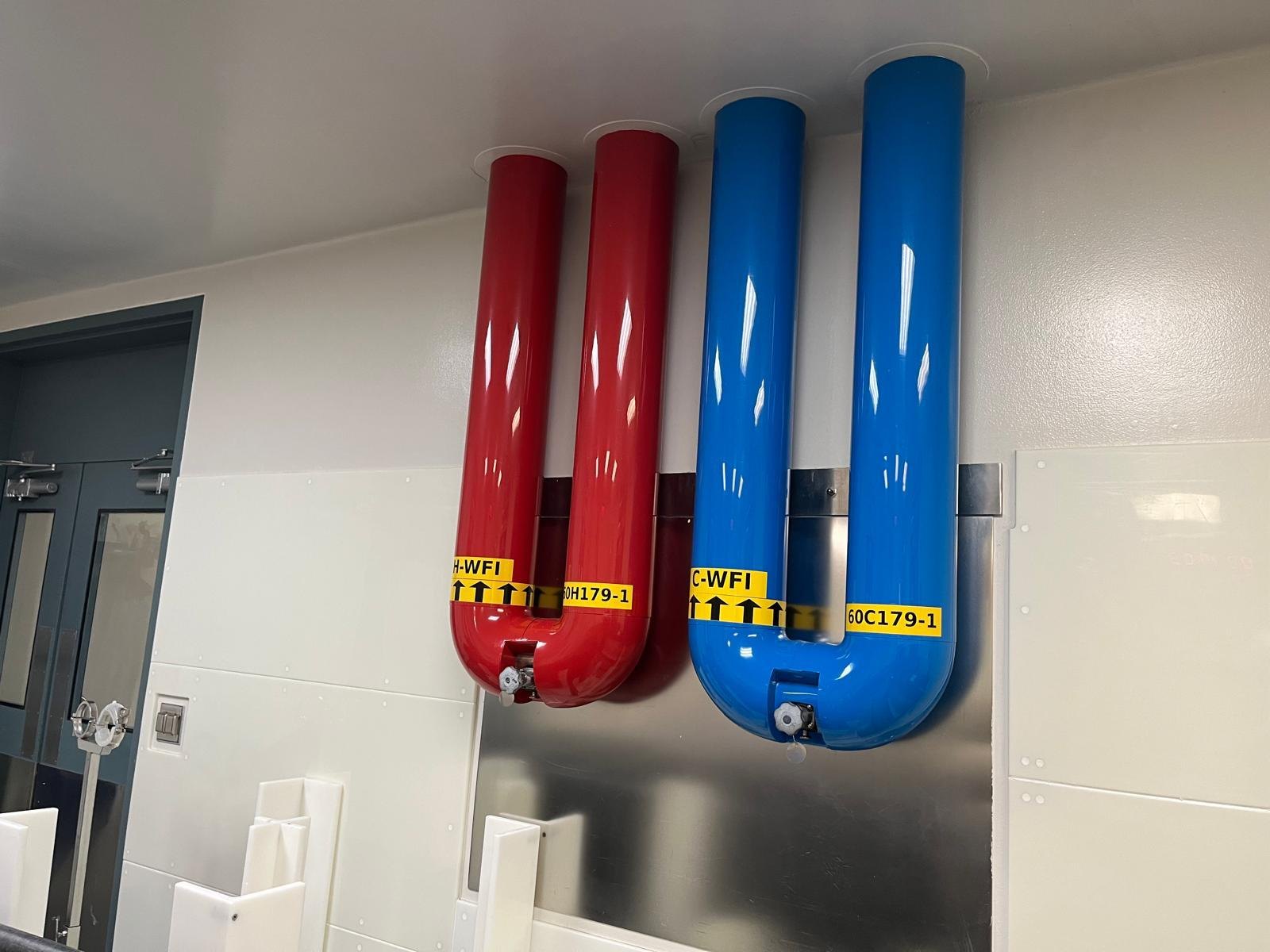
Work our crews have finished.


Related
Other scopes we self-perform.
Next step
Send us the line list and the shutdown window.
We will walk the job, confirm what is actually on the pipe today, and come back with a scope tied to a sequence rather than a lump sum with no detail behind it.