
Millwork and casework
Cut to the model, not to the drawing.
We run a five by twelve foot CNC router in our own shop. Full sheet goods, machined panels, precision components, and geometry that would be unbuildable by hand.
Why the bed size is the first number
Our router bed is five feet by twelve feet, and that dimension decides more about what is practical than the spindle or the software does.
A standard sheet is four by eight. A bed that takes five by twelve swallows a full sheet with room around it, takes oversized stock, and takes long components in one piece rather than in sections that have to be joined. For architectural work that matters, because a joint in the middle of a panel is visible forever and a joint in a machined profile almost never lines up convincingly.
It also means nesting. Parts can be laid out across a full sheet to minimize waste, which on a job with hundreds of unique pieces is the difference between a sensible material cost and an absurd one.
Cut to the model
The real shift with CNC is not accuracy, though the accuracy is better. It is that the geometry no longer has to be describable on a drawing.
A drawing is a set of dimensions a person reads and reproduces. Anything a person can reasonably measure and mark can be drawn. A continuously varying curve, where every one of three hundred pieces is a slightly different shape, cannot be drawn in any useful way, and that is exactly what a model holds without difficulty.
So the workflow runs from the model, through toolpaths, to the machine, and the drawing becomes documentation rather than instruction. When somebody sends us geometry we can cut it. When somebody sends us a sketch and an idea, the first piece of work is getting to a model that is machinable, and that is a real step with real hours in it.
What makes a model machinable. Closed geometry rather than open surfaces, a defined material thickness, tolerances that acknowledge a cutter has a radius, and an inside corner the tool can physically reach. A model built to look right in a render frequently has none of these. Sending us the file early means we can tell you what needs resolving while it is still cheap to change.
What we run it for
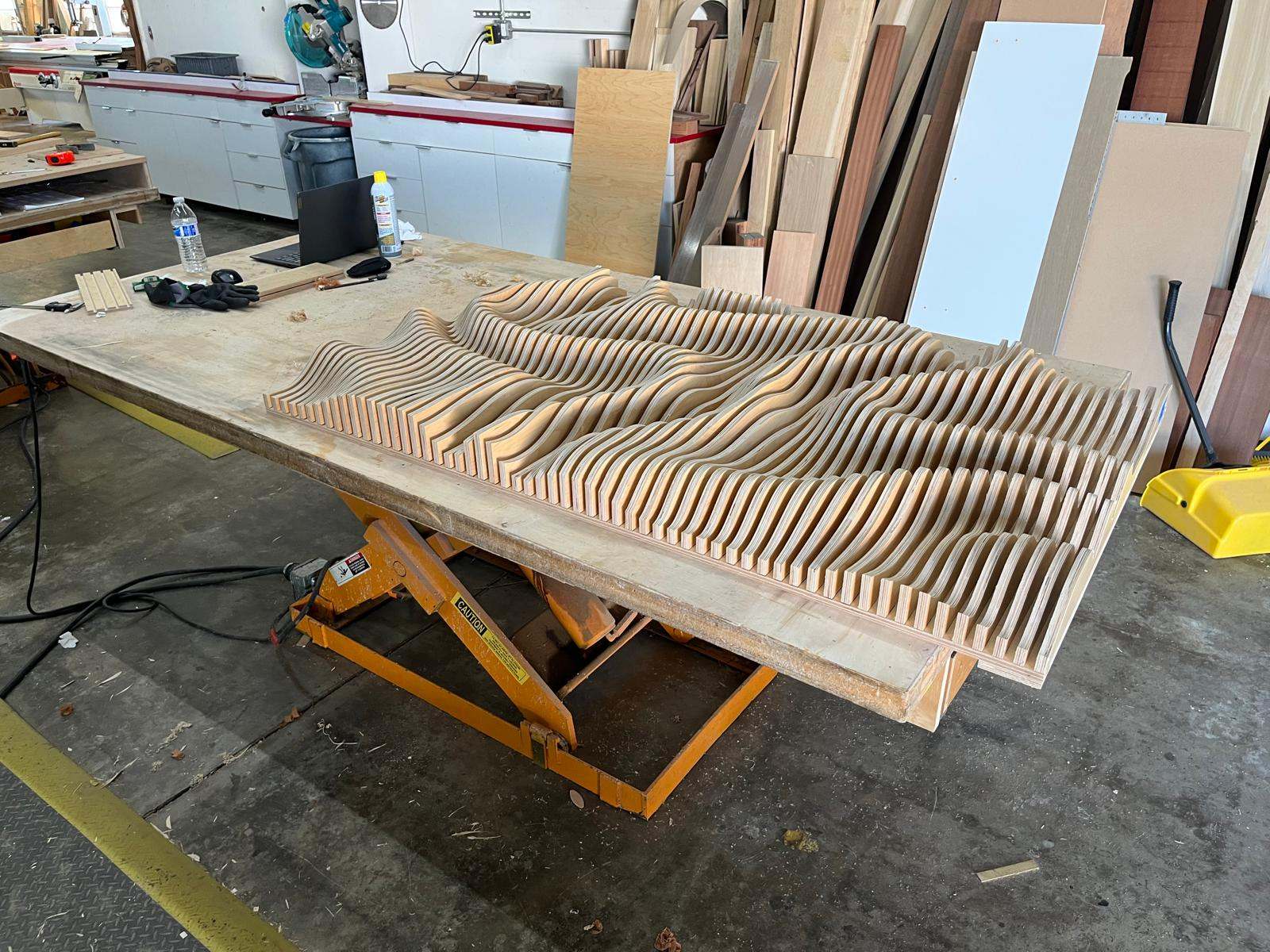
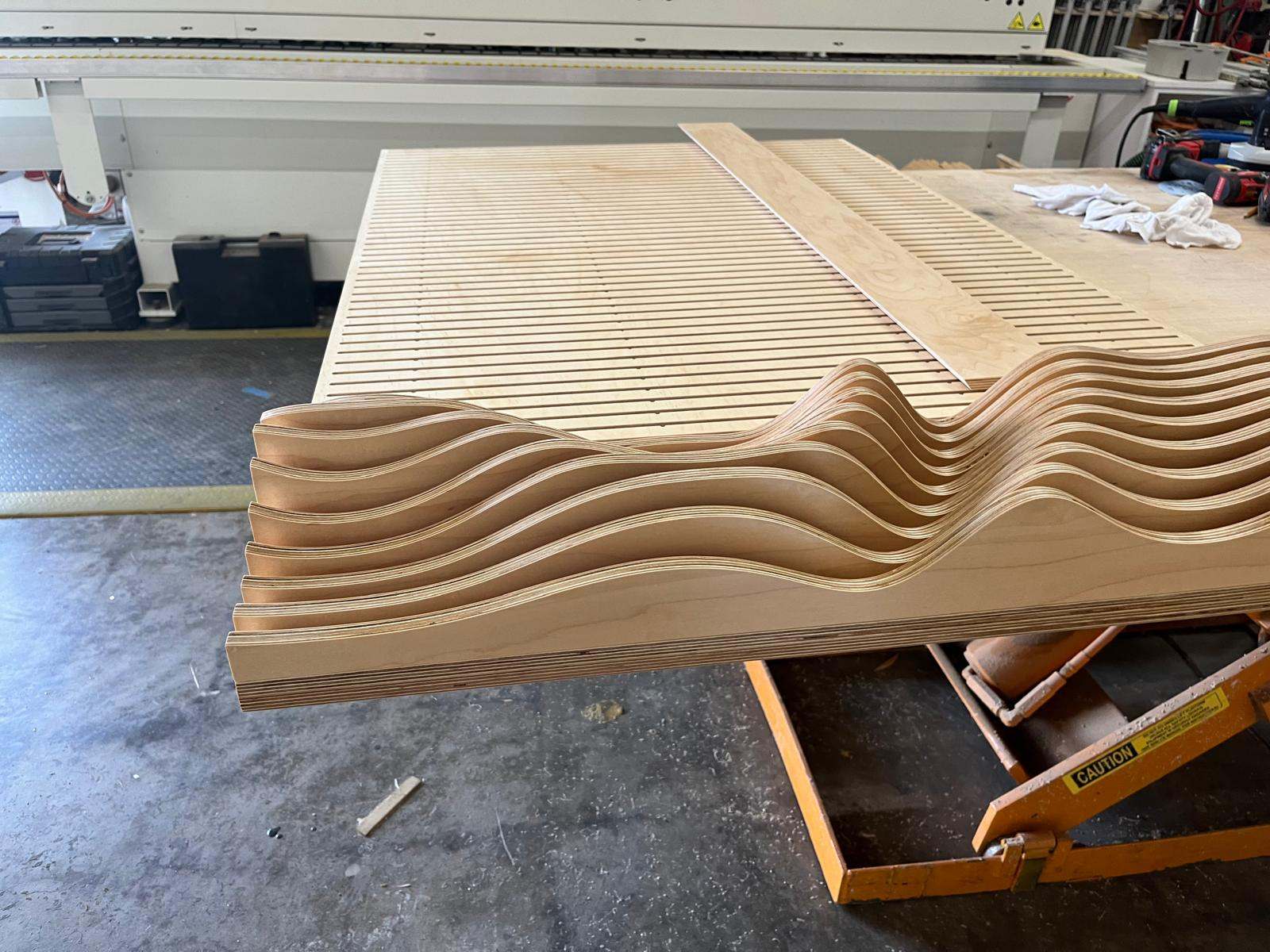
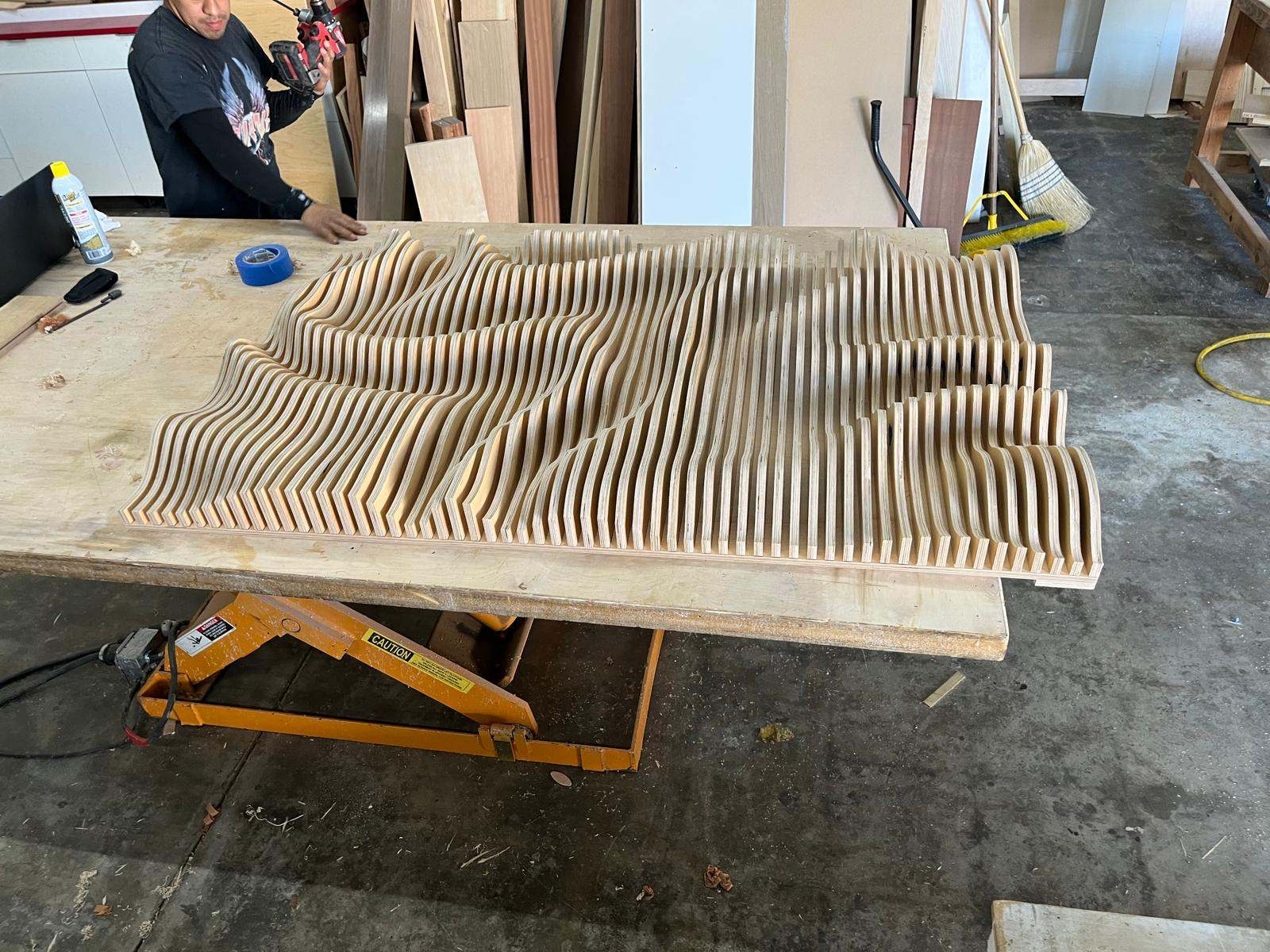
Machined panels and parametric geometry. Feature walls and ceilings made of many individually shaped pieces, where cutting by hand is not slow so much as impossible.
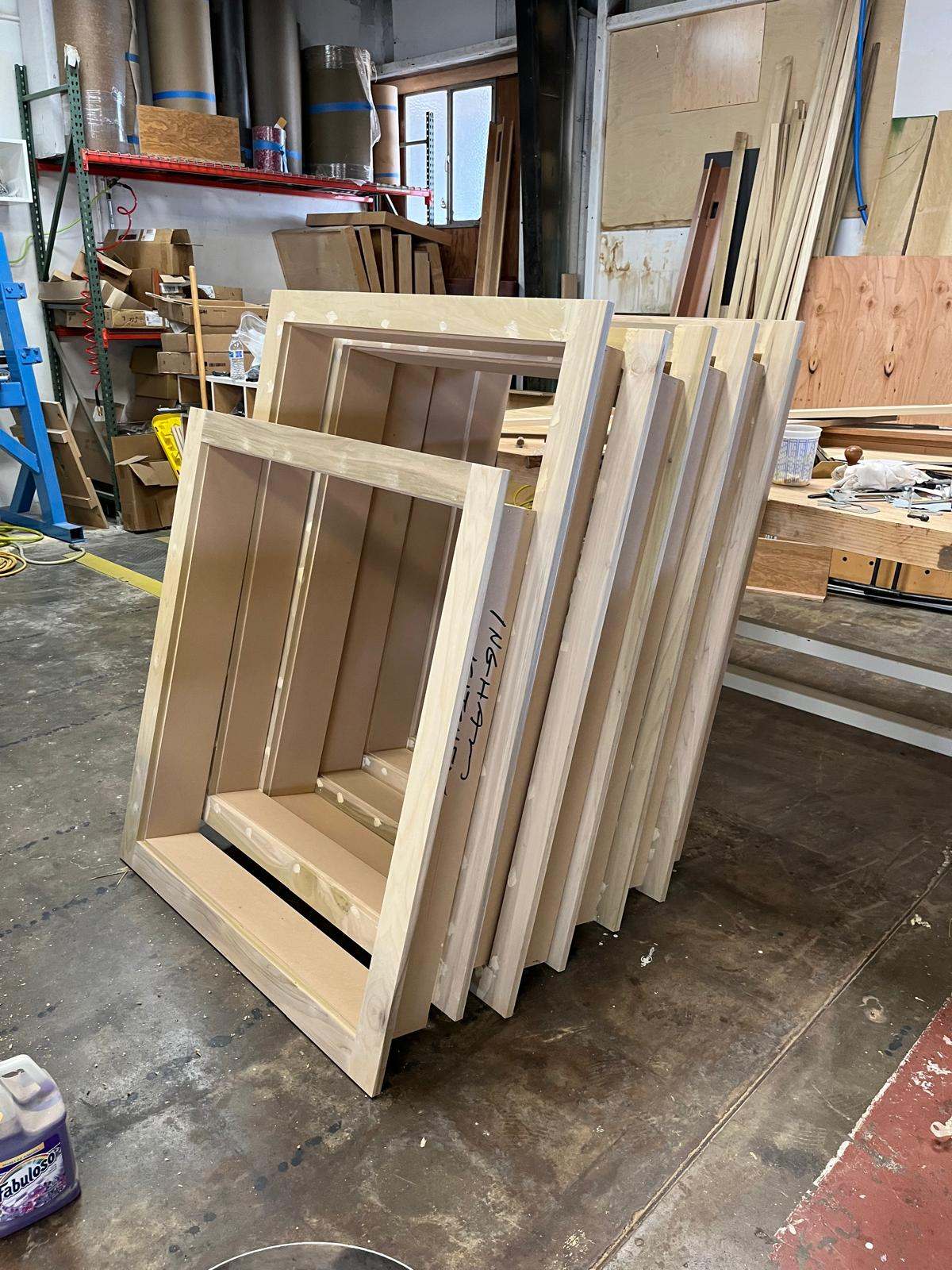
Casework components. Repeatable parts cut identically, every time, with joinery and hardware boring already in place rather than marked out afterwards.
Non-standard openings. Panels cut to a surveyed condition rather than a nominal one, which is how a tight building gets a tight-looking finish.
Jigs, templates and fixtures. Unglamorous and probably the highest return on the machine. A jig cut once makes every subsequent field operation faster and more consistent.
Short-run components that are too few for a manufacturer to tool up for and too many to make by hand.
Materials
Sheet goods of every ordinary kind: plywood and baltic birch, MDF, particle core and veneered panels, high pressure laminate, solid surface and most architectural plastics. Hardwood within the limits of what the stock and the hold-down allow.
Two things worth raising before you specify. A cutter leaves a radius in every inside corner, so a true sharp internal corner needs a secondary operation or a relief detail designed in. And edge quality varies enormously by material: baltic birch machines to an edge worth showing, while a particle core will want edge banding or a facing wherever a cut edge is visible.

Capability
- 5 ft × 12 ft bed
- Full sheet nesting
- Machined panels
- Parametric geometry
- Casework components
- Joinery and boring
- Jigs and templates
- Short runs
- Prototyping
- Cut from model files
Questions we get asked
Sending us a job.
What file should I send?
Whatever you actually have. A 3D model is ideal because it carries the geometry directly. Vector files work for flat cutting. A PDF or a dimensioned drawing can be worked from, but somebody has to rebuild the geometry first and that time goes on the job.
If you are not sure whether what you have is usable, send it and ask. That costs you nothing and it is a faster answer than guessing.
Can you cut metal?
No. This is a router configured for architectural and woodworking materials, which is what it is good at. Sheet goods, panel products, architectural plastics and solid wood.
We would rather tell you that plainly than take the job and subcontract it without saying so.
How many pieces does it take to be worth setting up?
Fewer than people expect, because the setup is mostly programming rather than tooling. There is no mold and no fixture to build, so a run of ten unique parts is not fundamentally different in setup from a run of one.
Where volume changes things is material nesting. More parts means better yield per sheet, which is where the cost per piece actually falls.
Will the machined edge need finishing?
It depends on the material and on whether the edge will be seen. A good sheet material cut with the right tooling and feed produces an edge that can be left as it is on plenty of architectural work.
A cored product almost always wants banding or a facing on a visible edge. Tell us which edges are seen and we will specify the material accordingly, rather than finding out at installation.
Do you do one-off prototypes?
Yes, and it is often the sensible first step on anything unusual. Cutting one before committing to three hundred finds the problems that no amount of looking at the model will.
On a parametric wall in particular, a single sample panel answers questions about material, edge quality and how the surface reads under the actual lighting that nobody can answer from a render.
From our shop
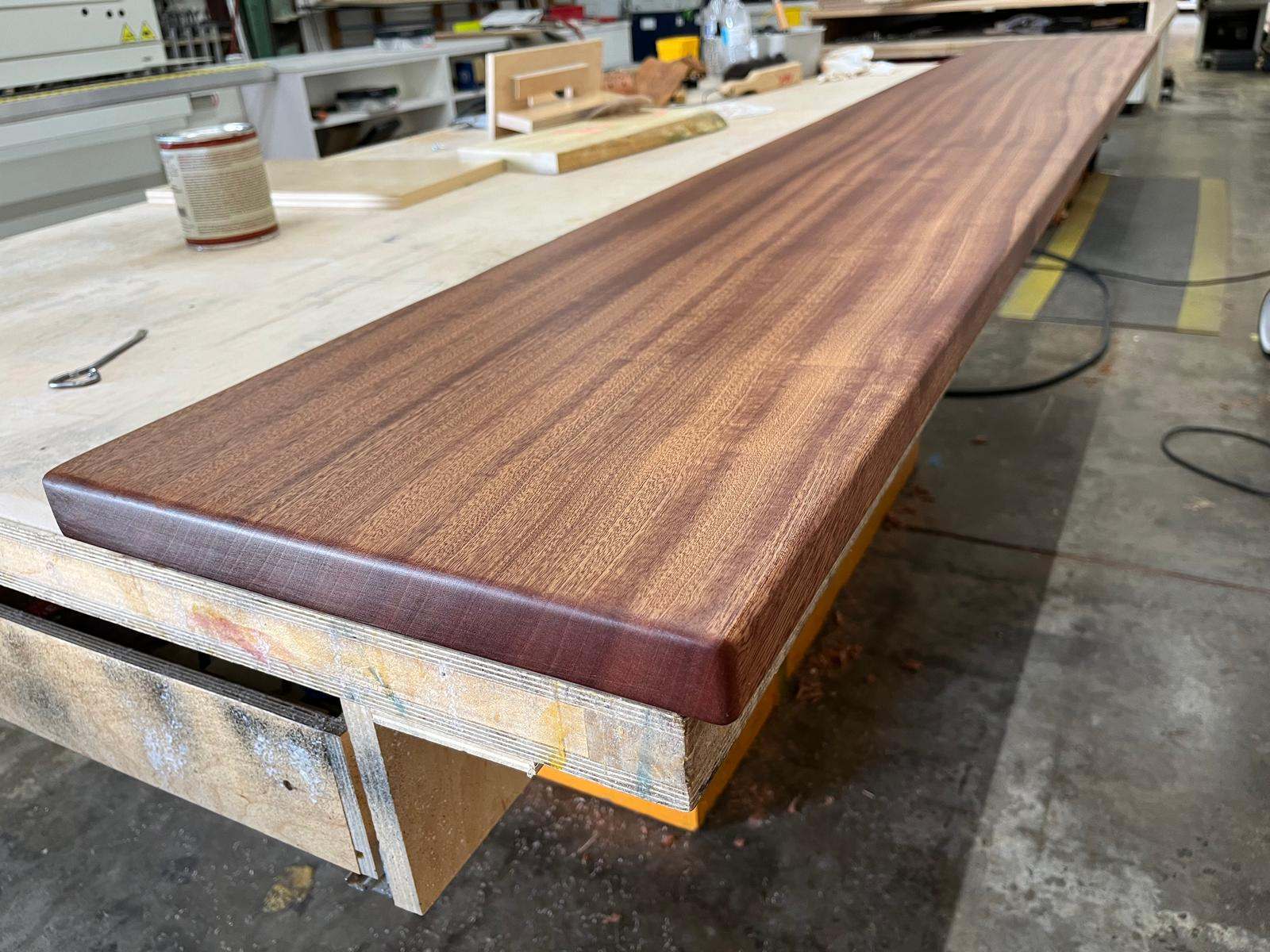
Machined work.

Related
Other scopes we self-perform.
Next step
Send the file, not a sketch.
If you already have a model we can usually quote from it directly. If you have a drawing and an idea, we will tell you what it takes to get it machinable.