
Markets
Production does not stop for your scope.
Manufacturing and processing plants where the mechanical scope has to fit a short window without touching production, and where overrunning the window costs more than the job.
The window is the job
In a manufacturing or processing plant, the mechanical work is rarely the hard part. The hard part is that the plant makes money every hour it runs and makes none every hour it does not, and our scope sits directly in the way of that.
Which means industrial work gets priced against the window rather than against an eight hour day. A scope that takes three working days in an empty building may have to happen across a single weekend outage, with a crew sized accordingly, materials staged in advance and a sequence written to the hour. That is a different job with a different number, and a contractor who prices it as though it were ordinary work will not finish it.
What we need before we can price it
The shutdown calendar, first and before anything else. When the plant comes down, for how long, and how firm that date is.
Then what is actually there. On a plant that has been running for twenty years, the drawings and the building diverged a long time ago. Lines have been added, valves replaced, insulation cut off at fittings and never put back. We walk it, because the condition of the existing system usually determines the scope more than the new work does.
Then the plant's own rules. Hot work permits, lockout and tagout, confined space, who escorts, what training our people need before they are allowed through the gate. Those are your processes and we work inside them rather than proposing our own.
Removal is usually bigger than installation. On industrial insulation work in particular, the quantity of existing material that has to come off, be assessed and be disposed of regularly exceeds the new work. It is also the part most likely to reveal something nobody expected, from corroded pipe to material that has to stop the job and go to a licensed abatement contractor. We would rather open a representative section during the walk than price it blind.
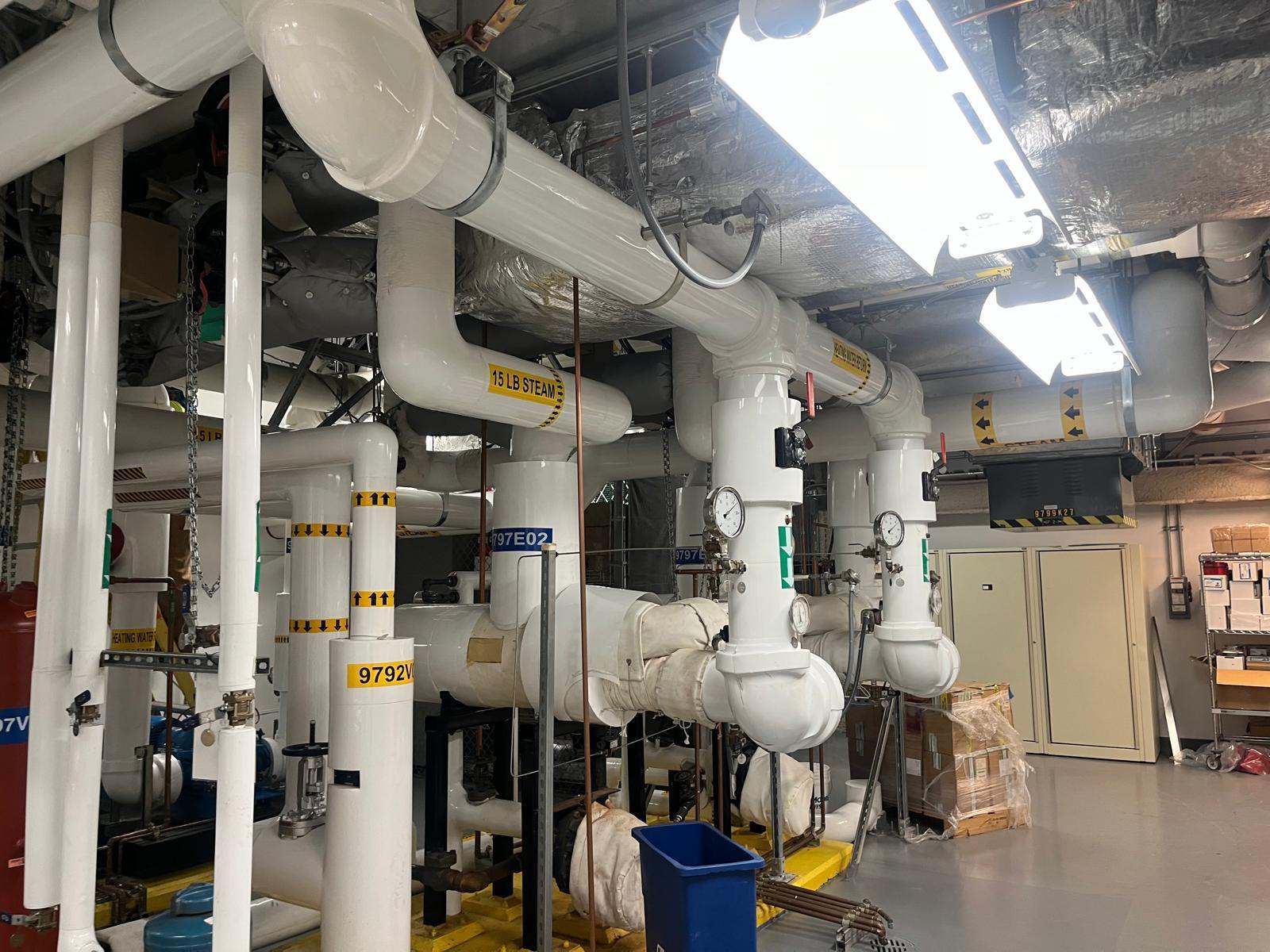
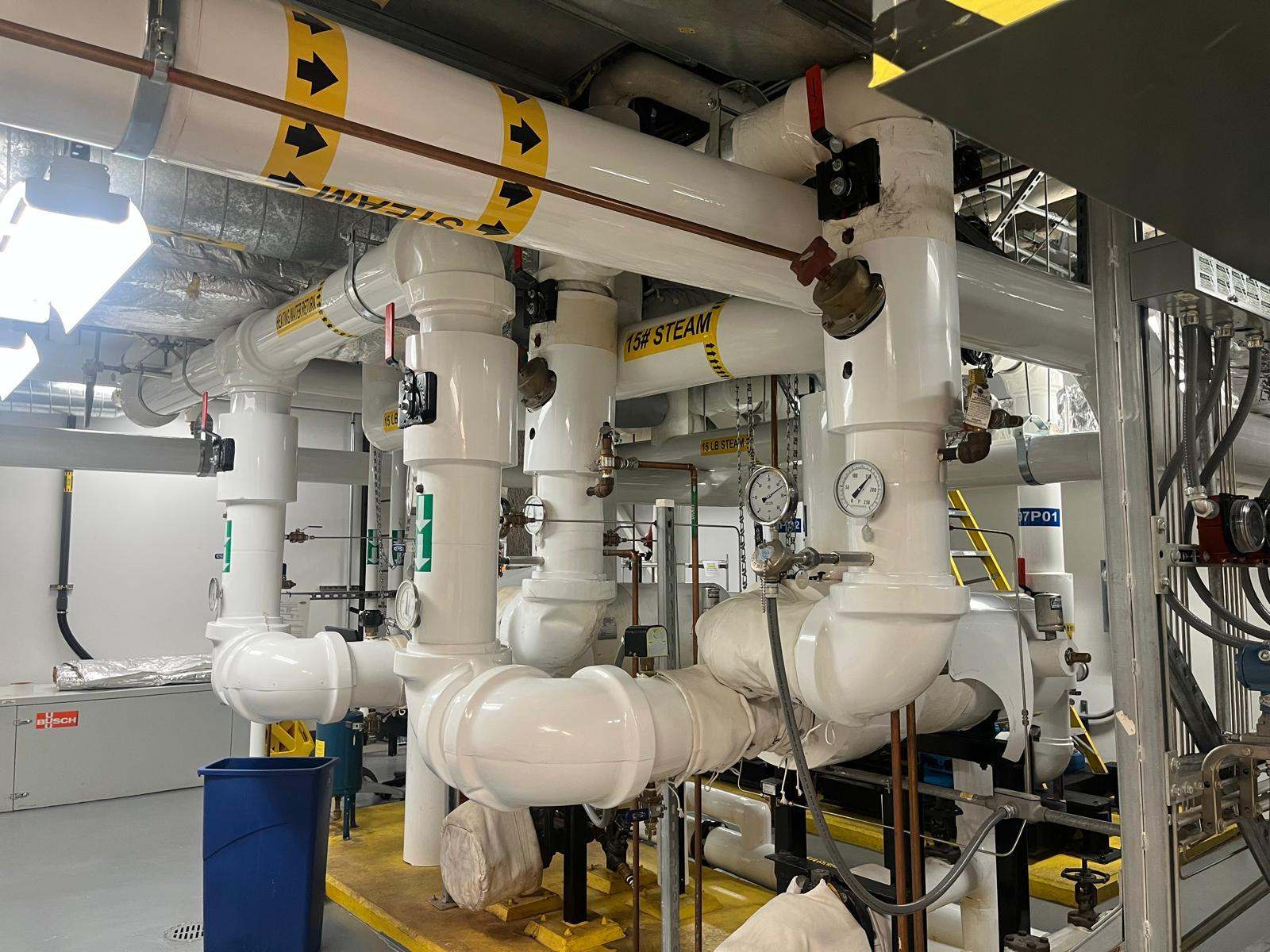
Insulation in a working plant
Most light industrial mechanical insulation falls into a few recurring categories, and they have different urgency.
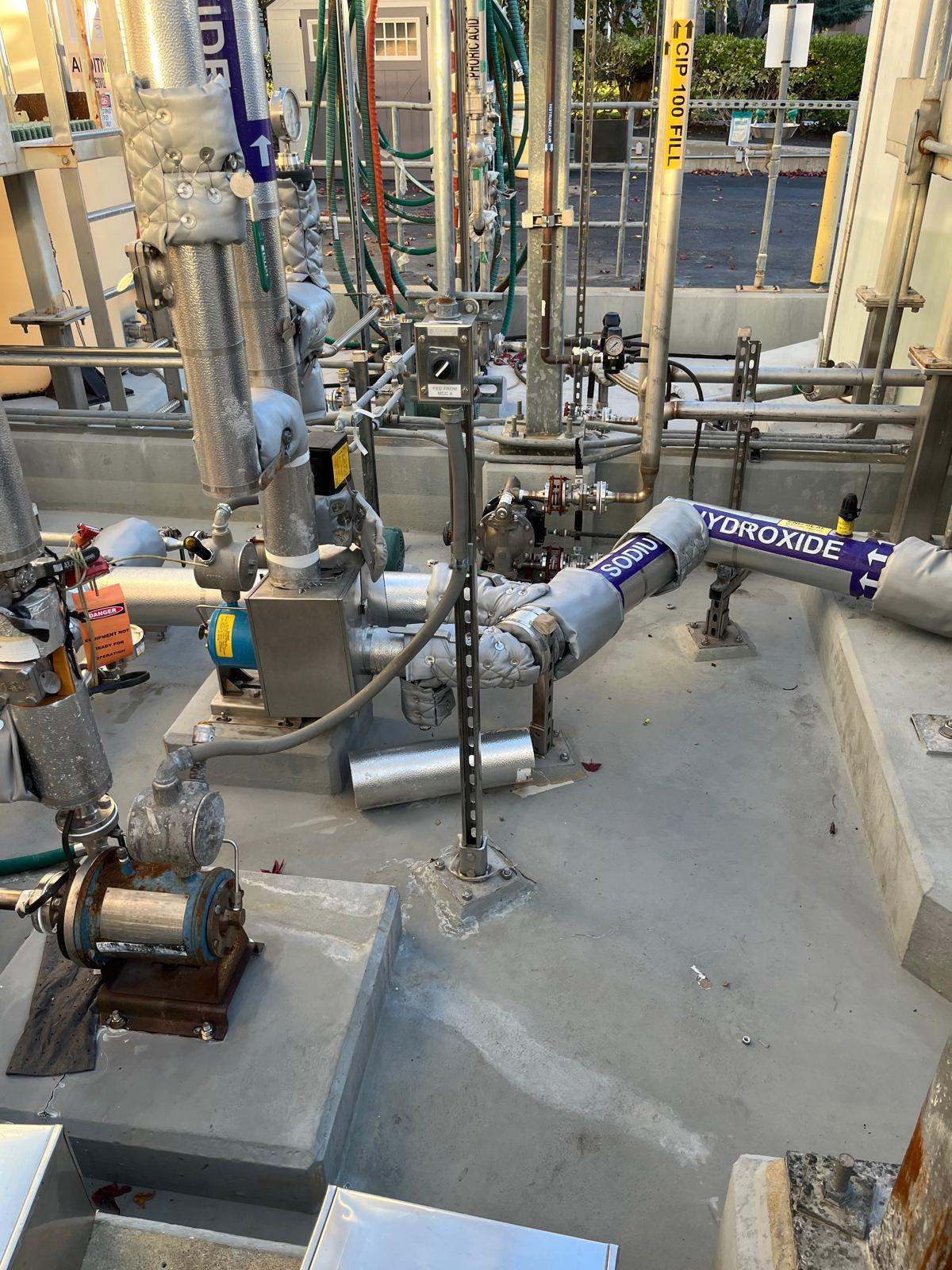
Personnel protection on hot lines and fittings, which is a safety item rather than an energy one and tends to be the reason we are called.
Removable covers on anything that gets opened during a turnaround. Hard insulation at a valve that is serviced quarterly is destroyed four times a year and usually not replaced after the second.
Cold and cyclic systems, where the vapor barrier rather than the insulation decides the service life, and where a line that runs cold then warm then cold again is the most demanding case in the trade.
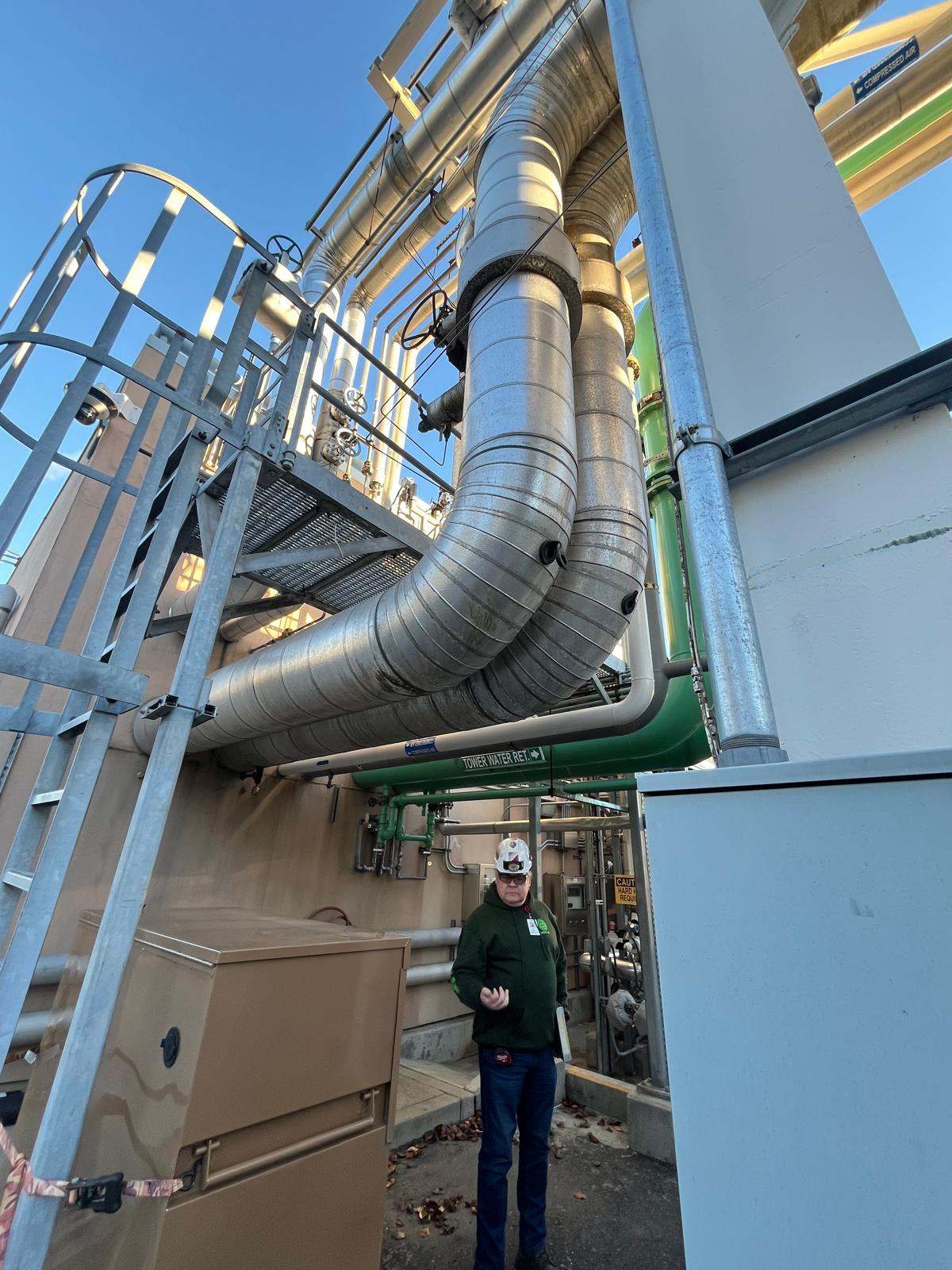
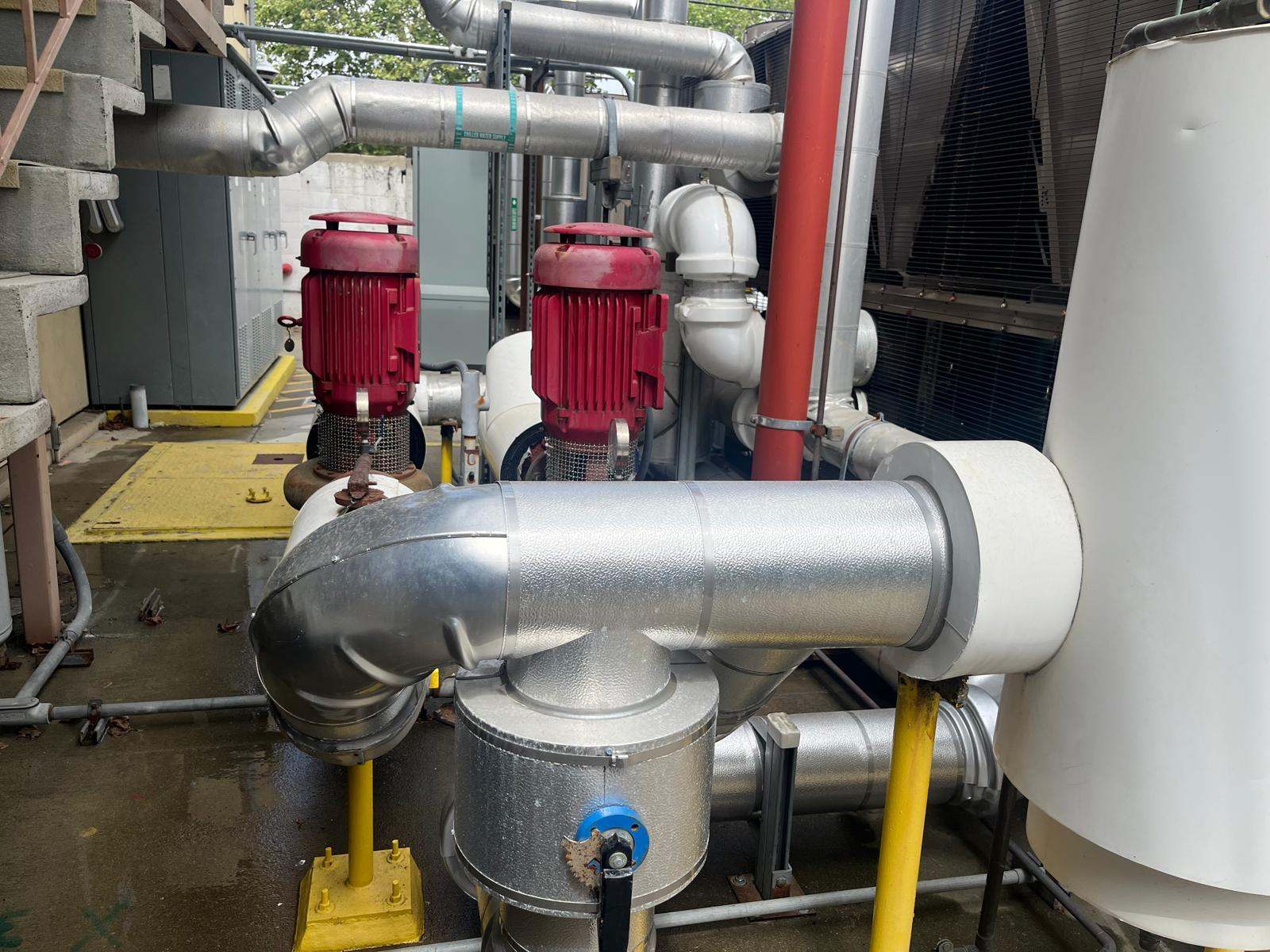
Outdoor and rooftop runs, where the jacketing is what fails first and where catching it early is the difference between resealing and replacing.
Piping that has to tie in
New equipment, a capacity change or a line replacement nearly always ends at a connection to something that is still running. The planning around that connection is where industrial piping jobs are won.
Spools fabricated, fitted and tested before the window opens. Isolation confirmed physically with plant staff rather than assumed from a P&ID. Valves and materials staged and counted. A written sequence with the point of no return identified, so everyone knows the moment after which the plant is committed.
When an outage overruns it is almost never because the welding was slow. It is because something that could have been resolved beforehand was discovered inside the window.
Our scope
- Mechanical insulation
- Removal and replacement
- Removable covers
- Metal jacketing
- Process piping
- Tie-ins
- Equipment sets
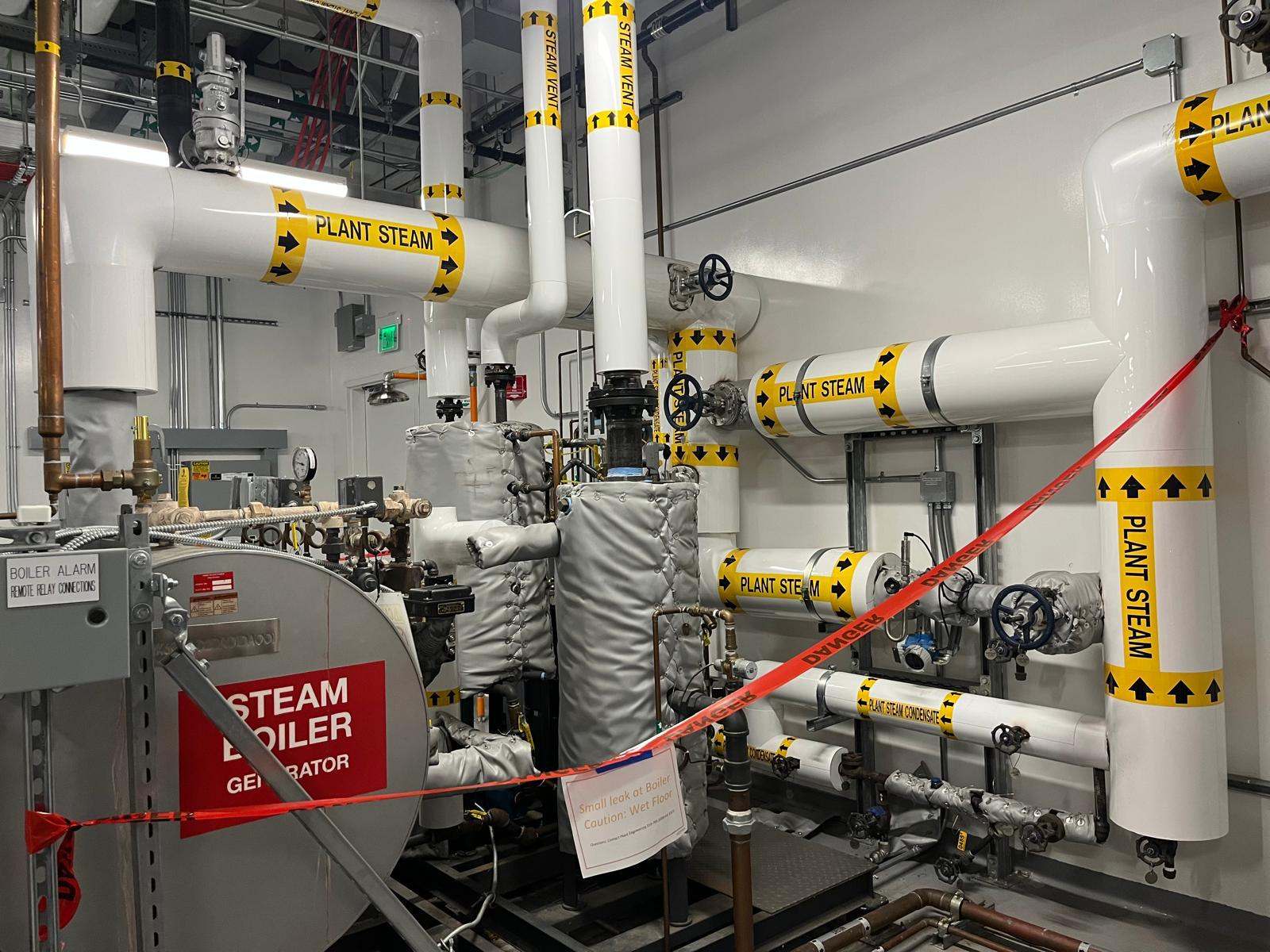
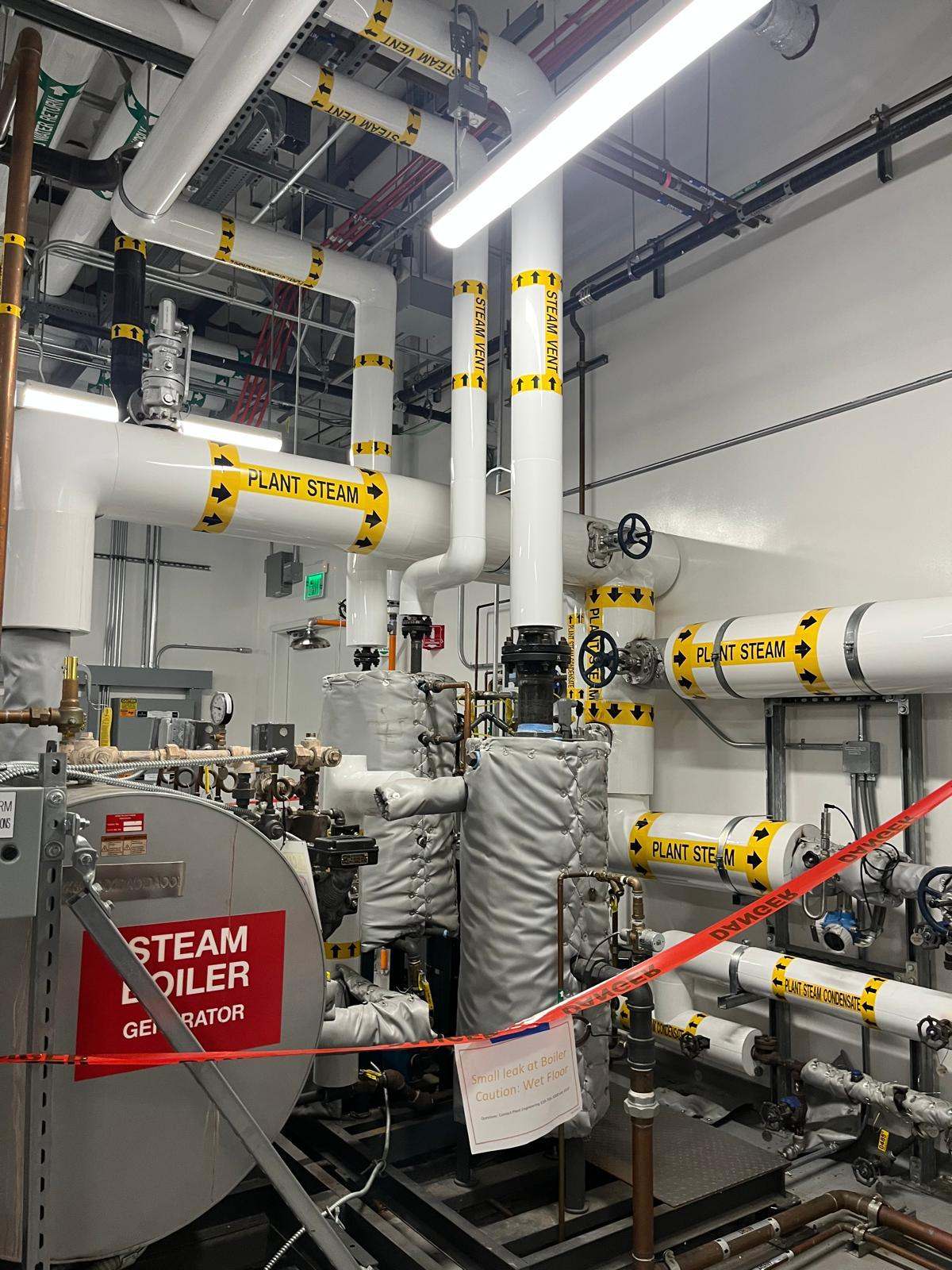
- Steam and condensate
- Compressed air
- Personnel protection
- Turnaround support
- Building scope
Questions we get asked
Working inside a running plant.
Can you work during a turnaround?
Yes, and it is a large part of what we do. Turnaround work is planned backwards from the window: what has to be prefabricated, what materials are staged where, how many people can physically work in the space at once, and what the sequence is hour by hour.
Give us the dates as early as you have them. The earlier we plan, the less has to happen inside the window.
What happens if you find asbestos?
Work stops at that location and it goes to a licensed abatement contractor for testing and removal before we continue. Abatement is a separately licensed and regulated activity and we do not perform it.
On older plants this is a realistic possibility rather than a formality, which is another argument for opening a representative section during the walk rather than finding out mid-outage.
Do your people have plant safety training?
We work inside your processes: hot work permits pulled through your system, lockout and tagout coordinated with your staff, job hazard analysis before each phase and daily toolbox talks.
Where your site requires specific training or orientation before access, tell us at award and we will complete it before mobilization rather than on the first morning.
Why do you want to walk the job before quoting?
Because on an operating plant the existing condition usually determines the scope more than the new work does. How much insulation has to come off, what state the pipe underneath is in, what access actually exists and where a crew can physically stand.
A number produced without that is a guess, and it will be revised. We would rather give you a real one up front.
From our jobs
Plant work.
Related
Other scopes we self-perform.
Next step
Give us the shutdown calendar first.
We price industrial work against the window, not against an eight hour day. Tell us when the plant comes down and for how long.