
Markets
Build around the forklift traffic.
Office build-outs, envelope work and mechanical upgrades inside distribution facilities that keep shipping through construction, where our site boundary has to stay out of the pick path.
The constraint is the floor, not the work
Distribution buildings are structurally simple and operationally unforgiving. The work itself, an office build-out, a mechanical upgrade, envelope repair, is ordinary construction. What is not ordinary is doing it in a building where forklifts are moving on a schedule somebody is measured against.
So the first thing we plan is not the sequence of trades. It is the footprint: where our boundary sits, how it is protected, how material comes in without crossing a pick path, and what happens during the hours the building is busiest.
A phasing plan that keeps the aisles open is worth more to most distribution clients than a faster schedule that does not.
Office and support build-outs
Most of what we do in these buildings is the finished space inside the shell: offices, break rooms, locker and welfare areas, training rooms, and the conditioned spaces that get added as a building's use intensifies.
That is general building work with mechanical and plumbing inside it, which is the combination our license was assembled for. Framing, interior finishes and millwork under B and C-6, plumbing and piping under C-36, and the insulation under C-2, from one company on one schedule.
Dust is the thing that gets you removed from site. In a building holding product, airborne dust from cutting, grinding or demolition is a contamination issue as much as a nuisance, and in a food or pharmaceutical distribution building it is a serious one. Containment, negative pressure where it is warranted, and scheduling the dirty operations into quiet hours are planning decisions, not site improvisations.
Mechanical upgrades in a working building
Heating, ventilation and conditioning get added or expanded as buildings take on more automation and more people. Most of that work happens overhead, above active operations.
Which means the real questions are about access rather than about the mechanical system: what has to be cleared beneath the work, how long an aisle can be closed, whether the lift can get where it needs to be, and what the drop zone looks like. Those are answered with your operations lead, not from a drawing.
Envelope and the quiet energy cost
Large-volume buildings leak heat and gain it through surfaces nobody looks at. Dock door seals that no longer seal, insulation disturbed by racking changes or earlier work, roof penetrations around equipment added over the years.
None of it is dramatic and all of it is continuous. Envelope work is rarely urgent, which is precisely why it accumulates. It is also the kind of scope that fits neatly into the quiet weeks when nothing else can be done, which makes it worth keeping on a list.

Our scope
- Office build-outs
- Break and welfare areas
- Interior fit and finish
- Framing and partitions
- Millwork and casework
- Plumbing
- Mechanical upgrades
- Duct insulation
- Envelope work
- Firestopping
- Phased occupied work
Questions we get asked
Building inside a live facility.
Can you work off-shift?
Yes, and in a building that ships continuously it is often the only sensible answer for the disruptive operations. Cutting, demolition and anything needing an aisle closed goes into the quiet window.
Tell us what your quiet window actually is. It is frequently narrower than people outside operations assume.
How do you keep dust out of our product?
Containment appropriate to what is stored, with negative pressure where the risk warrants it, dirty operations scheduled into quiet hours, and cutting done outside the building where that is practical.
In a food or pharmaceutical distribution building this is a contamination control question rather than a housekeeping one, and it belongs in the scope document.
Do you need the racking moved?
Sometimes, and it is the question most worth answering early because it is usually the most expensive constraint in the job. Moving racking means moving inventory, which is an operations cost far larger than the construction cost.
Often there is a sequence that works around it. We would rather find that during the walk than assume access we do not have.
Can you handle the whole build-out?
Yes. We hold the general building classification along with millwork, plumbing and insulation, so an office build-out inside a distribution shell sits almost entirely within what we self-perform.
Electrical and fire sprinkler are subcontracted, and we say so rather than implying otherwise.
From our jobs
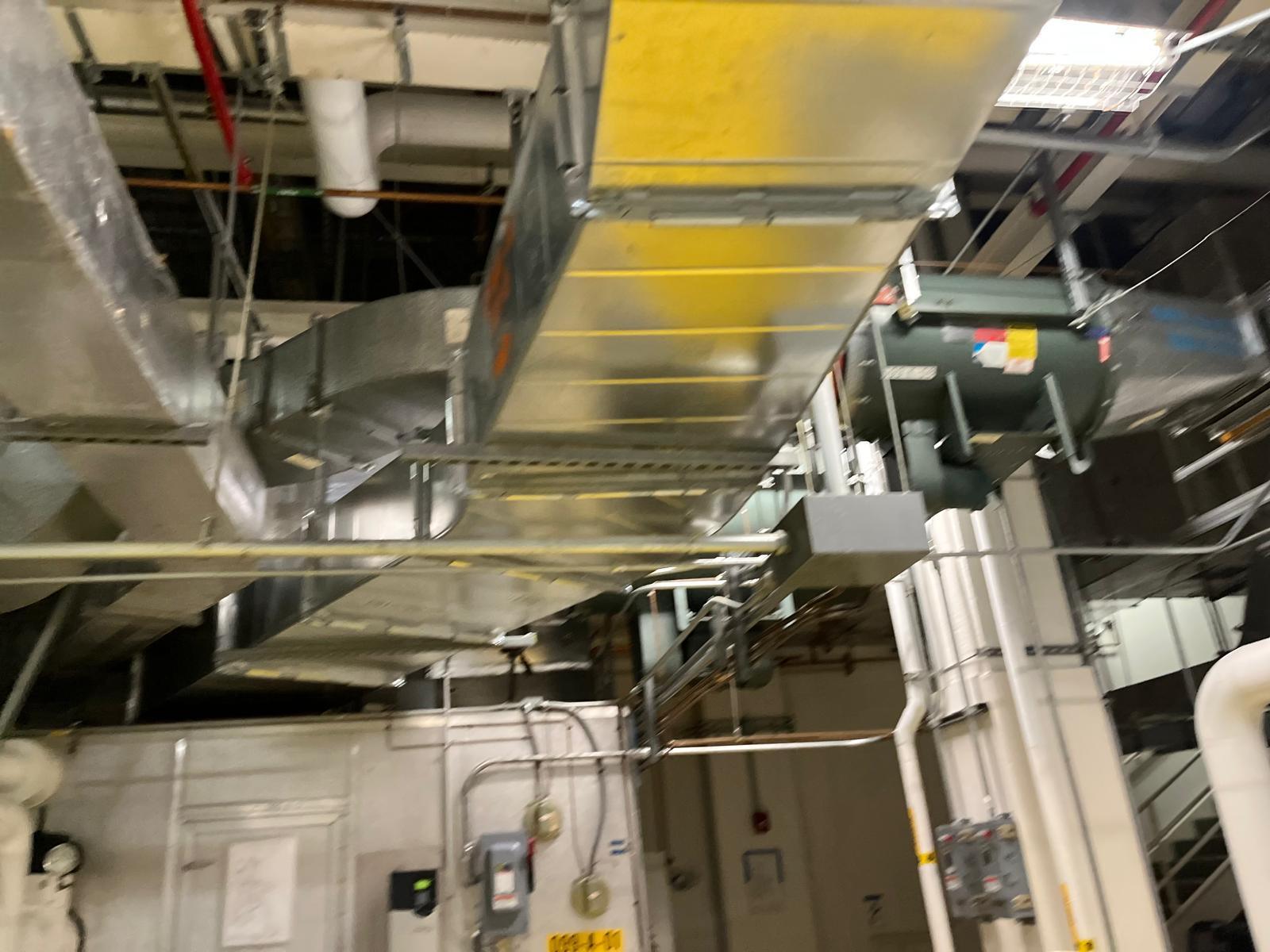
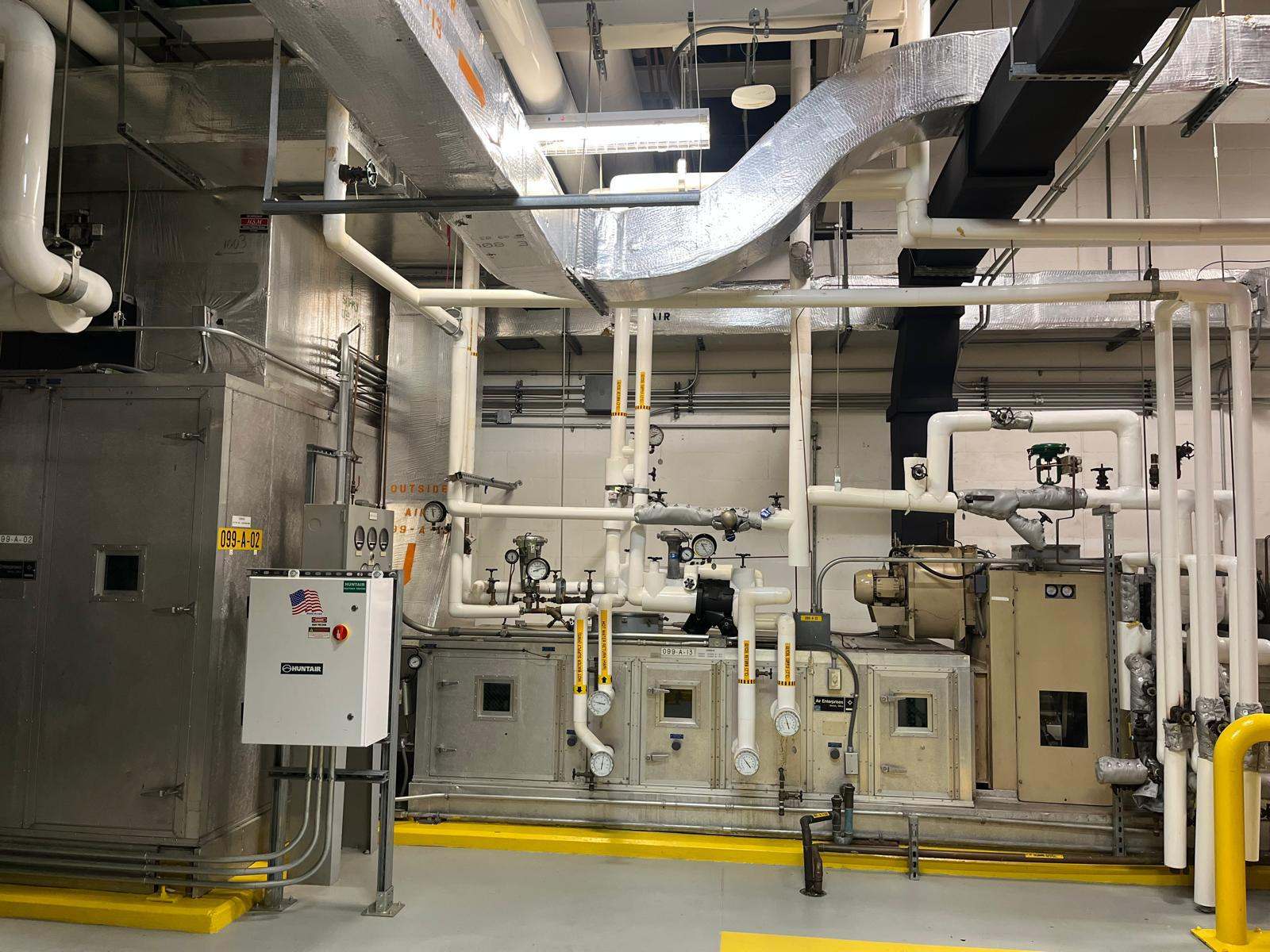
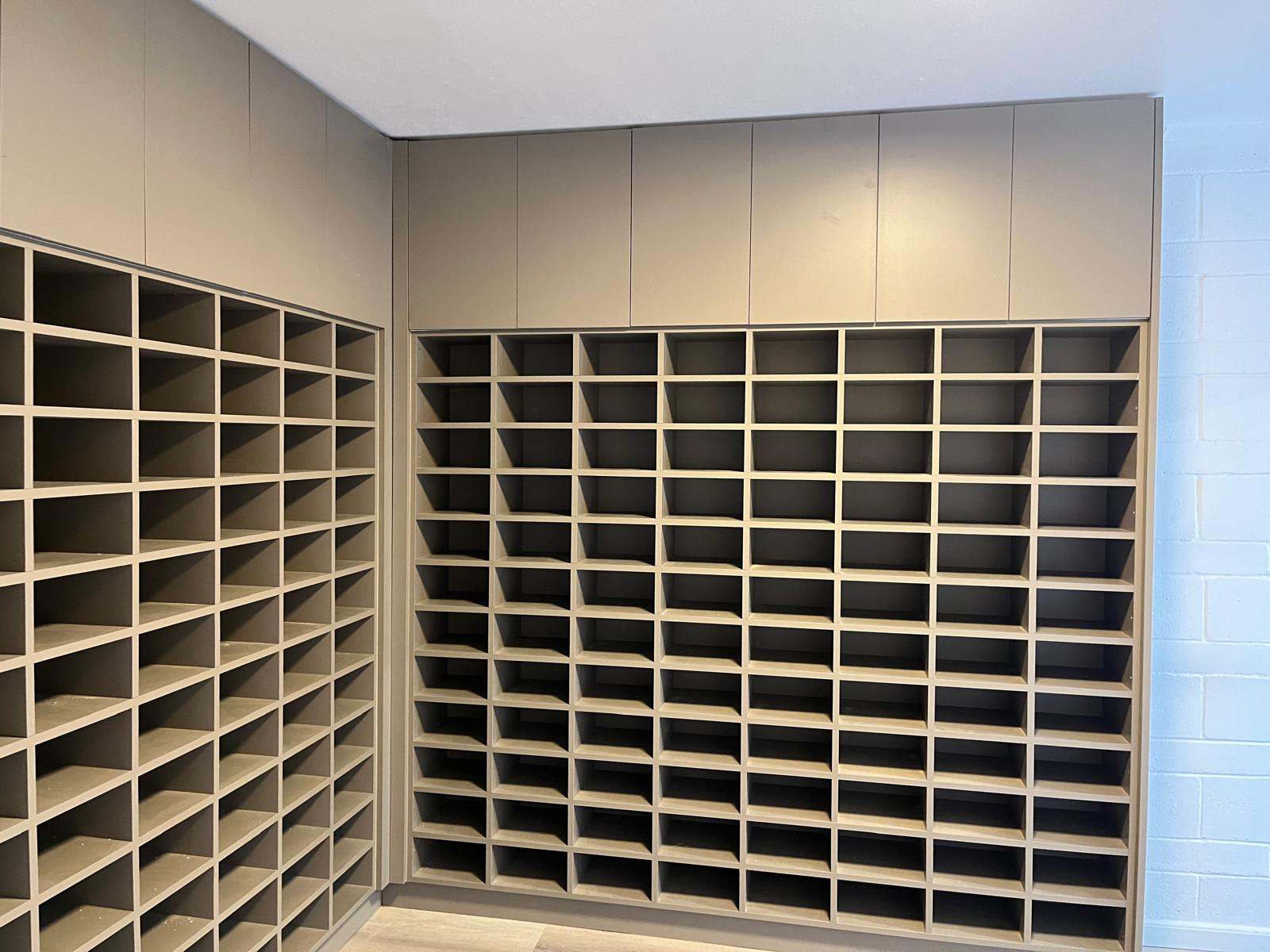
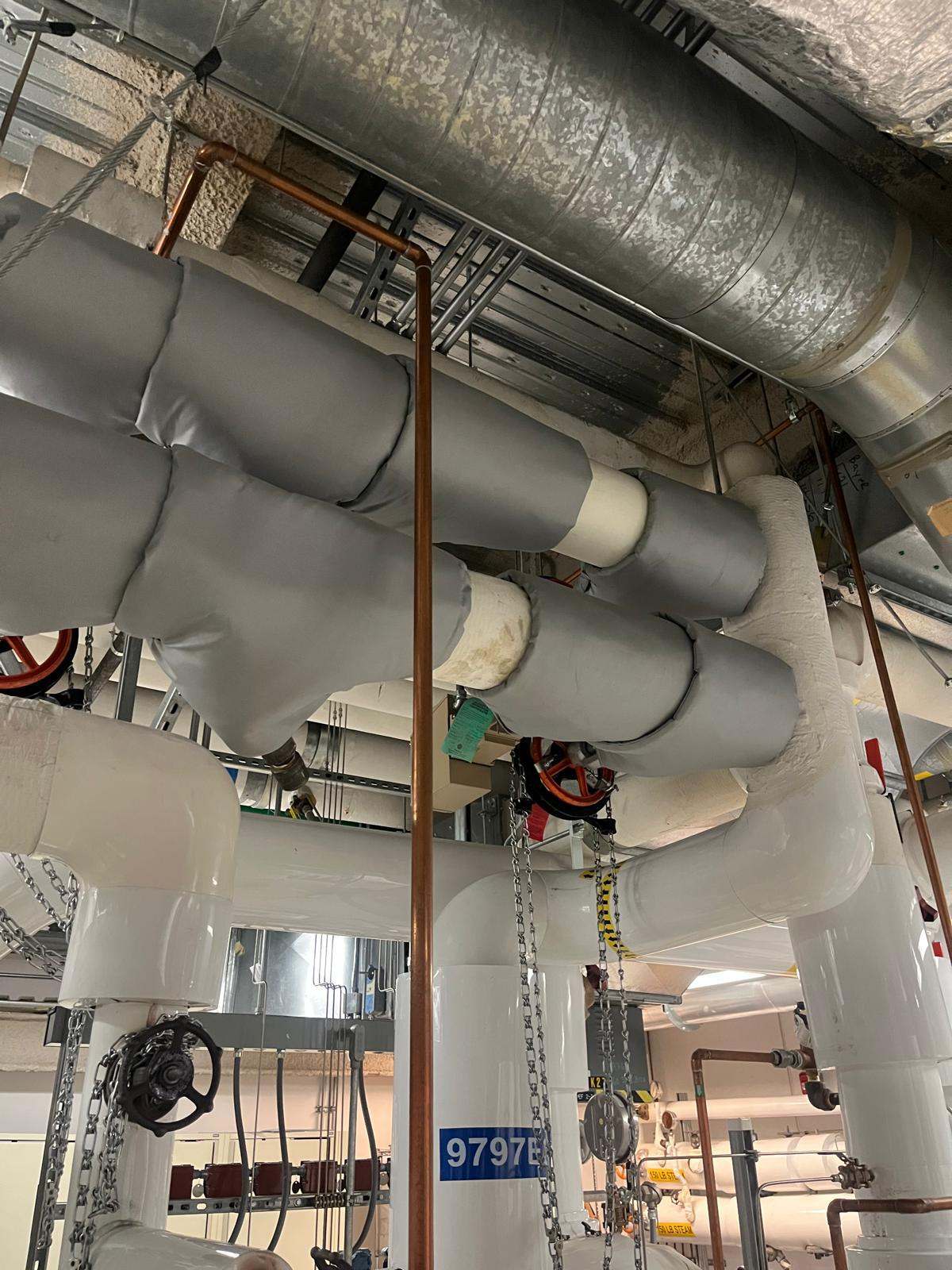
Interior and mechanical scope.


Related
Other scopes we self-perform.
Next step
Tell us what cannot be interrupted.
In a live distribution building the constraint is rarely the work. It is access, dust, and keeping the aisles open. We plan for that first.