
Markets
Cooling is the whole building.
Mechanical piping, chilled water systems, pipe insulation and HVAC on new builds and expansions. We self-perform the full mechanical scope and leave the electrical to the electricians.
The mechanical scope is the building
In most buildings the mechanical system serves the occupants. In a data center the mechanical system is what the building is for. Everything else exists to support the removal of heat from the racks, continuously, without interruption, forever.
Our scope is the water side and what covers it: chilled water piping, condenser and cooling loops, equipment connections, pipe insulation and the HVAC mechanical work around it. We self-perform the full mechanical scope under our own license and we leave the electrical to the electricians, which we say plainly because a contractor who claims everything is usually subcontracting most of it.
Condensation is the quiet problem
Every chilled water surface in the building is a potential condensation source, and a data hall is the last place you want water appearing.
Which makes the insulation on a data center cooling loop a different job from insulation on a commercial chilled water system. The vapor barrier has to be continuous and it has to stay continuous: sealed at every joint, every termination, every fitting and every support. A hanger that contacts cold pipe directly carries cold outside the barrier and sweats indefinitely, no matter how good the rest of the run is.
California is specific about this. Title 24, Part 6, Section 120.3(b) requires chilled water and refrigerant suction piping outside conditioned space to include or be protected by a Class I or Class II vapor retarder, with all penetrations and joints sealed, and states that adhesive tape shall not be used to provide weather protection. In this market that is not a compliance detail. It is the difference between a dry white space and an incident report.
Why we insulate what we pipe. On a cooling loop the pipe and its vapor barrier are one system, and splitting them between two companies puts the most failure-prone interface in the building on a contractual boundary. We hold C-36 and C-2 on the same license, so the barrier is detailed by the people who installed the pipe, and the insulation follows the pressure test rather than waiting for a second mobilization.
The last connection to the equipment
As liquid cooling moves into more halls, the industry has converged on a recognized scope gap: the short run between the facility water loop and the vendor's packaged cooling equipment. The hoses, quick disconnects, strainers and balancing valves in that gap frequently belong clearly to nobody.
The mechanical contractor's scope stops at a flange. The equipment vendor's scope starts at their skid. Between them sits a short, fiddly, high-consequence connection near live infrastructure, and the consequences of leaving it ambiguous are leaks where leaks are least acceptable, and commissioning holds because a unit cannot be started until its loop connection is verified.
We would rather own it. When we price a data center scope we ask explicitly where the mechanical scope ends and what the equipment vendor is supplying, and if that boundary is undefined we will say so at bid time rather than at commissioning.
Expansions are harder than new builds
A greenfield hall is a construction project. Adding capacity to a running facility is a sequencing problem wearing a construction project's clothes.
Tying new piping into a live cooling loop means isolation confirmed physically rather than assumed from a drawing, spools prefabricated and tested before the window opens, and a written sequence with the point of no return identified in advance. Hot work in a live facility goes through your permit process, not ours. Everything that can happen outside the window happens outside the window, because inside it there is no recovering lost time.
Our scope
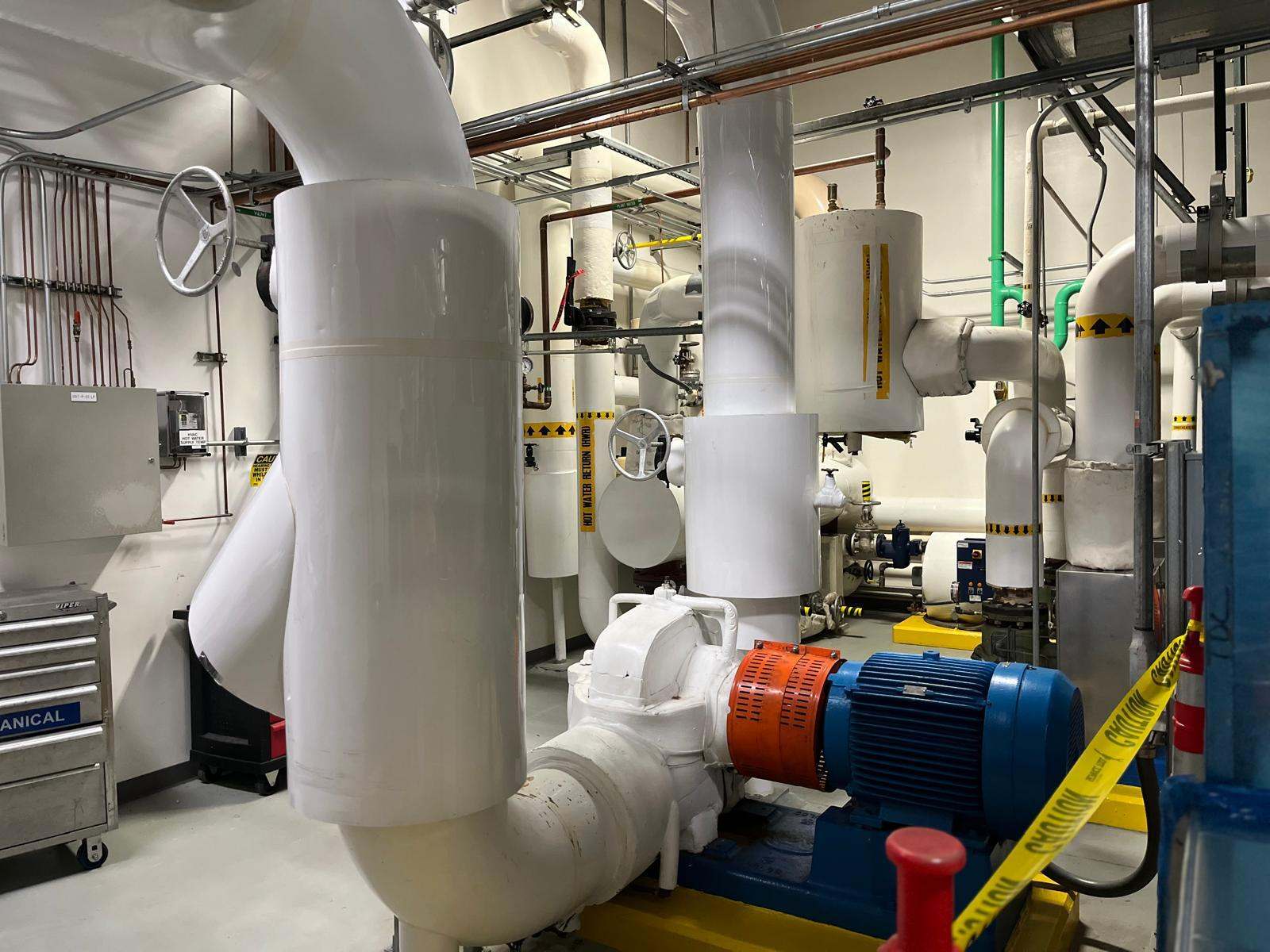
- Chilled water piping
- Condenser loops
- Equipment connections
- Pipe insulation
- Vapor barriers
- Metal jacketing
- HVAC mechanical
- Prefabricated spools
- Tie-ins
- Pressure testing
- Rooftop piping
Questions we get asked
Data center mechanical work.
Do data center chilled water pipes need insulation?
Yes, and for condensation control at least as much as for energy. Any surface below the room dew point will collect water, and in a data hall that is unacceptable regardless of what it costs in cooling efficiency.
Title 24 Section 120.3 requires insulation on chilled water distribution, and 120.3(b) adds the vapor retarder requirement for piping outside conditioned space. The code floor and the operational requirement point the same direction here.
Who connects the cooling equipment to the facility loop?
Whoever the contract says, and the honest industry answer is that it is often unstated. That short run between the facility piping and the vendor's skid is a known gap, and it causes leaks and commissioning delays precisely because each party reasonably believes it belongs to the other.
Settle it in writing at bid time. We are happy to carry it, and we will raise it if your documents leave it open.
Can you do hot work in a live facility?
Where your process permits it, through your process. Hot work permits get pulled through the facility's own system rather than ours, and in many halls the answer is that certain work simply cannot happen while equipment is live.
Which is why we lean on prefabrication. The more that is welded and tested in a shop, the less has to happen next to running equipment.
Why prefabricate piping?
Because shop conditions beat field conditions on quality, and because it moves work out of the window. A spool fabricated, tested and delivered ready to set turns hours of in-place work into a lift and two joints.
On an expansion inside a live facility, that trade is almost always worth making even when the shop hours cost more than the field hours would have.
What do you need to quote a data center scope?
The drawings, the equipment schedule, and the constraints: what is live, what outage is available, what the permit process is, and where the equipment vendor's scope starts.
That last question is the one that most often has no answer yet, and it is the one most worth resolving before anyone prices anything.
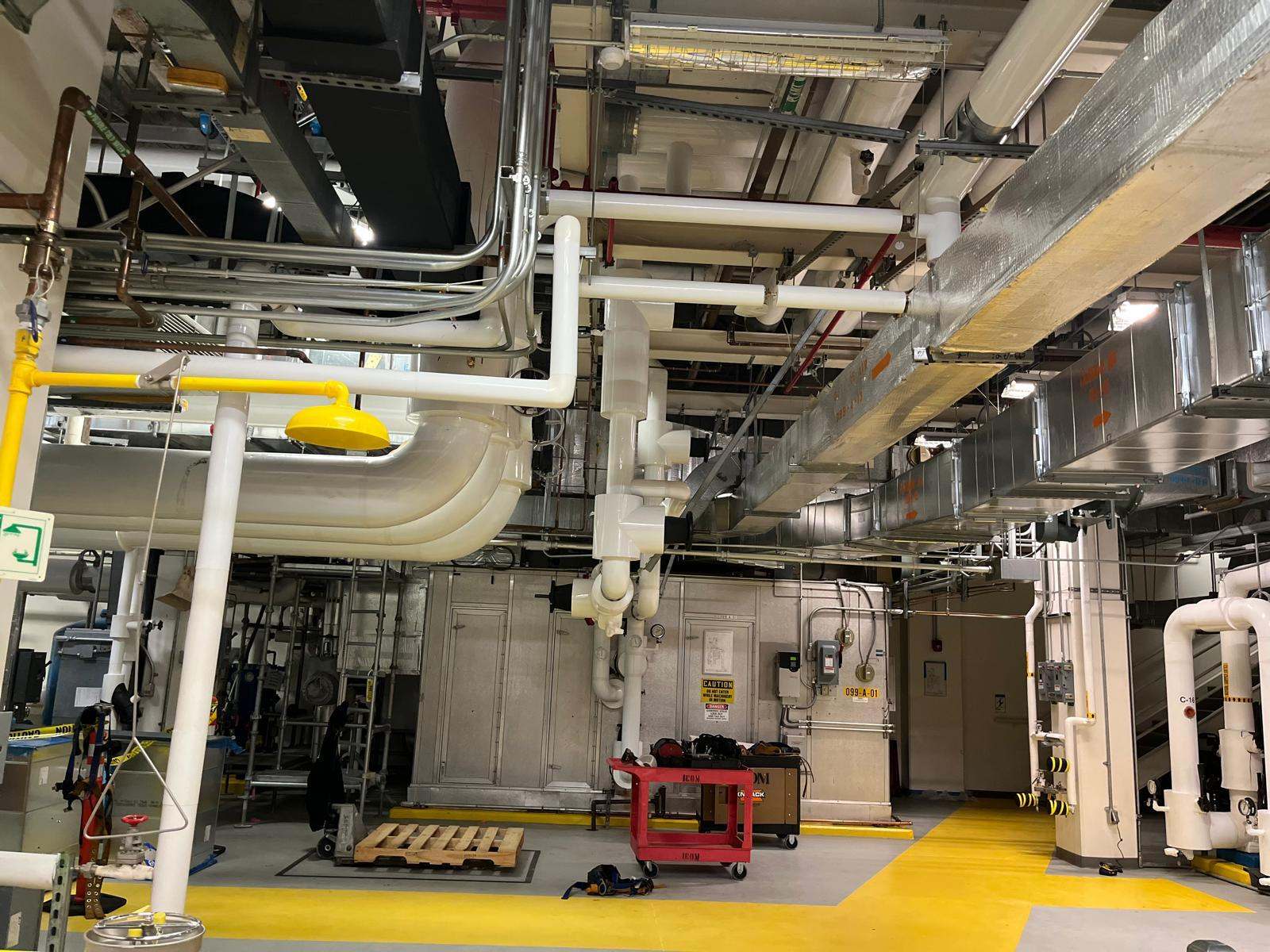
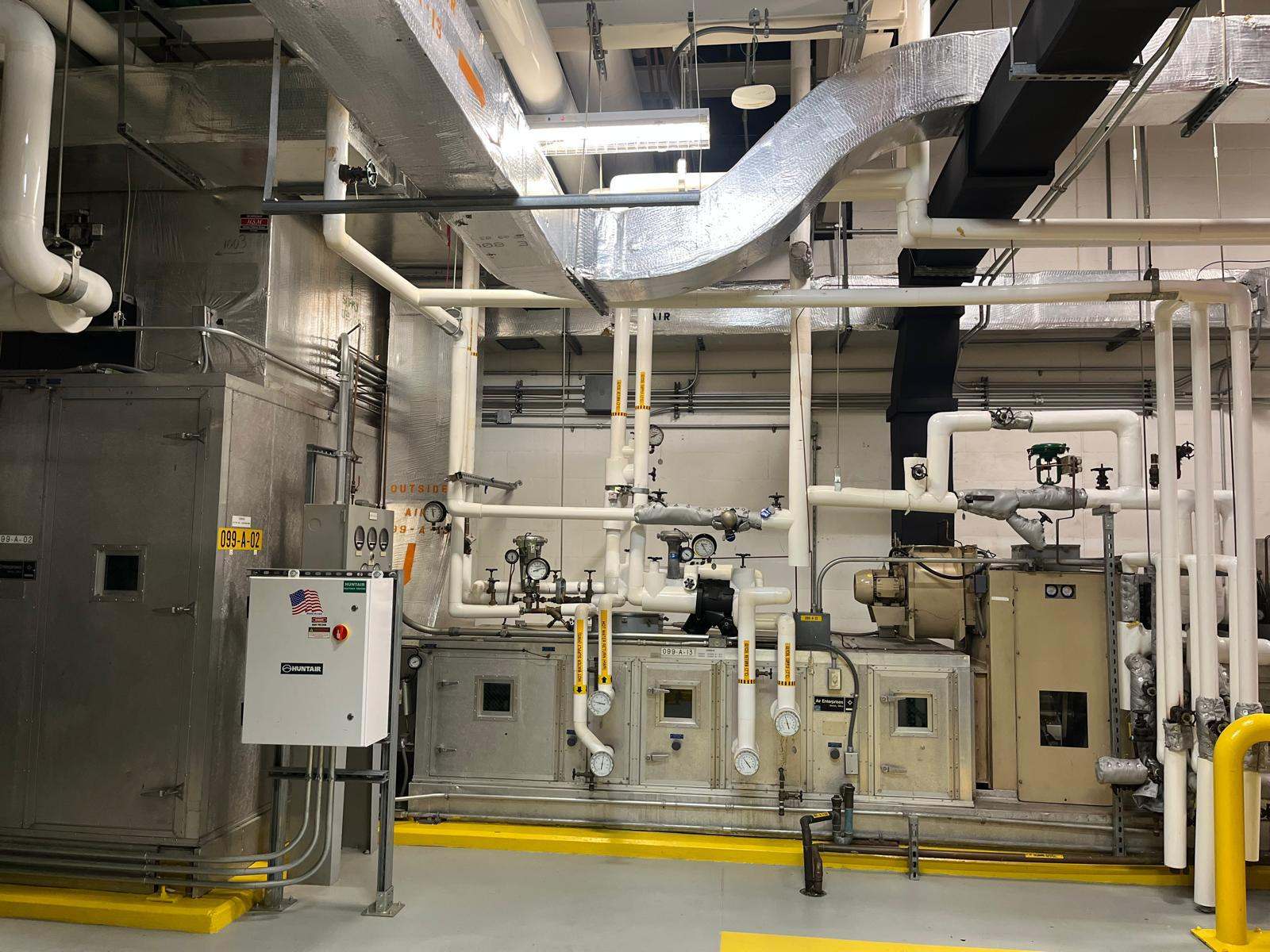
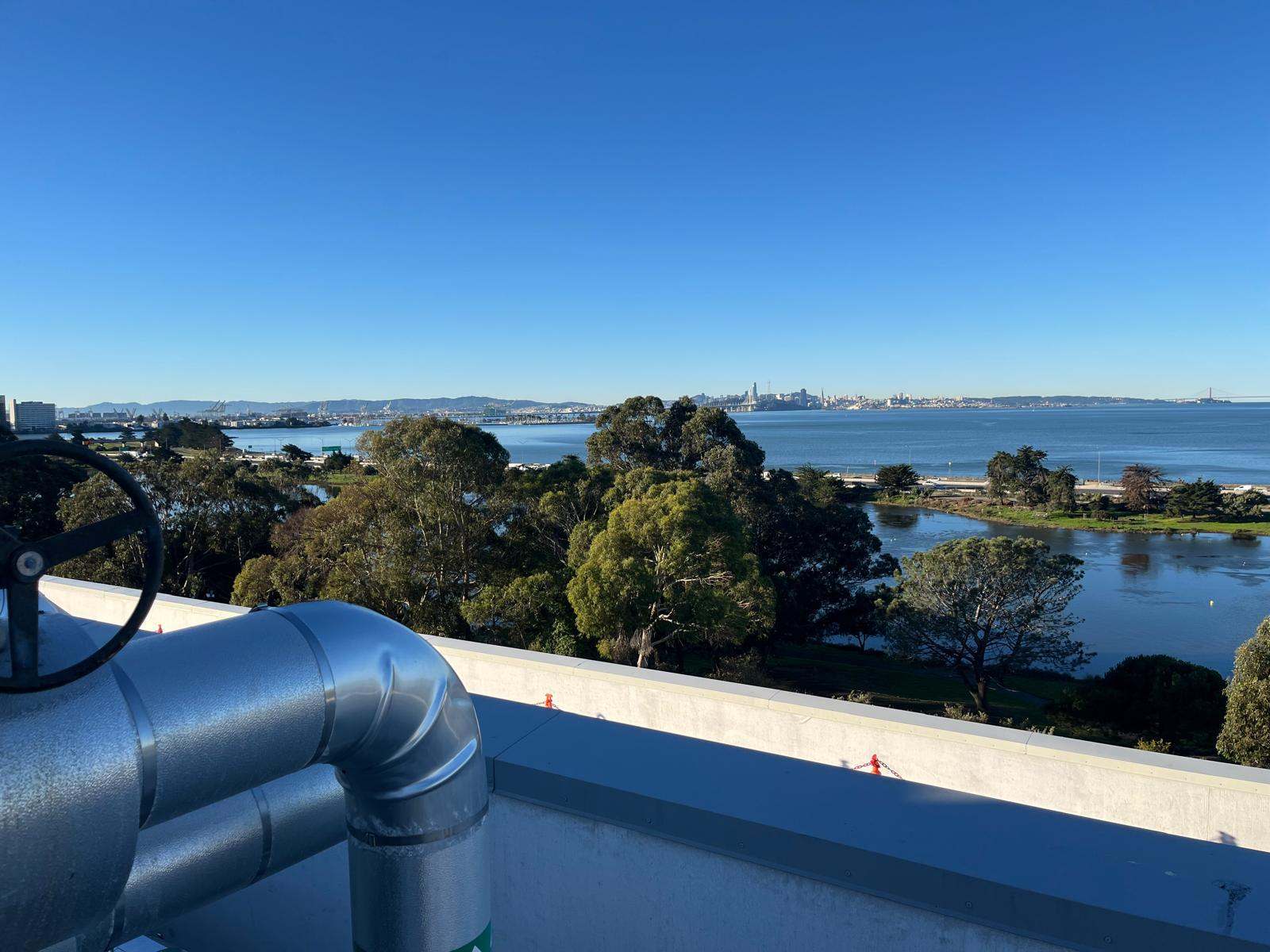
From our jobs
Mechanical work in operating facilities.


Related
Other scopes we self-perform.
Next step
Expansions are harder than new builds.
Tying new capacity into a live cooling loop is a sequencing problem before it is a piping problem. Send us the one-line and the outage constraints.