
Markets
Wet, chemical, and never off.
Treatment plants and pump stations where piping, insulation and corrosion protection have to survive a wet, chemically aggressive environment and a plant that cannot be taken offline.
A plant that cannot be switched off
Treatment plants have the least forgiving operating constraint of any facility we work in. A data center can fail over. A factory can take a weekend. A treatment works is processing whatever arrives, continuously, and what arrives does not pause while a contractor works.
So the work gets built around redundancy rather than around shutdown. One train comes out of service while the others carry the load, which means the window is defined by the plant's hydraulic capacity, not by a calendar. That is a conversation with your operations staff before it is a conversation about scope.
Why materials matter more here
The environment is the defining feature of this market. Constant humidity, washdown, and air carrying hydrogen sulfide and chlorine compounds that attack metals far faster than ordinary industrial air does.
The practical consequences show up in material selection rather than in method. Aluminum jacketing has a hard time in this environment, which is why stainless jacketing under ASTM C1767 is so often the right answer despite the cost. Fastening and banding have to be considered for the same reason, because a stainless jacket held on with the wrong bands fails at the bands.
Where insulation contacts austenitic stainless steel, the chloride question behind ASTM C795 becomes a live concern rather than a specification footnote, because chlorides are abundant in this setting.
Corrosion under insulation is the long game. A treatment plant combines everything that drives it: persistent moisture, aggressive chemistry, and lines that cycle in and out of the temperature range where carbon steel corrodes efficiently while wet. The industry standard covering this is NACE/AMPP SP0198, which approaches corrosion under thermal insulation as a system rather than a material choice. On a plant with decades of service ahead, the inspection interval matters as much as the original installation.
What we carry here
Mechanical insulation and jacketing on process piping, digesters and heated systems. Process and service piping, pump and equipment connections, and tie-ins to lines that stay in service. Corrosion protection as part of the insulation system rather than as a separate afterthought. And where the work includes structures, our general building classification covers the building scope around the mechanical work.
Electrical, instrumentation and the specialized process equipment belong to other trades, and we say so.
Public work has its own rhythm
Much of this market is municipal, which brings prevailing wage, public bidding procedures, documentation requirements and an approval chain that is longer than a private client's. None of that is difficult. All of it takes time that has to be in the schedule rather than discovered.
Where a project carries a project labor agreement, we will tell you plainly where we stand on it rather than leaving it to be worked out after award.
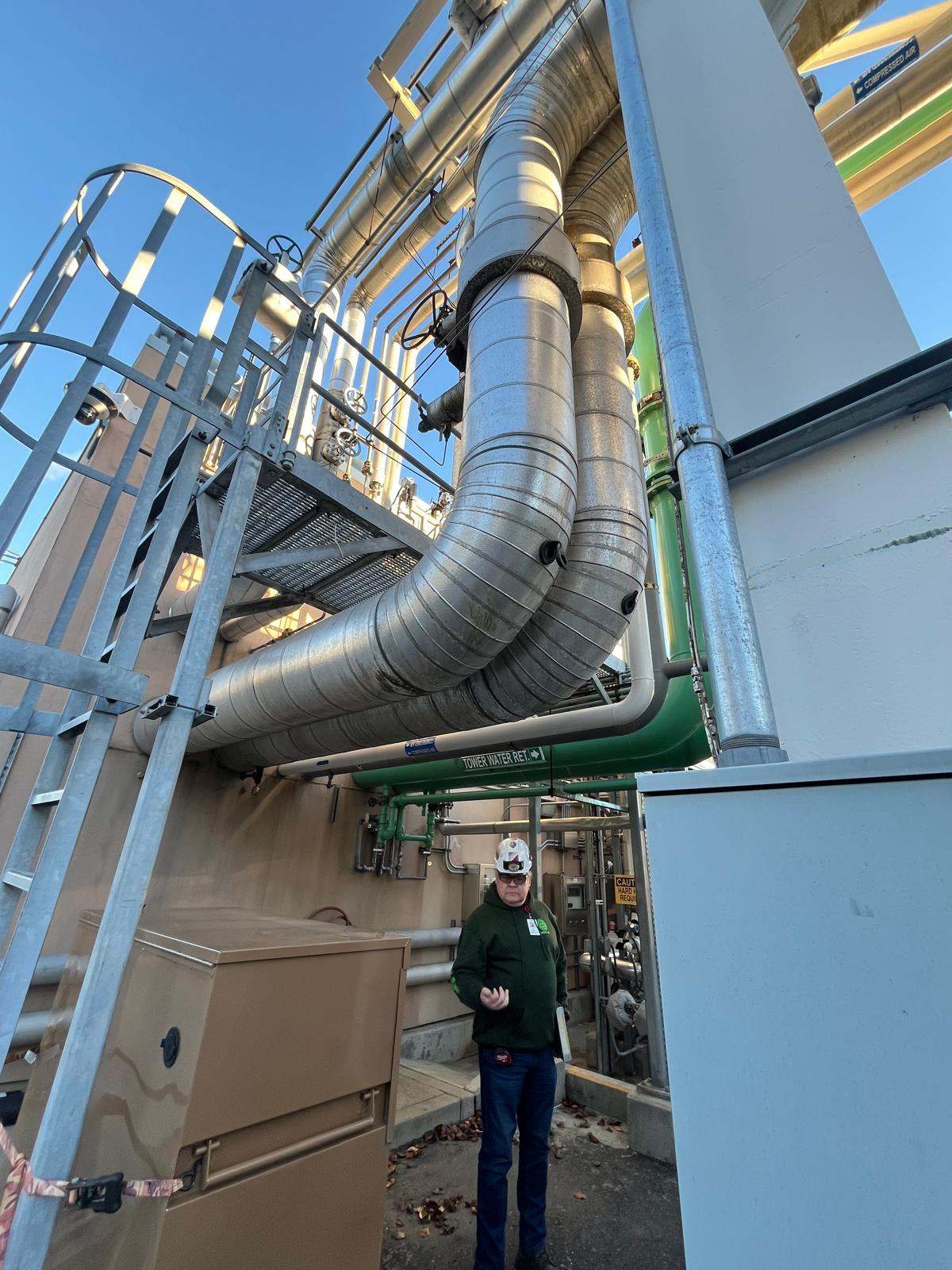
Our scope
- Process piping
- Mechanical insulation
- Stainless jacketing
- Corrosion protection
- Pump connections
- Heated systems
- Tie-ins
- Removable covers
- Building scope
- Structures and enclosures
Questions we get asked
Treatment plant work.
Why does jacketing keep failing at our plant?
Usually because aluminum was specified where the air chemistry does not allow it. Hydrogen sulfide and chlorine compounds attack aluminum, and once the jacket is pitted, water gets into the insulation and the real damage starts on the pipe underneath.
Stainless under ASTM C1767 costs more and lasts in this environment. On a plant with a long service life the comparison is not close.
Can work happen without taking a process offline?
Often, by working one train at a time while the others carry the load. The limit is your hydraulic capacity rather than our schedule, and it is set by your operations staff.
That conversation belongs at the start. A sequence built around what the plant can actually spare is worth more than a faster one that it cannot.
How do we know if corrosion under insulation is already happening?
You generally do not from the outside, which is the whole problem. Staining at seams and insulation that feels soft are the visible late stages. By then there is water against the pipe and has been for a while.
Inspection means opening representative sections on a planned interval, prioritizing the lines most at risk: those that cycle, those outdoors, and those where the jacket has been disturbed. NACE/AMPP SP0198 treats this as a systems problem, and that is the right way to budget for it.
Do you work on public projects?
Yes. Prevailing wage, public bidding and the longer documentation and approval chain that comes with municipal work are all normal parts of this market.
Where a project carries a project labor agreement, ask us directly and we will give you a straight answer about where we stand before you spend time on a bid.
From our jobs
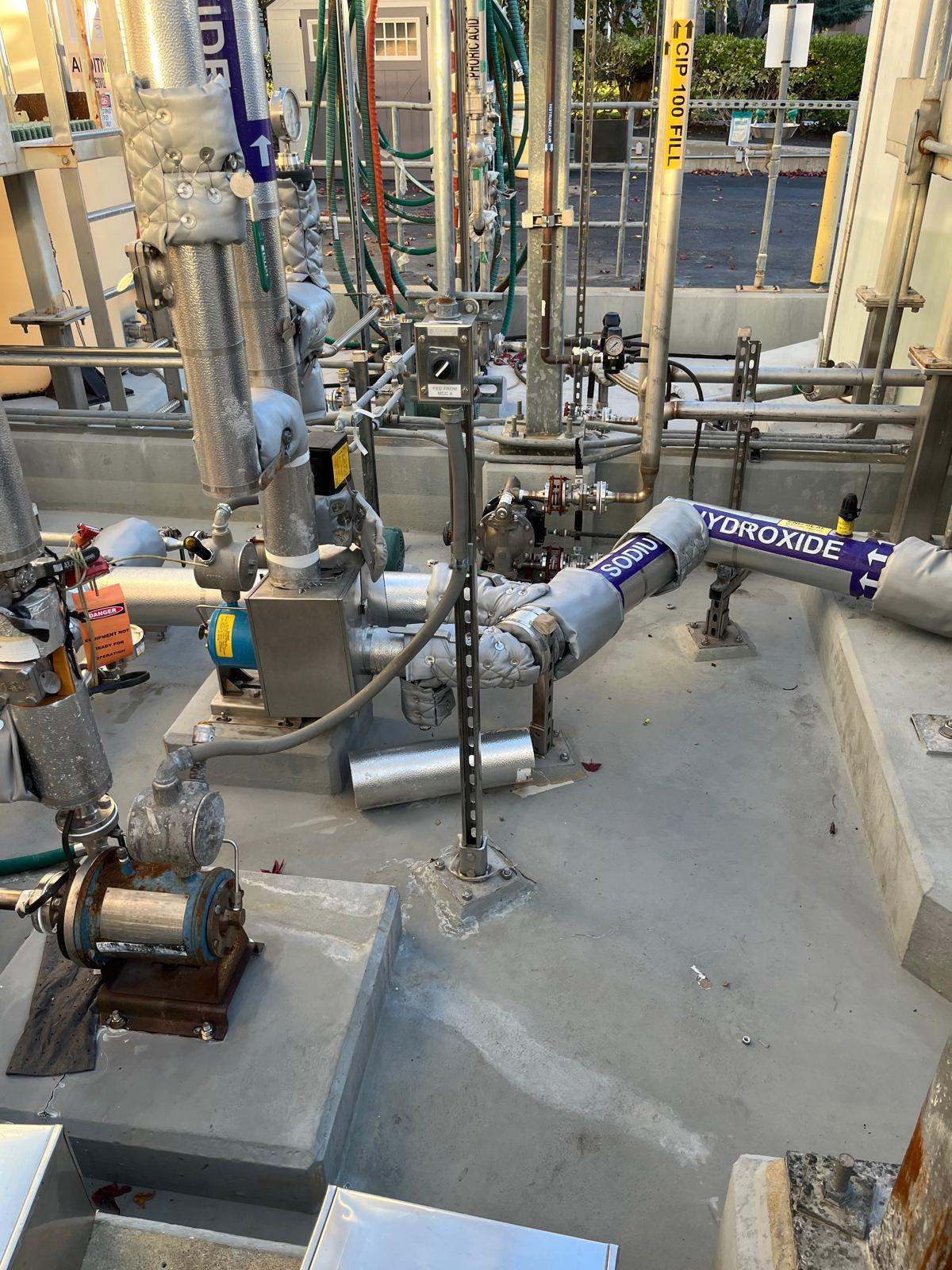
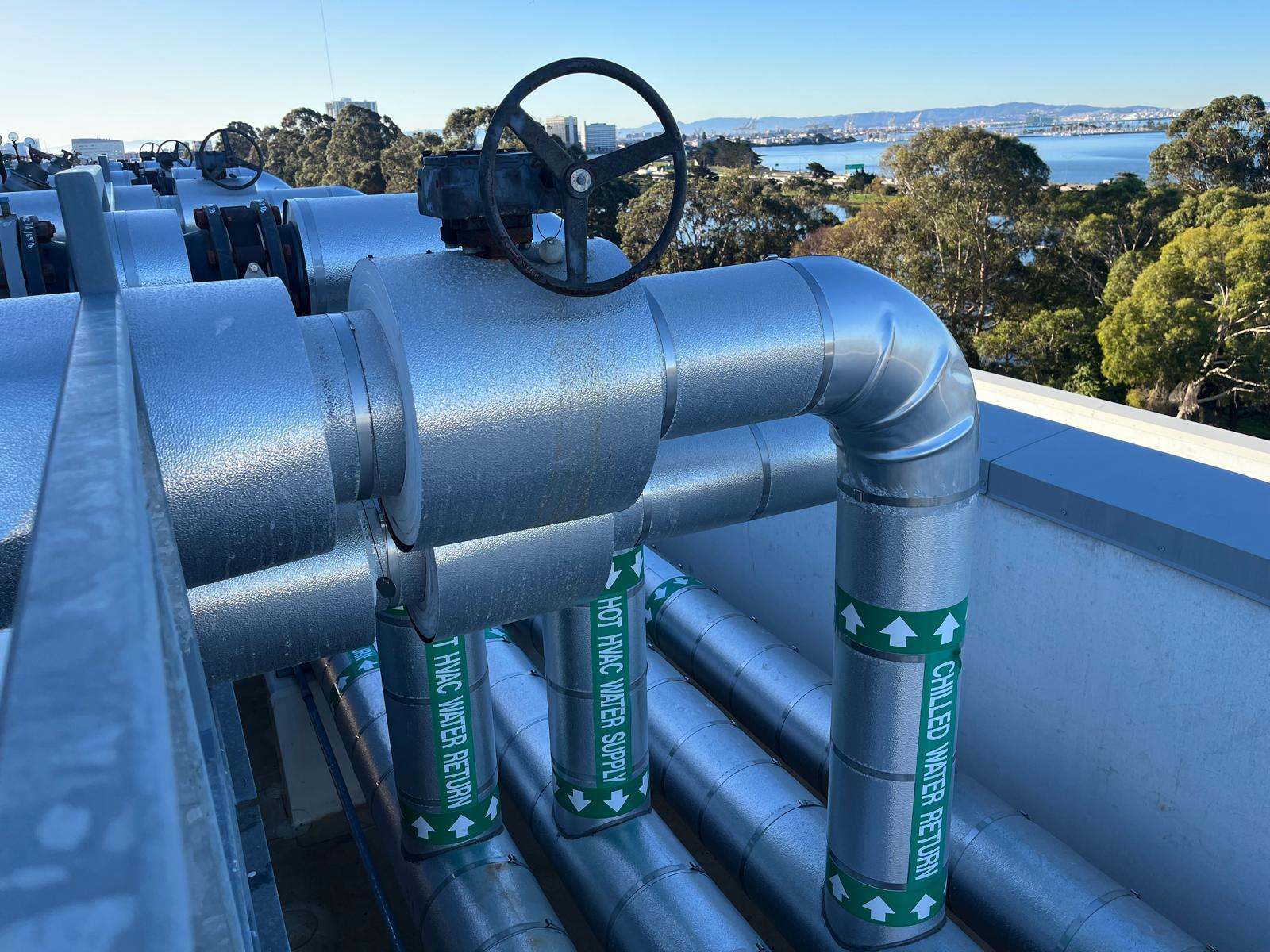
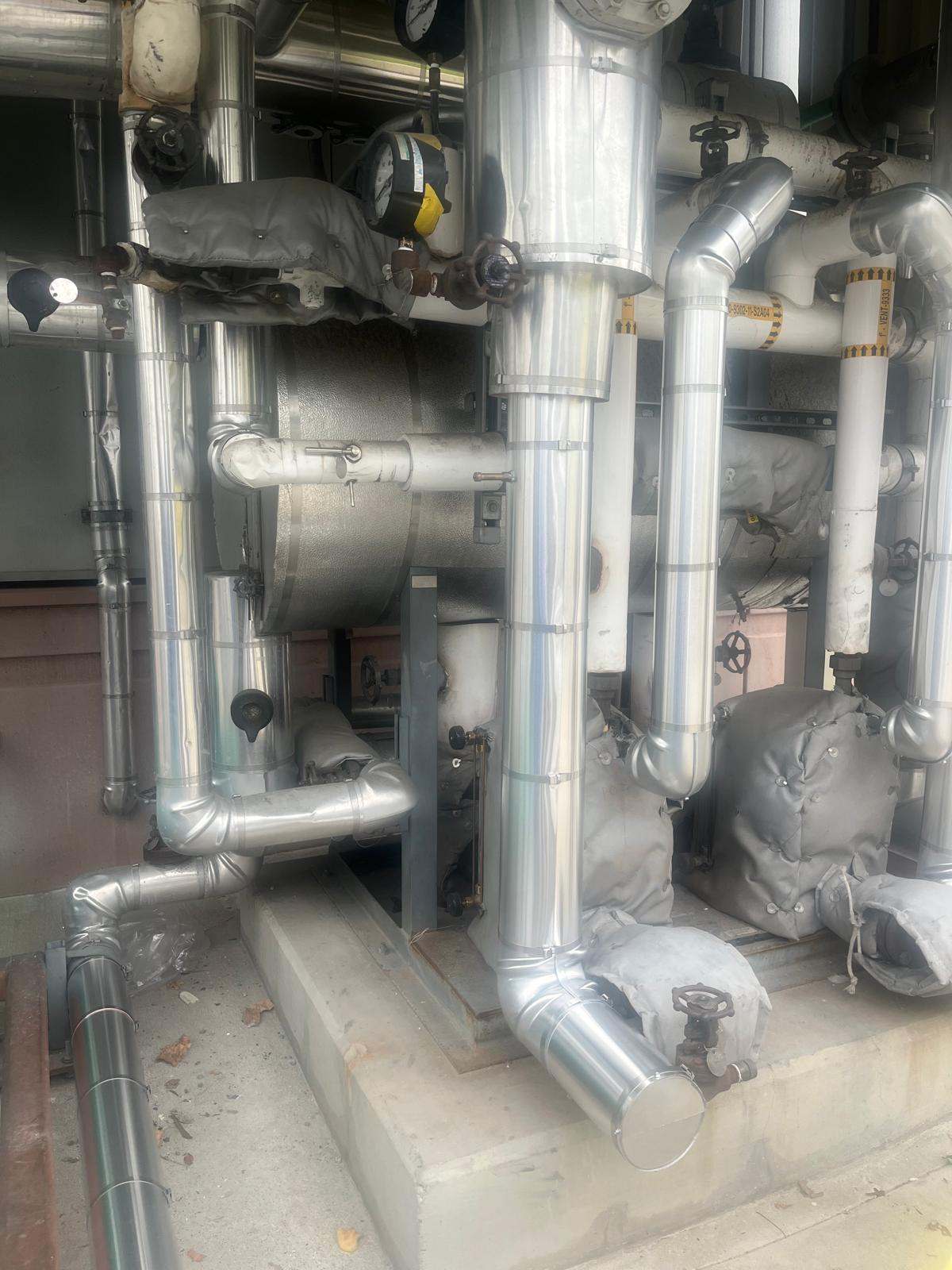
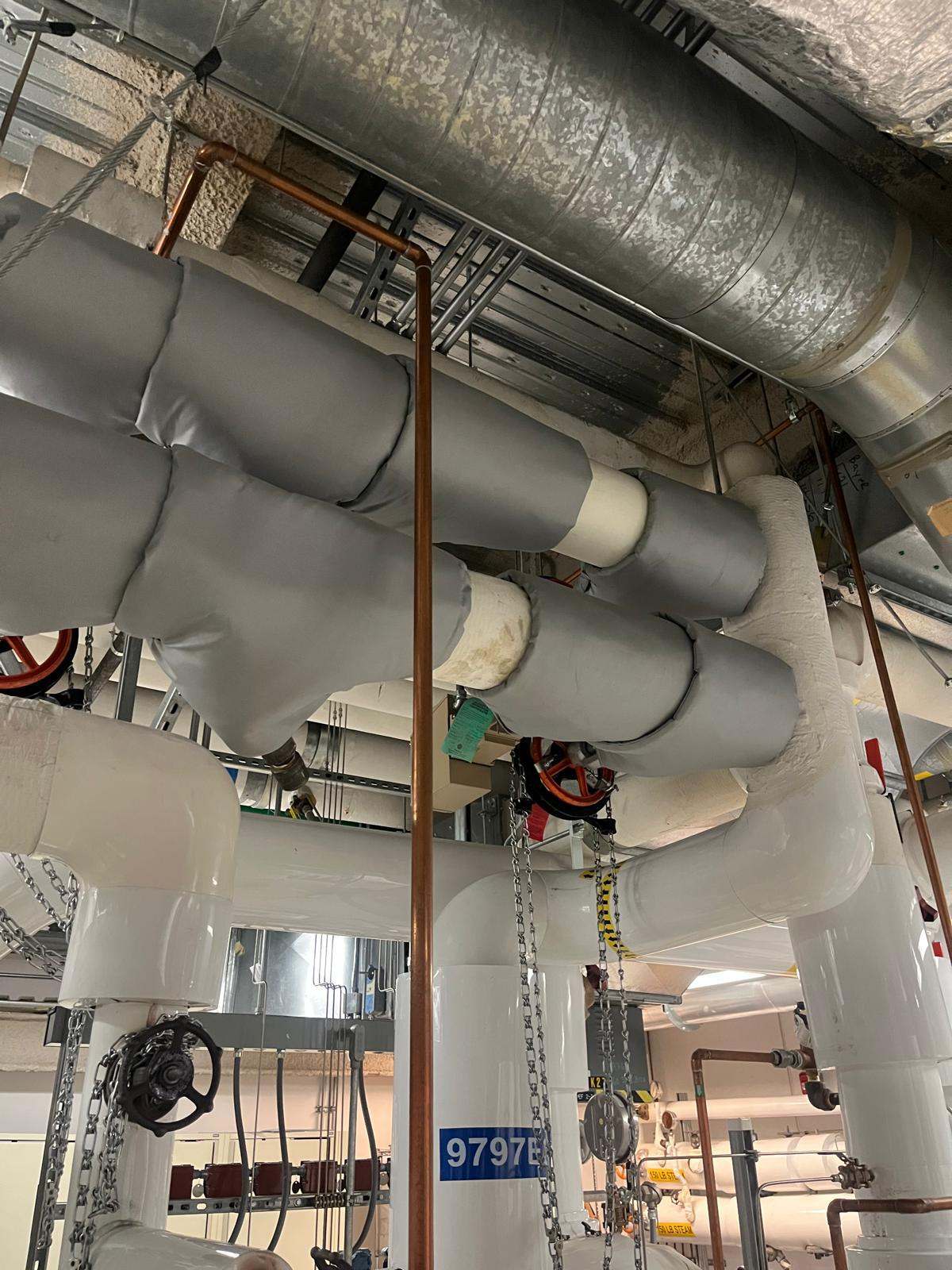
Piping, insulation and jacketing.


Related
Other scopes we self-perform.
Next step
Corrosion is the long game here.
Material selection matters more in a treatment plant than almost anywhere else. Tell us the environment and we will tell you what will actually survive it.