
Mechanical insulation
Removable covers for anything you open.
Valves, flanges, strainers, traps and heat exchangers get opened for service. Covered in hard insulation they have to be cut off and rebuilt every time. We fabricate covers that come off in minutes and go back on the same way.
The problem covers solve
Hard insulation is built to stay where it is put. That is exactly what you want on a straight run of pipe, and exactly what you do not want on a valve that gets exercised every quarter, a strainer that gets cleaned, or a flange that has to come apart during every turnaround.
What happens instead is predictable. Somebody needs access, the insulation gets cut off, the work gets done, and the insulation never goes back. The fitting stays bare. Now you are losing heat at the single hottest concentration of surface area on the line, you have an unprotected burn hazard at waist height, and on a cold system you have a permanent condensation source dripping onto whatever is underneath.
A removable cover is the answer to that cycle. It is fabricated to the specific fitting, it comes off without tools or with a few lacing hooks, and it goes back on in the same minutes. Nothing is destroyed, so nothing gets skipped.
How they are built
A cover is three layers doing three different jobs. The inner face takes the heat and has to be rated above the service temperature with margin. The core does the thermal work, usually a needled mineral or silica blanket chosen for the temperature band. The outer face takes the abuse, sheds oil and water, and carries the closure hardware.
Closures matter more than the materials. The overlapping seams, the lacing hooks and wire, the hook and loop or the quilting pattern all decide whether the cover seals properly after its twentieth removal or gapes open after its third. A cover with a poor closure is worse than no cover, because it traps moisture without stopping heat.
Each one carries a tag that matches the equipment number, which sounds like a small thing until a turnaround crew pulls forty covers in a day and has to put them all back.
Cold service is not the same product. A removable cover on a chilled or cryogenic line has to deal with vapor drive, and a conventional sewn blanket will not. Cold covers need a genuine vapor barrier and a closure that seals rather than merely overlaps, or they turn into a condensation trap bolted to your pipe. If someone quotes you the same construction for hot and cold, they are not thinking about your system.
Where they pay for themselves
The economics are unusually easy to see on this one. A bare six inch steam valve radiates like a small heater, continuously, every hour the line is in service. The cover costs what it costs once. The heat goes out of the building every day until something stops it.
The second return is labor, and it is the one plant engineers notice first. Stripping and rebuilding hard insulation at a fitting is skilled work that has to be scheduled, and during a turnaround schedule is the scarcest thing you have. Covers take that work off the critical path entirely. The maintenance crew pulls them, does the job, and puts them back without waiting on an insulator.
The third is personnel protection, which does not show up on a spreadsheet until it does.
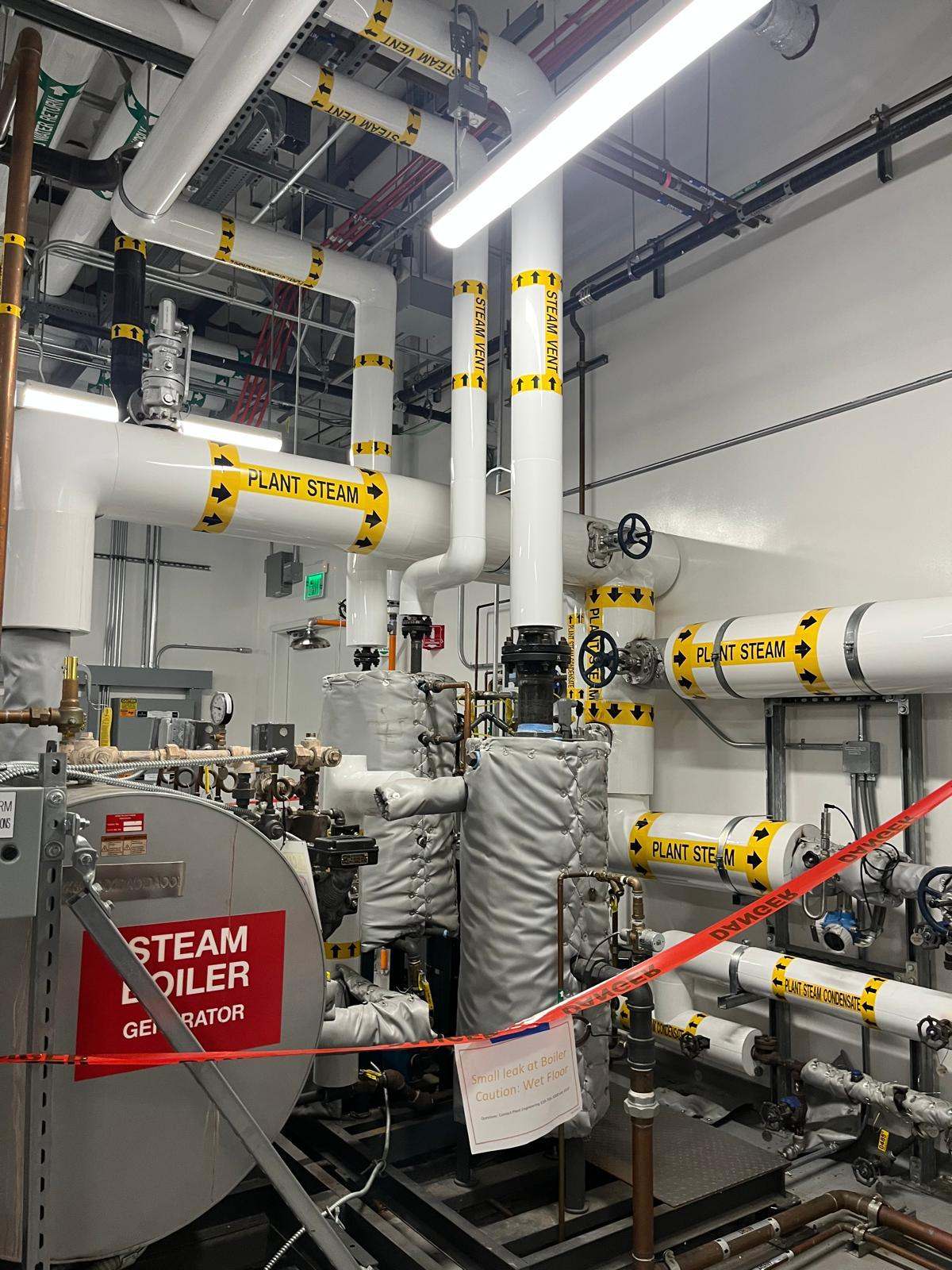
Fittings we cover
- Gate and globe valves
- Control valves
- Flanges
- Strainers
- Steam traps
- Heat exchangers
- Pumps
- Expansion joints
- Turbine and casing
- Instrumentation
- Manways
- Tank heads
Hard insulation against removable covers
Which one belongs where.
| Consideration | Conventional hard insulation | Removable cover |
|---|---|---|
| Straight pipe run | The right answer. Cheaper and continuous. | Not appropriate. |
| Valve opened yearly or more | Destroyed on every access. | The right answer. |
| Access time | Skilled removal and rebuild, scheduled. | Minutes, by the maintenance crew. |
| Cost at the fitting | Lower once, paid again each access. | Higher once, reused indefinitely. |
| Risk when skipped | Fitting usually stays bare afterwards. | Goes back because it is easy to. |
| Cold service | Continuous vapor barrier achievable. | Needs purpose-built cold construction. |
Questions we get asked
Before you order a set.
What do you need from me to quote a cover?
For a single fitting, usually a photograph, the line size, the fitting type and the operating temperature. That is genuinely enough to price most valve and flange covers, and we would rather you send a phone picture than wait a week to get a drawing together.
For a set large enough to matter, we field measure. Covers quoted from a schedule and never verified are the ones that show up not fitting, and a cover that does not fit does not get used.
How long do removable covers last?
Years of normal service, and the limit is almost always the closure rather than the insulation. Lacing wire fatigues, hook and loop fills with dust and stops gripping, outer fabric abrades where it rubs against a support.
Those are repairable. We would rather re-close and re-face a cover than sell you a new one, and the tag on it tells us exactly what it was built for.
Can covers be made for an oddly shaped piece of equipment?
Yes, and that is most of the value. Pumps, exchangers, turbine casings, expansion joints and instrument assemblies are all shapes that conventional insulation handles badly and that nobody makes a standard product for.
The more irregular the shape, the more field measurement matters, and the less likely a catalog item is to do the job.
Will a cover handle wash-down or an outdoor location?
With the right outer face, yes. Outdoor and wash-down covers use a different exterior material and different closure detailing than an indoor cover, because they are fighting water from outside rather than just holding heat in.
Tell us the location when you ask for the quote. The same fitting in a dry mechanical room and on an exposed roof are two different covers, and the cheaper one will not survive on the roof.
Are removable covers worth it on a line that is rarely touched?
Usually not, and we will say so. If a fitting is genuinely never opened, conventional insulation is cheaper and performs at least as well, because it is continuous.
The honest test is whether anyone has cut the insulation off that fitting in the last few years. If the answer is yes, covers pay. If the fitting is still intact after a decade, leave it alone.
Related
Other scopes we self-perform.
Next step
Send us a photo and a tag number.
Most covers can be quoted from a photograph, the line size and the operating temperature. For a larger set we will come out and field measure.