
CSLB C-6 · Cabinet, millwork and finish carpentry
We build casework rather than order it.
When an opening is not standard, or a custom order carries a twelve week lead time, our own shop closes the gap. Same license, same company, same schedule.
finish carpentry
in our own shop
general contractor since
to the installed finish
Casework, millwork, and why the distinction matters
The words get used loosely and the difference is worth holding onto, because it changes who should build a thing and where.
Casework is boxes: cabinets, base and wall units, counters, storage. It is modular by nature, and much of it can be bought as a standard product if the openings cooperate.
Millwork is everything shaped to the building: trim, paneling, reception desks, feature walls, non-standard openings, anything cut to a dimension that exists only on this job.
The California license treats them together. The C-6 classification covers a contractor who makes cabinets, cases, sashes, doors, trims, nonbearing partitions and other items of finish carpentry by cutting, surfacing, joining, gluing and fabricating wood, and who installs and completes that work in buildings. The fabrication and the installation sit in the same classification, which is a fair reflection of how the work actually goes.
The case for building instead of ordering
We do not build everything. Where a standard product fits the opening and the schedule, buying it is cheaper and we will say so.
Three situations change the answer. The first is a non-standard opening, where a catalog unit means filler strips, scribes and a result that reads as approximate. The second is lead time. A custom order carrying twelve weeks is a schedule problem long before it is a cost problem, and a shop that can start Monday is worth a premium that looks irrational on a line-item comparison. The third is a thing nobody makes, which is most of what comes to our router.
The quiet fourth reason is accountability. When the shop and the field crew are the same company, a piece that does not fit gets modified that afternoon. When they are different companies, it becomes a claim.
Where this intersects the rest of what we do. In a lab or clean area, casework is not a standalone package. Services come up into it, piping lands in it, and the surface has to survive what gets cleaned off it. We hold the millwork classification and the plumbing classification on the same license, which means the bench and the service that feeds it are one scope and one company. That combination is unusual, and it is most of why clients bring us into clean environment work.
Material selection in labs and clean areas
This is the question we get asked most on pharmaceutical and biotech work, and the honest answer is that it depends on what will be done to the surface rather than on which material is best.
Stainless steel is non-porous, takes aggressive cleaning and sterilization, does not absorb anything, and is the expected answer where contamination control governs. It is also the most expensive, it dents, and it shows every mark.
Phenolic resin handles moisture and most chemicals well, is lighter and more economical than stainless, and suits wet labs where the chemistry is ordinary rather than extreme.
Epoxy resin is the usual answer for work surfaces specifically, where heat and chemical resistance at the bench matter more than anything else.
Wood-based casework, however well finished, is generally inappropriate in a controlled environment because the substrate can absorb moisture at any edge or penetration that is ever damaged.
There is also a detail that gets missed until late: in a clean area the junction between casework and wall has to be sealed and cleanable. A beautiful cabinet with an uncleanable gap behind it has failed at the only thing the room is for.
Shop built against field built
Shop work is better work. The equipment is better, the conditions are controlled, the dust stays in our building rather than in your occupied one, and the tolerances are tighter because the tools holding them are not a cordless saw on a bucket.
What shop work demands in exchange is accurate field dimensions, which is why we measure rather than scale drawings, and it demands that the piece can physically get to where it is going. A reception desk that will not turn the corner out of the freight elevator is a problem of exactly one kind, and it is solved at the drawing stage by deciding where the joints go.
Field work earns its place in the trim, scribes and transitions, where a building is never quite what the drawing said. The craft is in knowing which parts belong on which side of that line before anything is cut.
What we build
- Casework
- Laboratory casework
- Reception and transaction
- Feature walls
- Parametric systems
- Machined panels
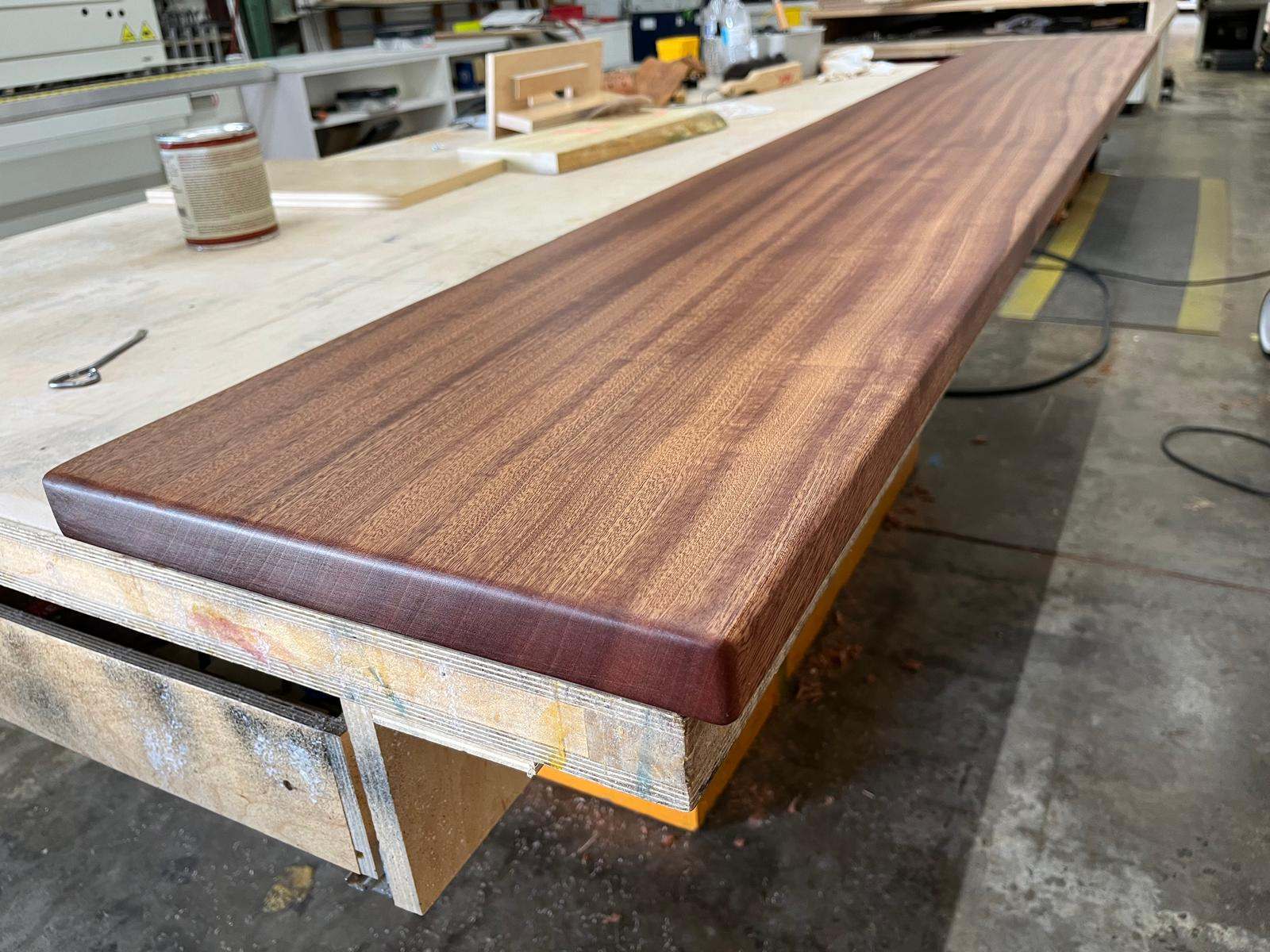
- Counters and tops
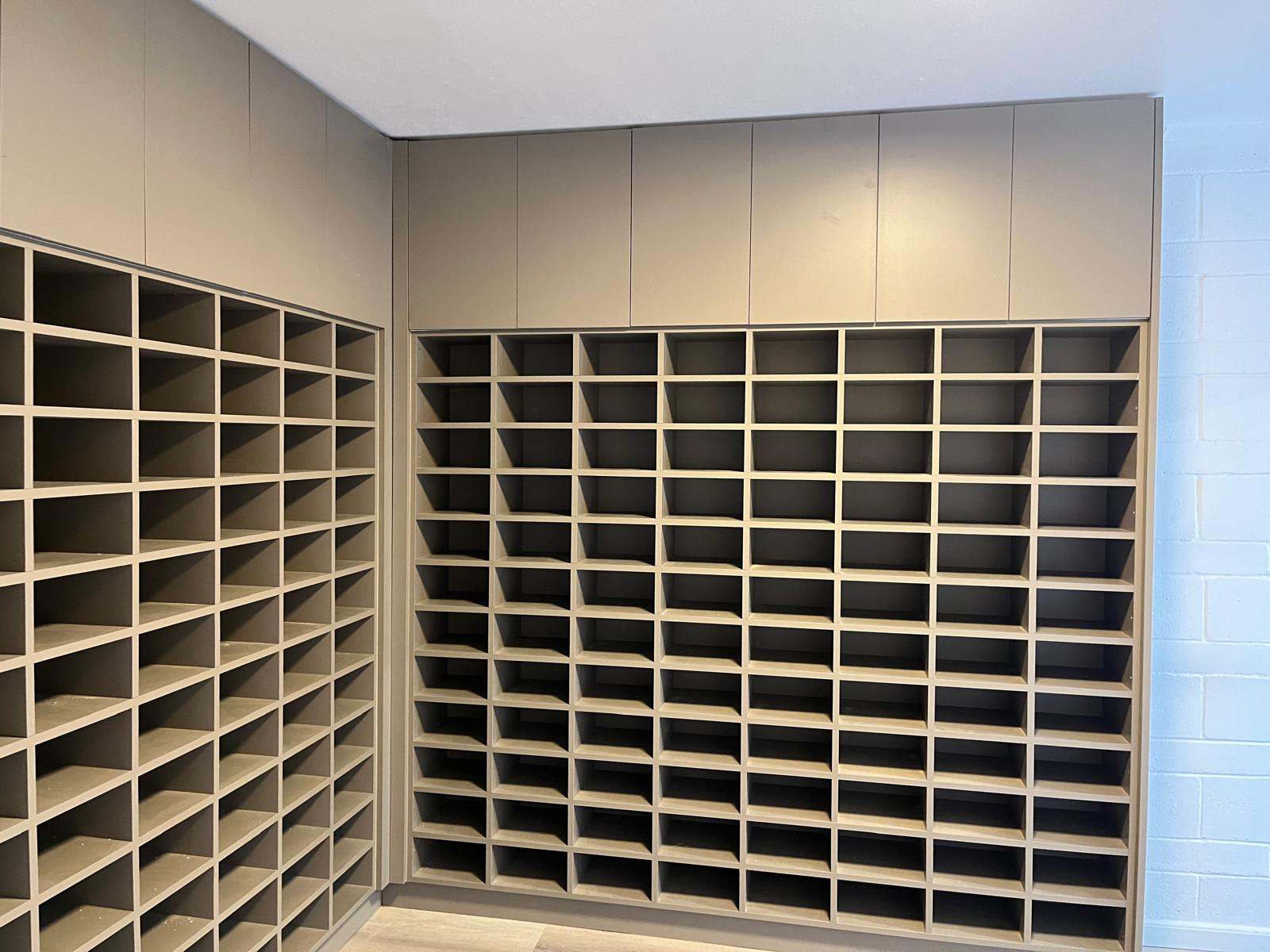
- Shelving and storage
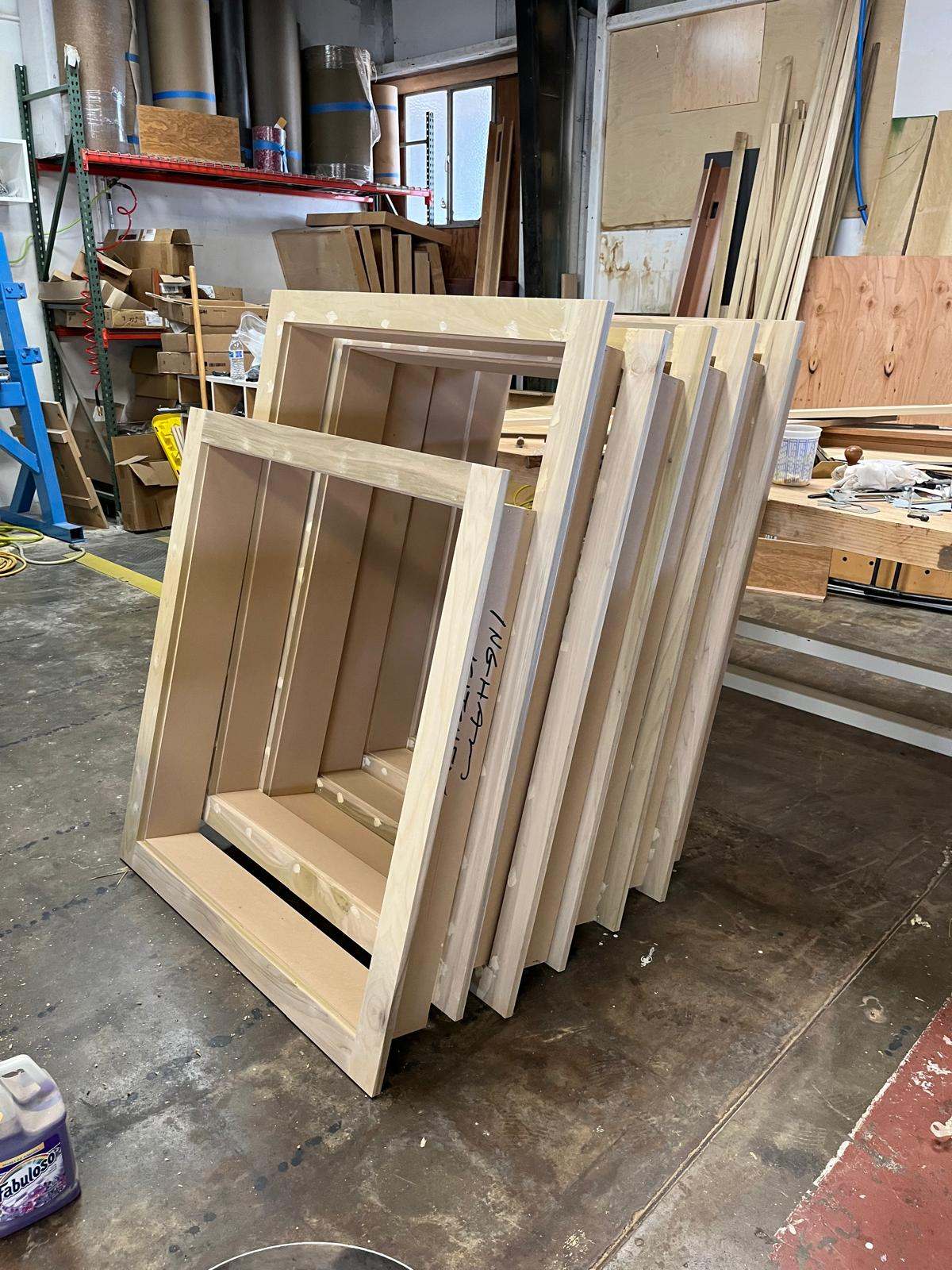
- Doors and hardware
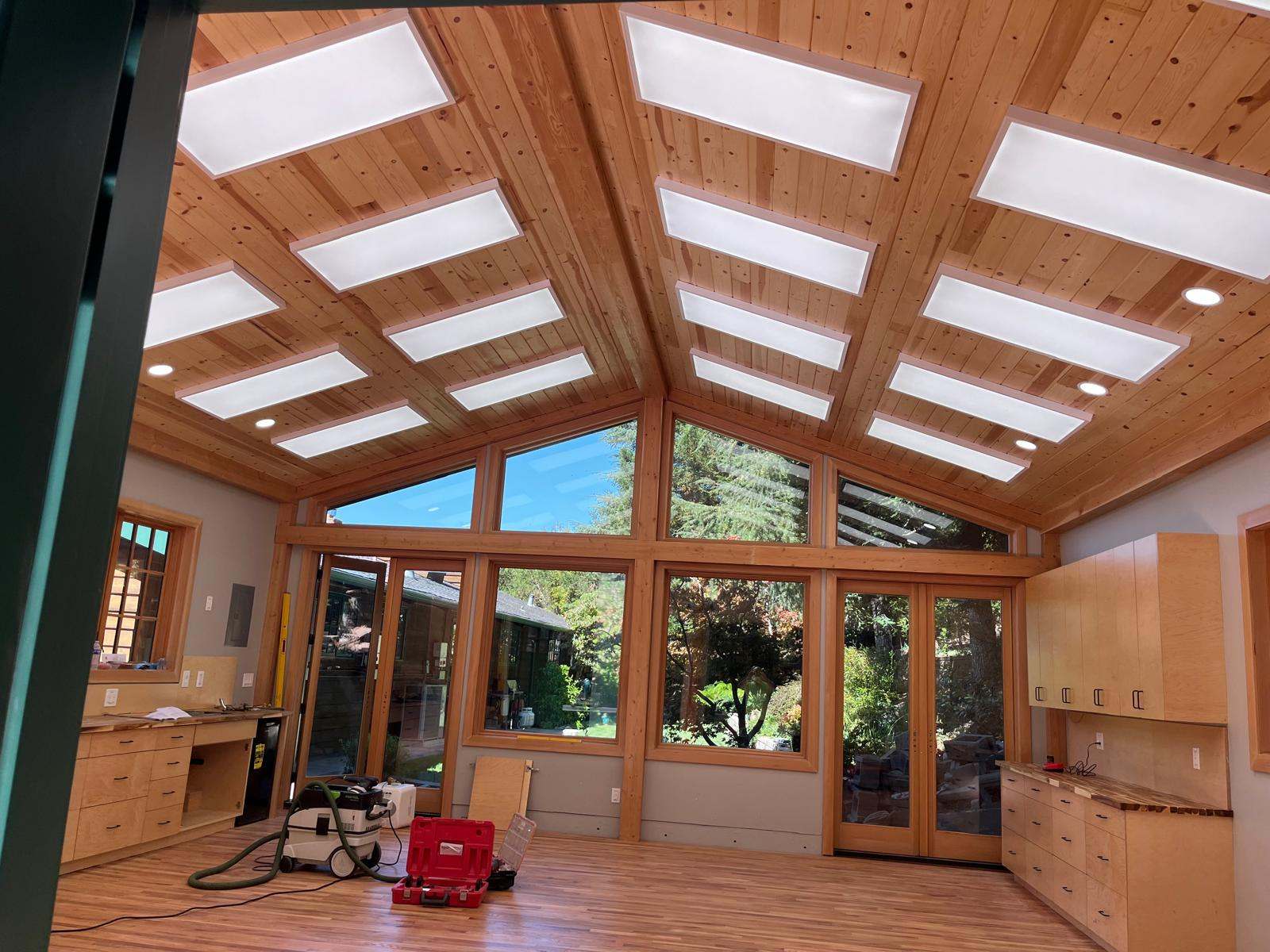
- Trim and finish carpentry
- Nonbearing partitions
- CNC components
Clean environment surfaces
Choosing a casework material.
| Material | Where it suits | What to weigh against it |
|---|---|---|
| Stainless steel | Contamination control, sterilization, aggressive cleaning regimes | Highest cost, dents, shows marks and fingerprints |
| Phenolic resin | Wet labs, general chemical exposure, moisture | Not equivalent to stainless where sterilization governs |
| Epoxy resin | Work surfaces facing heat and chemical attack | Heavy; usually a top rather than a whole unit |
| High pressure laminate | Offices, write-up areas, support spaces | Edges and penetrations are the weak point if they get wet |
| Wood and wood veneer | Commercial interiors, offices, institutional spaces | Generally unsuitable inside a controlled environment |
Questions we get asked
Millwork, practically.
What is the difference between casework and millwork?
Casework is the boxes, the cabinets and counters and storage that are modular by nature. Millwork is everything shaped to the specific building: trim, paneling, feature walls, non-standard openings and one-off pieces.
Under the California C-6 classification they sit together, along with the installation. That is the licensing answer. The practical answer is that casework can often be bought and millwork usually has to be made.
Is shop-built casework more expensive than ordering it?
On the line item, often yes. On the project, frequently not, and the difference is schedule. A custom order at twelve weeks has to be designed, approved, ordered and waited for, and anything that changes in the meantime restarts part of that clock.
We will tell you honestly which case you are in. Where a standard product fits the opening and your dates, we would rather you buy it than pay us to make it.
Can wood casework be used in a cleanroom?
Generally no. The problem is not the finish, which can be excellent. The problem is the substrate: any edge, drilled hole or damaged corner exposes material that can absorb moisture and hold contamination, and in a controlled environment that is a surface nobody can certify.
Stainless, phenolic and epoxy exist for this reason. Which one depends on what the room is actually for and what gets used to clean it.
What do you need from me to start?
Elevations, a finish schedule, and the hardware you want if you care about it. If you have a model rather than drawings, that is better, because it can feed the router directly.
For anything in a lab or clean area, we also need to know the cleaning regime. That single piece of information changes the material more than the design does.
Do you install what you build?
Yes, and that is the point. The C-6 classification covers both the fabrication and the installation, and keeping them together is what removes the argument when a piece needs adjusting.
It also means the measurements we build to are measurements our own people took.
From our shop
Work we have built.



Related
Other scopes we self-perform.
Next step
Send the elevations and the finish schedule.
We will tell you what is worth buying standard, what we should build, and where a shop-built piece saves you weeks against a custom order.