
Markets
Clean areas have no tolerance for improvising.
Lab and clean environment build-outs, process piping, casework and mechanical insulation held to documented tolerances, in buildings where the paperwork matters as much as the work.
The paperwork is part of the work
In most construction, documentation records what was built. In a regulated facility it is closer to the opposite: if the record does not exist, from a quality standpoint the work may as well not have happened.
That changes how a job has to be run rather than how it is built. Material certifications have to be collected as material arrives, not chased afterwards. Weld and joint records have to be kept as the work proceeds. As-builts have to reflect what is actually in the wall. None of that is difficult when it is planned in from the first week. All of it is painful, and sometimes impossible, when it is assembled at the end.
So the first question we ask on a pharmaceutical or biotech scope is what your quality system needs from us. The answer shapes the schedule, and it is cheaper to build the submittal path in at the start than to reconstruct it at closeout.
Where our classifications land in a clean build
Three of our four classifications show up in the same room, which is unusual and is most of why clients bring us into this work.
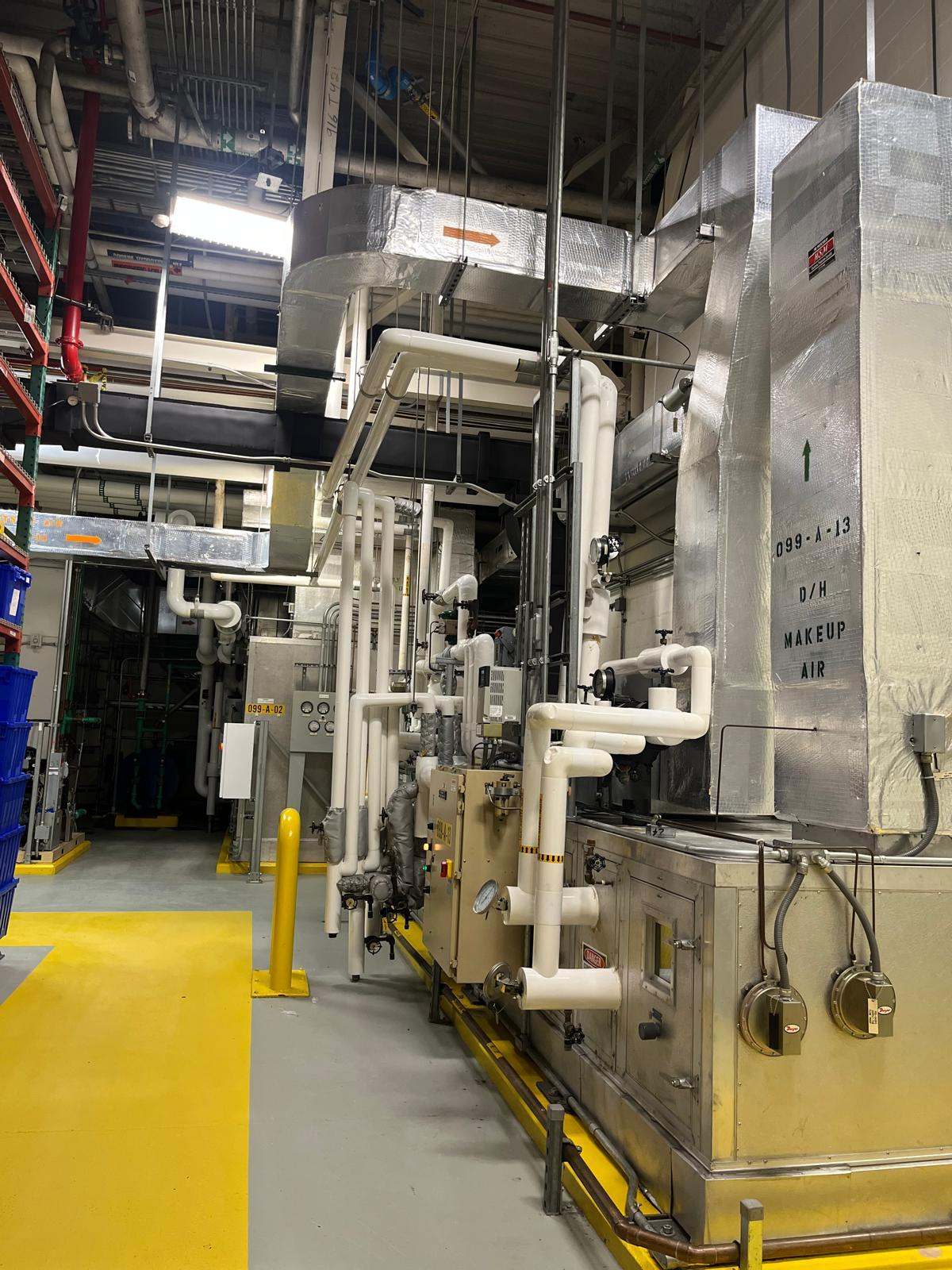
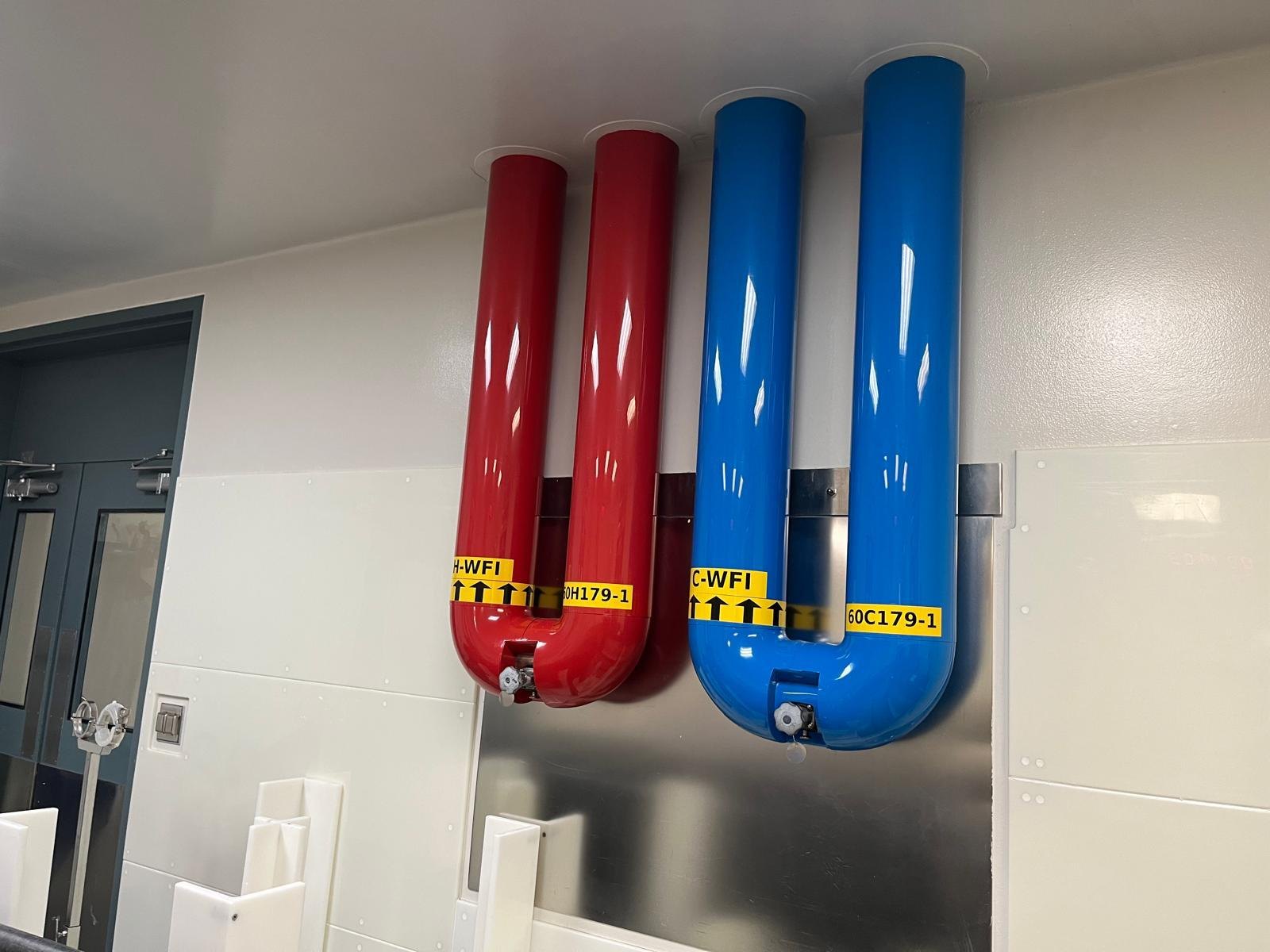
Process piping under C-36. The California plumbing classification explicitly covers piping, storage tanks and venting for gases and liquids for industrial, medical and dental use, which is the regulatory basis for process piping work in this state.
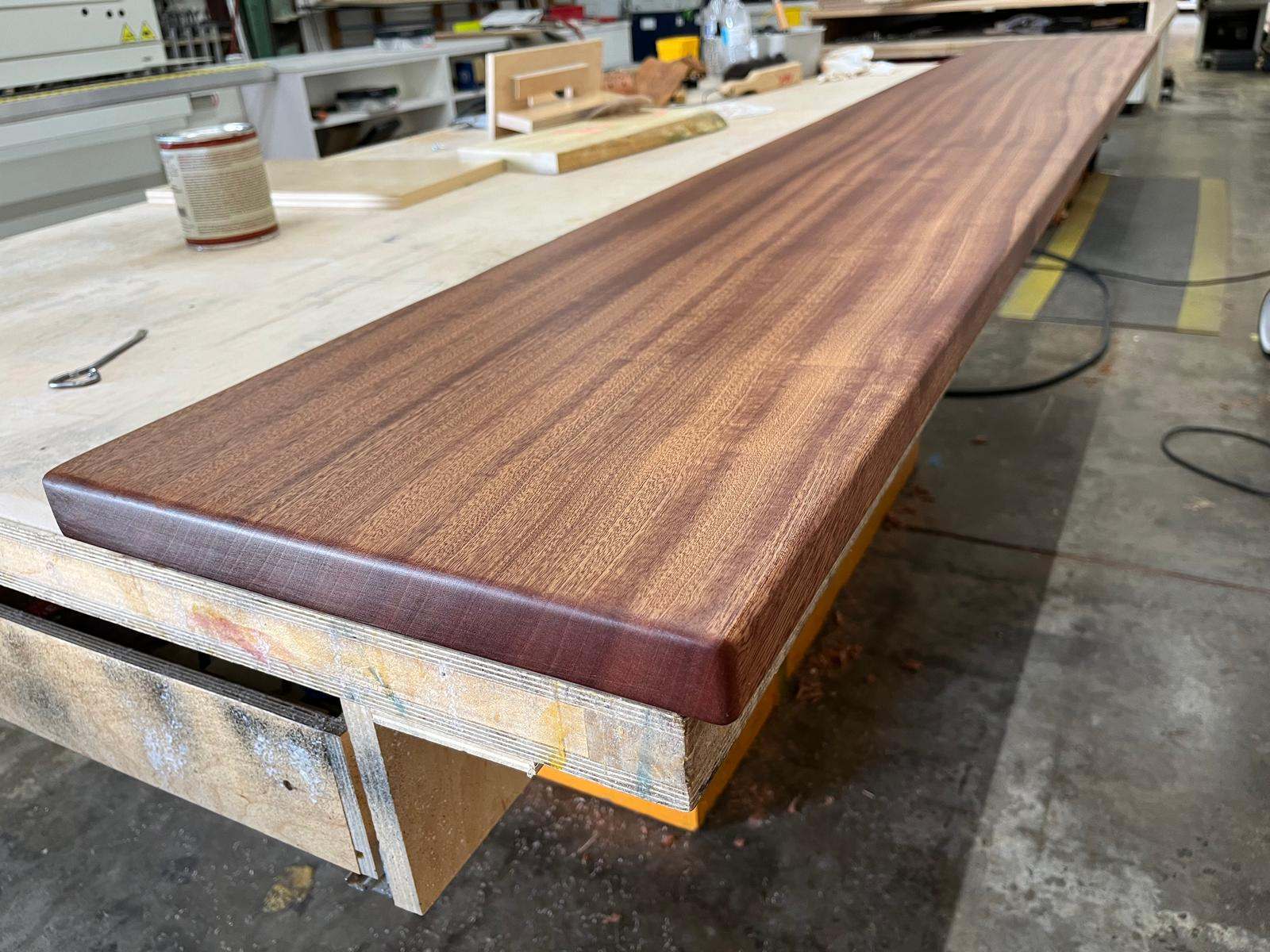
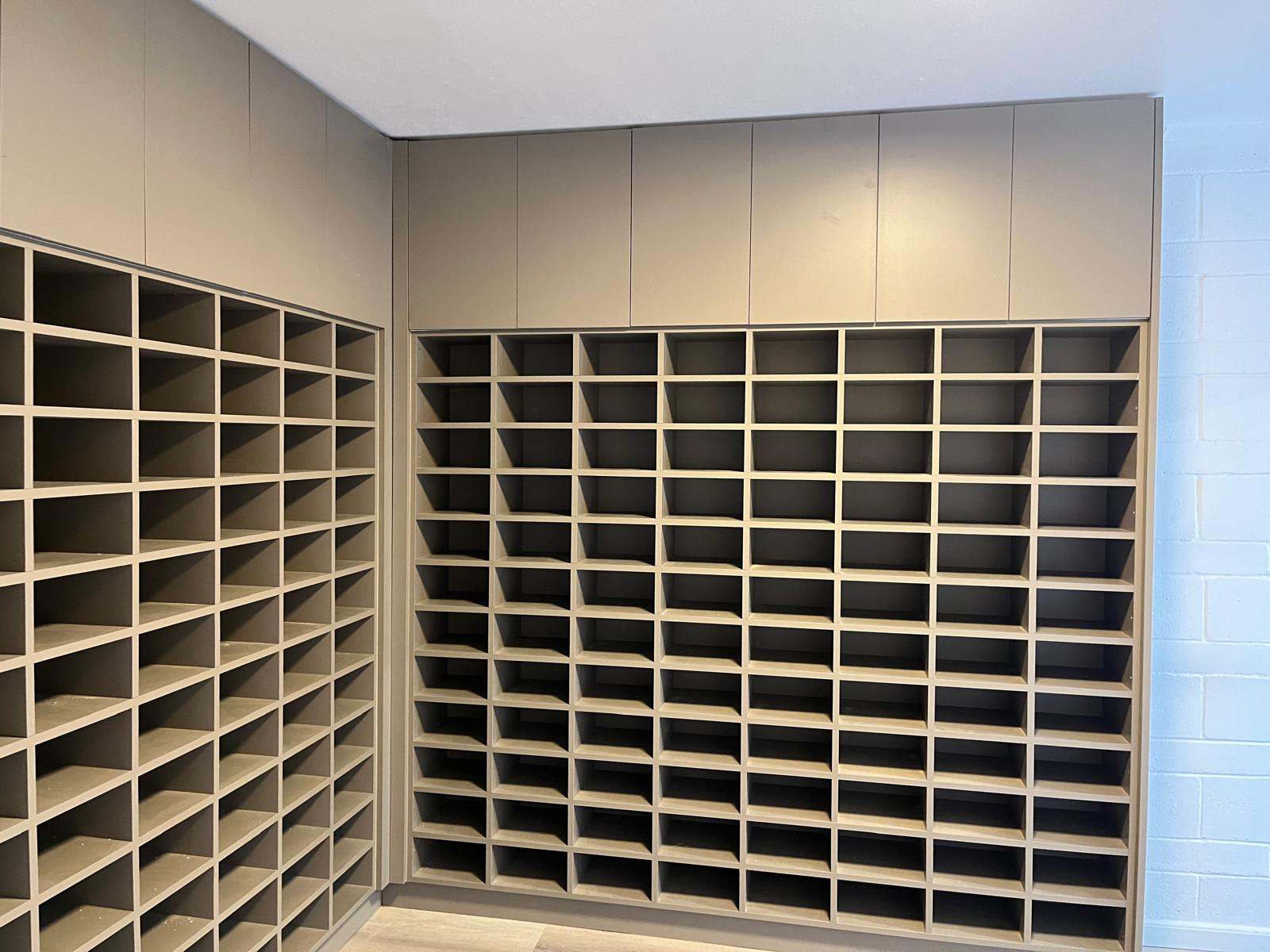
Casework under C-6. Built in our own shop rather than ordered, which matters in clean areas where openings are rarely standard and where a twelve week custom lead time can sit on the critical path.
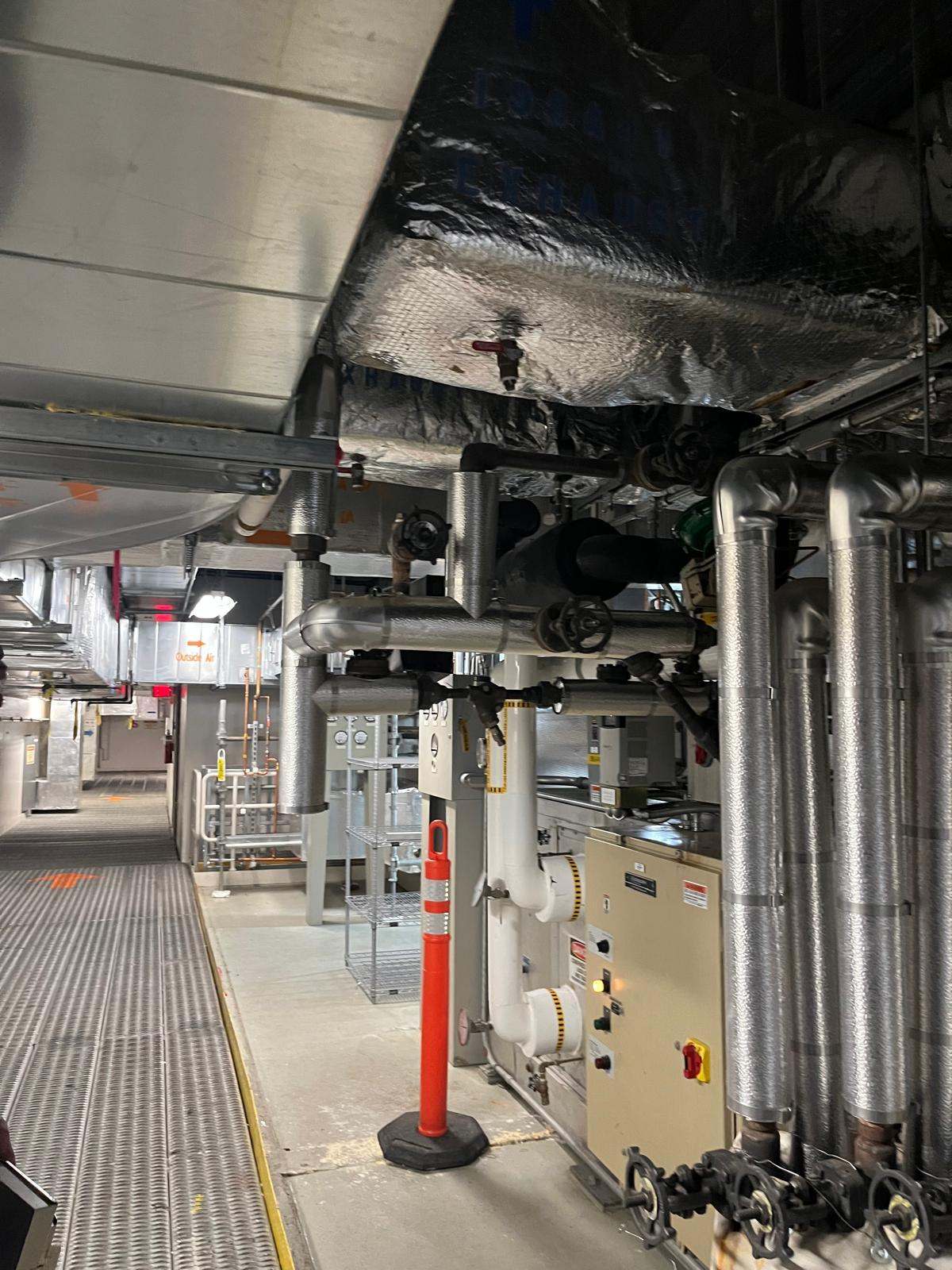
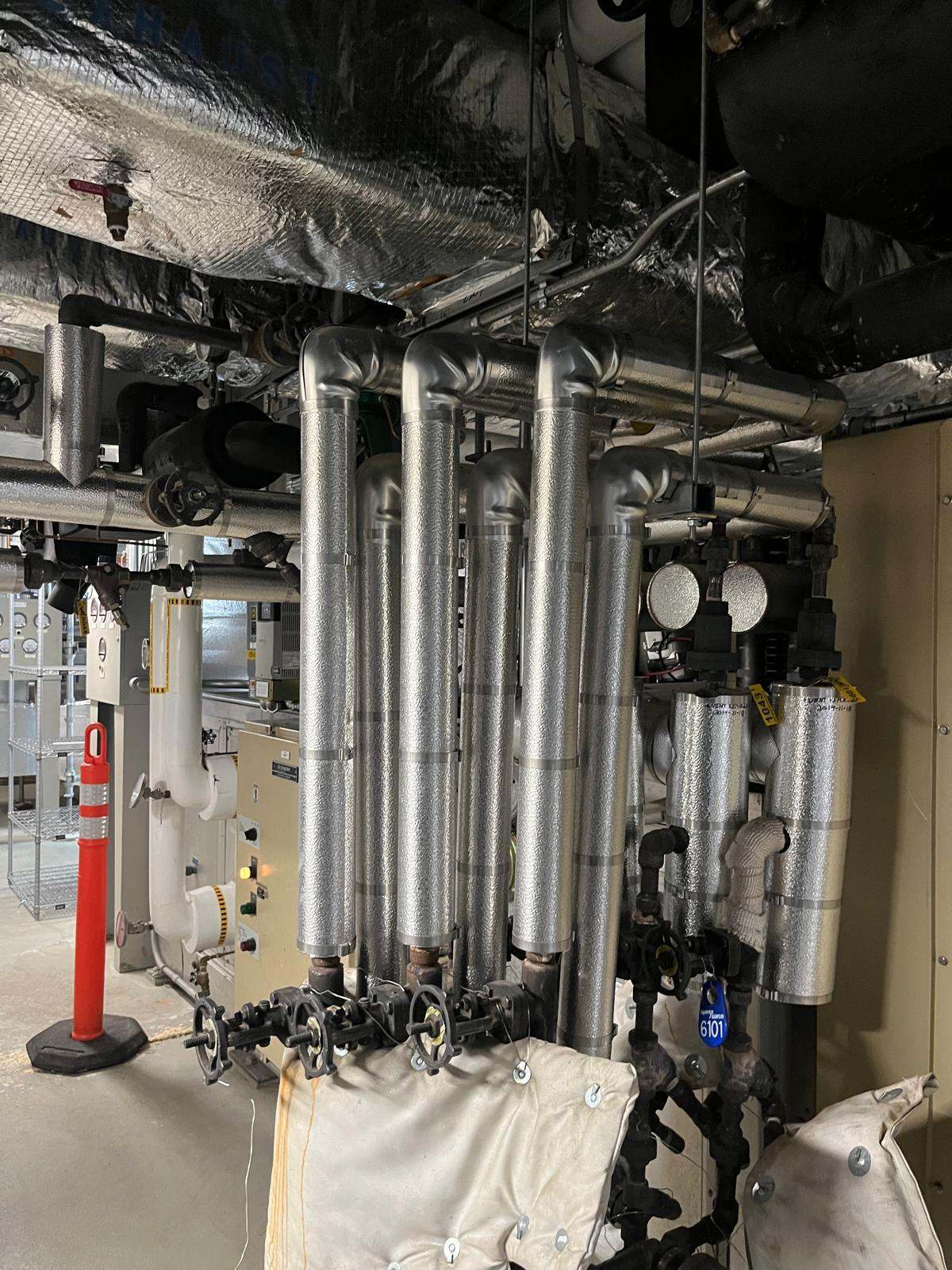
Mechanical insulation under C-2. Including the cold work, where vapor barrier continuity decides whether a chilled line stays dry in a room that cannot tolerate water.
The combination means the bench, the services feeding it and the insulation on those services are one scope and one company. That interface is a frequent source of friction when it is split three ways.
Material certifications on stainless. Where insulation contacts austenitic stainless steel, it has to qualify under ASTM C795, which depends on the stress corrosion screening of C692 and the leachable chloride, fluoride, silicate and sodium limits of C871. On a stainless process line the insulation specification is as much about what the material gives off as about how well it insulates, and the certification for that is a document your quality system will want.
Casework material, which is the question we get most
Not which material is best, but which one survives what will be done to it.
Stainless steel is non-porous, takes aggressive cleaning and sterilization, and is the expected answer where contamination control governs. It is also the most expensive and it shows every mark.
Phenolic resin handles moisture and ordinary laboratory chemistry well at a lower cost and weight, and suits wet labs that are not being sterilized.
Epoxy resin is the usual answer for work surfaces facing heat and chemical attack at the bench.
Wood-based casework is generally inappropriate inside a controlled environment, regardless of finish quality, because any damaged edge or penetration exposes a substrate that can absorb moisture.
The detail that gets missed until late is the junction between casework and wall, which in a clean area has to be sealed and cleanable. A well-built cabinet with an uncleanable gap behind it has failed at the one thing the room exists for.
Working around a validated space
A room that is qualified is a room that someone will have to qualify again if we disturb it. That fact governs more of the sequence than the drawings do.
Which areas can come down and when, how the work area is separated from the ones still operating, how material and people move without crossing a boundary they should not, and what has to be cleaned, tested or requalified before handback. Those questions belong in the scope document, not in a conversation on the first morning, and we would rather raise them at pricing than discover them on site.
Our scope
- Process piping
- Laboratory casework
- Clean area millwork
- Mechanical insulation
- Cold and chilled systems
- Equipment connections
- Lab build-outs
- Interior fit and finish
- Firestopping
- Material certifications
- As-built records
Questions we get asked
Regulated environments.
Stainless or phenolic for lab casework?
It depends on the cleaning regime rather than on the budget. If surfaces are sterilized or cleaned with aggressive chemistry, stainless. If the exposure is moisture and ordinary laboratory chemicals, phenolic does the job at lower cost and weight.
Tell us what gets used to clean the room and we will tell you which material will still look acceptable in five years.
Can you provide material traceability?
Where the specification requires it, yes, and it has to be set up from the beginning. Certifications collected as material is delivered, logged against the installed location.
What we will not do is promise to reconstruct traceability for material that arrived without it. That is a real limitation and it is better said at bid time.
Do you work in occupied, operating facilities?
Most of our work is in buildings that keep running. In a regulated facility the additional question is what has to be requalified afterwards, and that needs settling before the scope is priced rather than after.
We would rather plan a slower sequence that protects a qualified space than a faster one that triggers requalification nobody budgeted for.
Why does insulation matter on a stainless process line?
Because the insulation chemistry can attack the pipe. Chlorides leaching out of an otherwise ordinary insulation onto hot austenitic stainless is a recognized cracking mechanism, which is why ASTM C795 exists and why it depends on the chemical limits in C871.
It is a specification detail that gets overlooked by people who are thinking about thermal performance, and the consequence appears years later in the pipe rather than in the insulation.
From our jobs
Clean mechanical and shop-built work.

Related
Other scopes we self-perform.
Next step
Documentation is part of the scope.
If your quality system needs material certifications, weld records or as-builts, say so up front and we will build the submittal path into the schedule.